Tall Ladyslipper
Latin Name: Pedilanthus bracteatus
Price range: $16.95 through $19.95
- Pot Size: 4 Inch, 1 Gallon
- Hardiness Zone: Zone 9, Zone 10, Zone 11
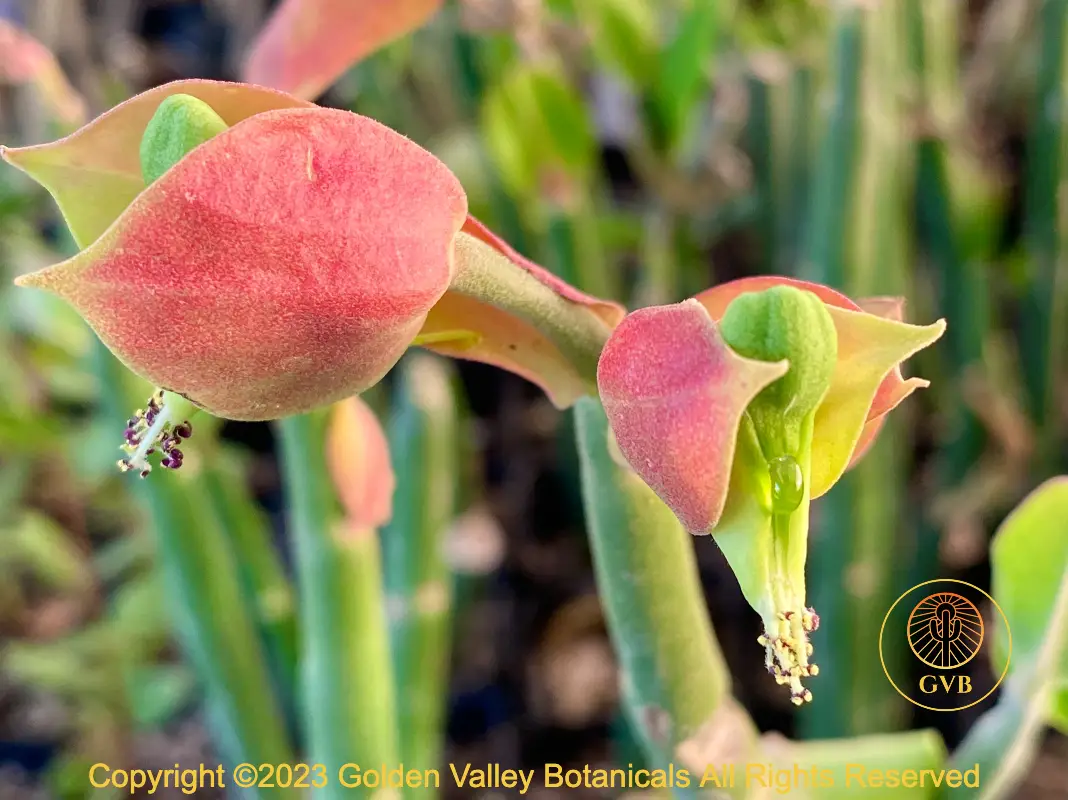
Euphorbia bracteata grows as a loose stand of slender, upright stems. Each one is smooth, round, and a bright glossy green. Oval leaves ride near the stem tips, then fall away when the weather turns cold or dry. This leaves clean green columns behind. Dropping its leaves is how the plant saves water, since the fleshy stems keep working on their own. In the warm months, small rosy bracts open at the tips. Each one curves like a slipper or a little perched bird, the source of its name little bird flower. Unlike its grey-stemmed relatives, this thornless plant stays fresh green all year and looks at home beside a patio or pool.
Plant Details
Quick Information
- Latin Name: Euphorbia bracteata
- Plant Family: Euphorbiaceae
- Common Names: Tall Slipper Plant, Slipper Spurge, Tall Lady’s Slipper, Little Bird Flower (also widely sold as Pedilanthus bracteatus)
- Origin / Native Range: Dry deciduous woodlands of western and southern Mexico, from southern Sonora south along the Sierra Madre Occidental to Guerrero
- Mature Height × Width: 4–8 ft × 3–5 ft
- Exposure Requirements: Full Sun to Light Shade
- Irrigation Requirements: Low
- USDA Hardiness Zones: 9–11
- Cold Hardiness: 20°F–25°F (when dry)
- Bloom Time: Spring through Fall
- Bloom Color: Red to Rosy Pink (bracts)
General Information
The stems of Euphorbia bracteata rise straight up from the base, each one thick, smooth, and round, like a green candle. A young plant may start with just a few stems, but over the years the clump fills out into a vase shape, wider at the top than the bottom. Some stems grow in a gentle zigzag, bending a little at each old leaf joint. The oval leaves sit far apart near the stem tips and can reach about 4 inches long, and they will drop off when the weather turns cold or dry. So for part of the year, an older plant stands as a group of bare green stems. Those stems store water and stay green, so they keep making food while the plant is leafless. That bright green also sets it apart from its close relative Euphorbia lomelii, still sold as Pedilanthus macrocarpus, whose stems are blue-grey.
In the wild, this plant grows at the edges of dry deciduous woodlands in Mexico. It is found across a wide range of elevations, where summers are hot, and rain falls in one short season. It takes intense heat and reflected warmth in stride: once established, it needs very little water, living off the moisture stored in its stems. Cold is its main limit. Frost can nip the stem tips below about 30 degrees. Settled plants handle brief dips into the low-to-mid 20s, but hard or long freezes cause damage. On cold nights, the stems often turn reddish. This is a normal seasonal change, not a warning sign. In the hottest low-desert gardens, a little afternoon shade keeps the stems looking their best. In colder regions, the plant grows well in pots that can move indoors for winter. The nectar-rich flower cups are said to draw hummingbirds and insects, though the exact pollinators are not well studied.
Like all spurges, Euphorbia bracteata bears odd little flowers. What looks like one flower is really a small cup called a cyathium. Each cup holds several tiny male flowers and a single female flower, none with petals of their own. Around the cup sits a pair of colorful bracts, which are modified leaves. They are shaped like a slipper or clamshell. That shape gave the old genus name Pedilanthus its meaning, from the Greek words for shoe and flower. The species name bracteata simply means having bracts. Botanists now place the plant in the large genus Euphorbia. Even so, many gardeners still know it as Pedilanthus bracteatus. One caution: like other spurges, every part holds a milky white sap. This sap is toxic if eaten and can irritate the skin and eyes. Wear gloves when you trim it, keep the sap away from your face, and plant it away from young children and pets.
General Planting & Cultivation Information
Even drought-tolerant plants require regular watering until they are well established, good drainage is essential. If planting in containers, avoid pots without drainage holes.
Irrigate by watering deeply and then allowing the top several inches of soil to dry between waterings. This encourages the plant to send roots deep into the earth in search of moisture, helping it to become established, prevent root rot, build drought tolerance, and resilience to wind, heat, and cold.
The length of time between waterings will vary depending on your growing conditions and environment. Use a moisture meter for precise irrigation.
When planting, set the plant at the same depth as it was in its current container. For trees, ensure the top of the root flare is at soil level.
Young plants are vulnerable to harsh conditions, so consider growing them in larger containers until mature.
When planting in the ground, research the optimal planting season for your climate zone and protect young plants from frost.
To support establishment, consider creating a microclimate with nurse plants, shade, or wind protection. This can reduce stress, conserve soil moisture, and increase long-term success.
Protect the small, immature plants from rabbits and deer.
Check out our FAQ page for more tips on desert gardening.