Aleppo Pine
Latin Name: Pinus halepensis
$38.95
- Pot Size: 5 Gallon (Local Pickup Only)
- Hardiness Zone: Zone 8, Zone 9, Zone 10
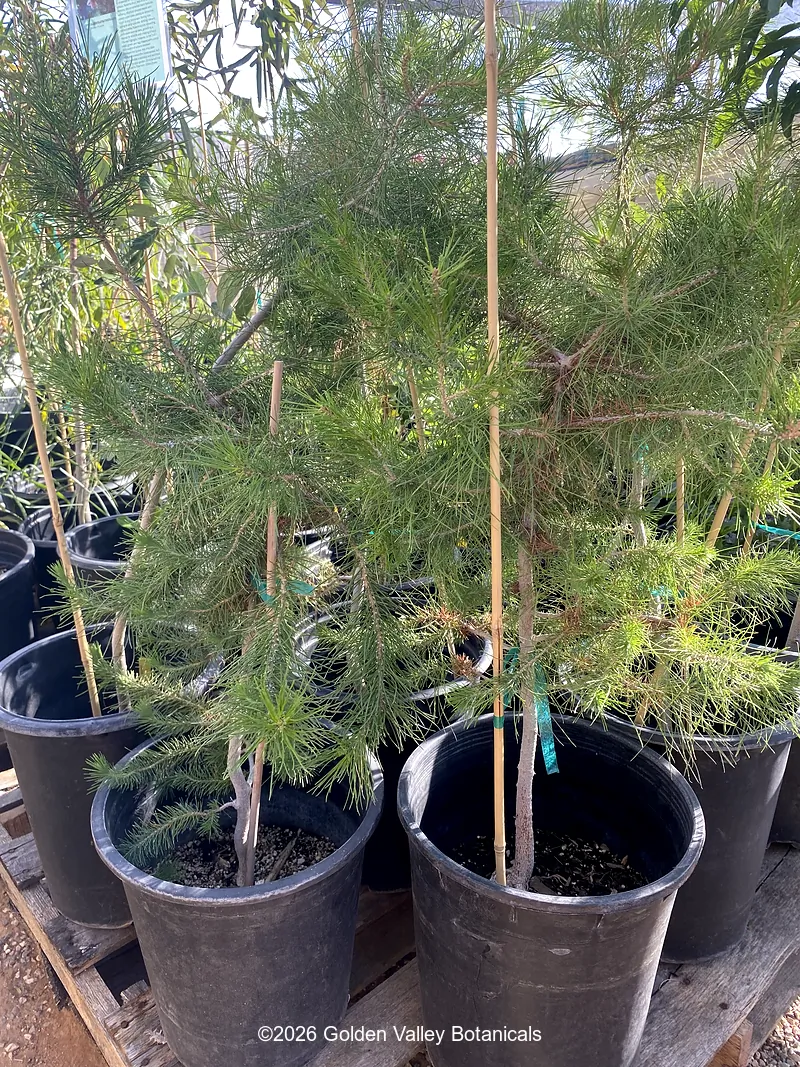
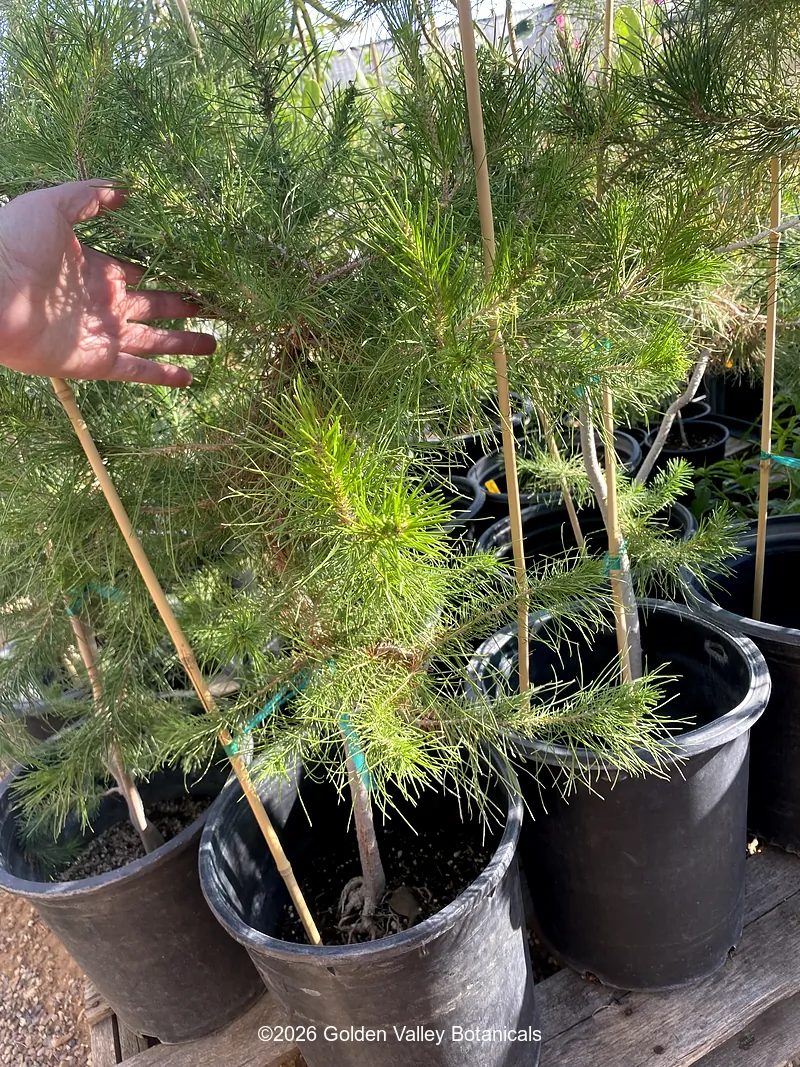
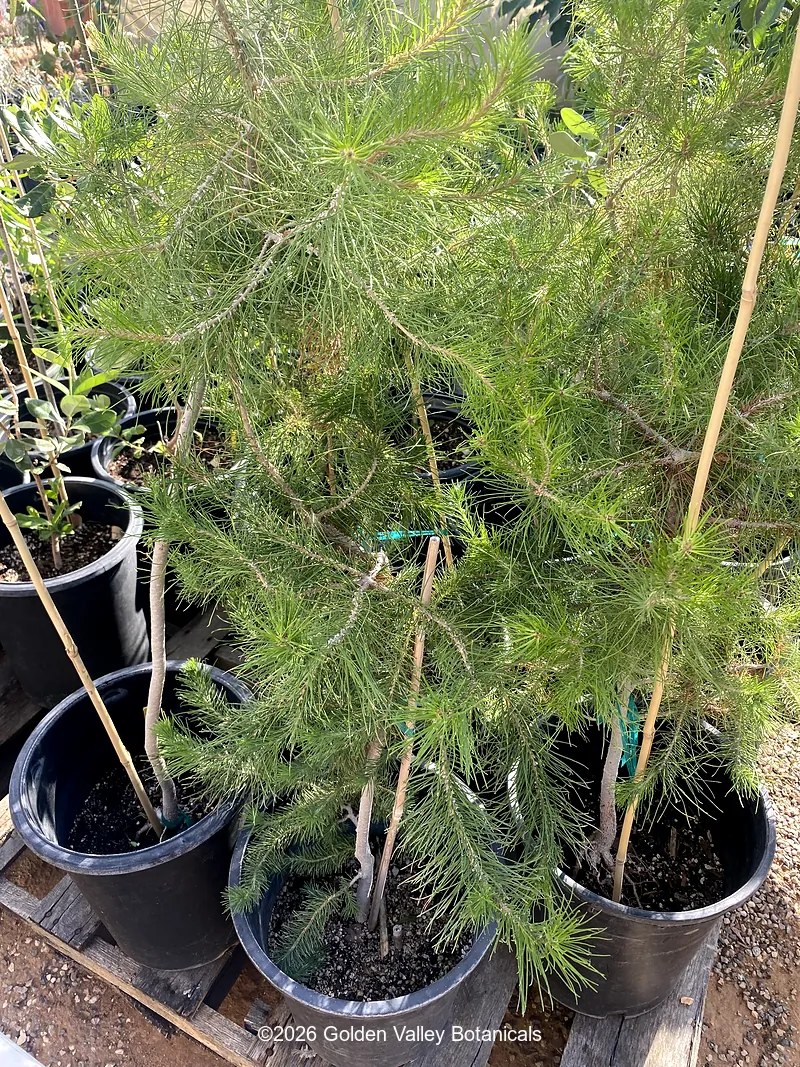
Pinus halepensis is an evergreen pine from the Mediterranean that grows into an open, irregular tree with slender, light green needles held in pairs. Young trees stand fairly upright, but older ones spread into a rounded or umbrella-shaped crown carried on a trunk that often leans or twists with the wind. Its reddish-brown, flaky bark and thin foliage give the canopy a fine, see-through texture rather than a dense wall of green. The cones ripen to a glossy red-brown and can cling to the branches for years before opening. Its sparse needles and lean, wind-shaped trunk are the marks of a tree built for hot, dry, sun-baked ground.
In stock
Plant Details
Quick Information
- Latin Name: Pinus halepensis
- Plant Family: Pinaceae
- Common Names: Aleppo Pine, Jerusalem Pine
- Origin / Native Range: Mediterranean Basin, from Morocco and Spain east through Italy and Greece to the eastern Mediterranean
- Mature Height × Width: 40–60 ft × 30–40 ft
- Exposure Requirements: Full Sun
- Irrigation Requirements: Low
- USDA Hardiness Zones: 8–10
- Cold Hardiness: 10°F–15°F
- Pollen Production: Spring
- Seed Cone Development: Cones mature over about two years, then persist on the branches
- Bloom Color: Non-descript
General Information
An Aleppo pine begins life fairly narrow and upright, then slowly opens into a broad, rounded or umbrella-shaped crown as it ages. The trunk often bows or twists as it grows, so old specimens take on a windswept, open look rather than the neat cone shape of many pines. The needles grow in bundles of two, called fascicles, and are slender, soft-looking, and light green, giving the whole canopy a fine, airy texture that lets light filter through. Bark on young trees is gray and smooth, but with age it thickens and turns reddish-brown, splitting into scaly ridges near the base while staying thin and flaky higher up. Because the branches are limber and irregular, no two mature trees grow into quite the same shape.
This pine comes from the hot, dry hillsides of the Mediterranean, where summers are long and fires are common, and those conditions shaped how it grows. Many of its cones are sealed shut with resin and open only after they are heated, so a passing fire triggers them to release their winged seeds onto freshly cleared ground, making the tree one of the first to return after a burn. Its deep roots and narrow needles help it endure long dry spells, though it may shed older needles when it is badly stressed for water. In the landscape, it handles full sun, reflected heat, wind, and fast-draining rocky or alkaline soils, which makes it useful as a screen, windbreak, or shade tree in warm, dry regions. It is not dependably cold-hardy however, and young trees in particular can be damaged by hard frost. Gardeners in the hottest low-desert areas should also know that prolonged drought and bark beetles have stressed and killed a number of mature Aleppo pines in recent years, so even an established tree benefits from occasional deep watering during extreme heat.
Like other pines, the Aleppo pine is monoecious, meaning a single tree carries both male and female cones. In spring, the small male cones release clouds of yellow pollen that the wind carries to the young female cones, which then take about two years to grow into the woody, egg-shaped cones that ripen a glossy red-brown. It belongs to a mostly Mediterranean group of pines and is closely related to the Turkish pine (Pinus brutia), with which it is easily confused. The species was named in 1768 by the botanist Philip Miller after the Syrian city of Aleppo, even though the tree grows across the wider Mediterranean rather than only near that city. Its fragrant resin has long been used to flavor the traditional Greek wine known as retsina, a reminder that this pine has lived alongside people around the Mediterranean for a very long time.
General Planting & Cultivation Information
Even drought-tolerant plants require regular watering until they are well established, good drainage is essential. If planting in containers, avoid pots without drainage holes.
Irrigate by watering deeply and then allowing the top several inches of soil to dry between waterings. This encourages the plant to send roots deep into the earth in search of moisture, helping it to become established, prevent root rot, build drought tolerance, and resilience to wind, heat, and cold.
The length of time between waterings will vary depending on your growing conditions and environment. Use a moisture meter for precise irrigation.
When planting, set the plant at the same depth as it was in its current container. For trees, ensure the top of the root flare is at soil level.
Young plants are vulnerable to harsh conditions, so consider growing them in larger containers until mature.
When planting in the ground, research the optimal planting season for your climate zone and protect young plants from frost.
To support establishment, consider creating a microclimate with nurse plants, shade, or wind protection. This can reduce stress, conserve soil moisture, and increase long-term success.
Protect the small, immature plants from rabbits and deer.
Check out our FAQ page for more tips on desert gardening.