Jojoba
Latin Name: Simmondsia chinensis
Price range: $18.95 through $24.95
- Hardiness Zone: Zone 9, Zone 10, Zone 11
- Pot Size: 4 Inch, 1 Gallon
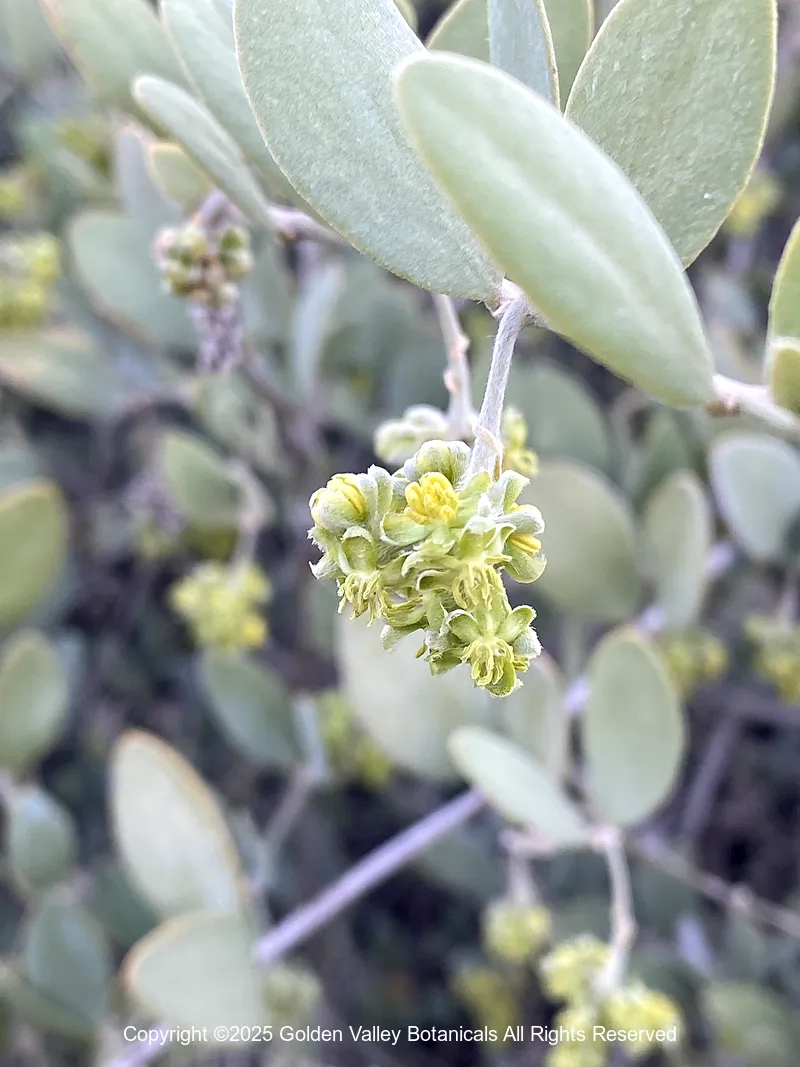
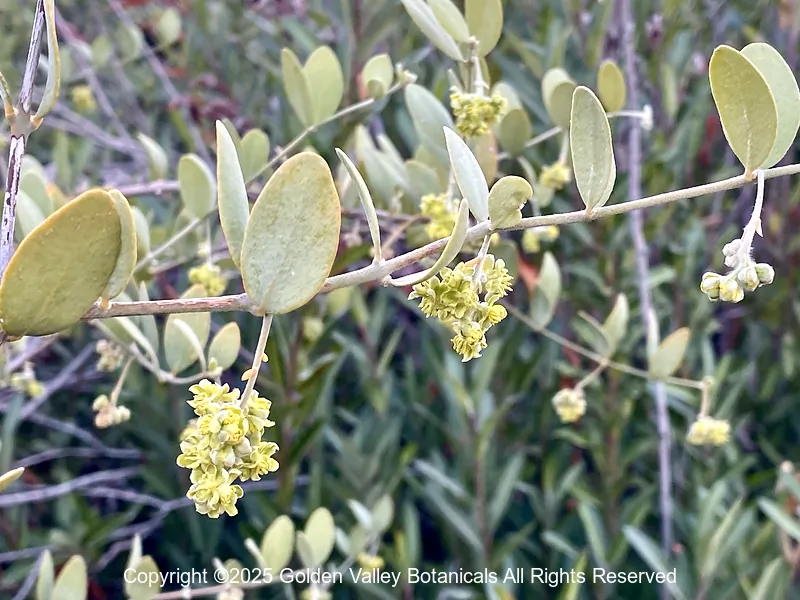
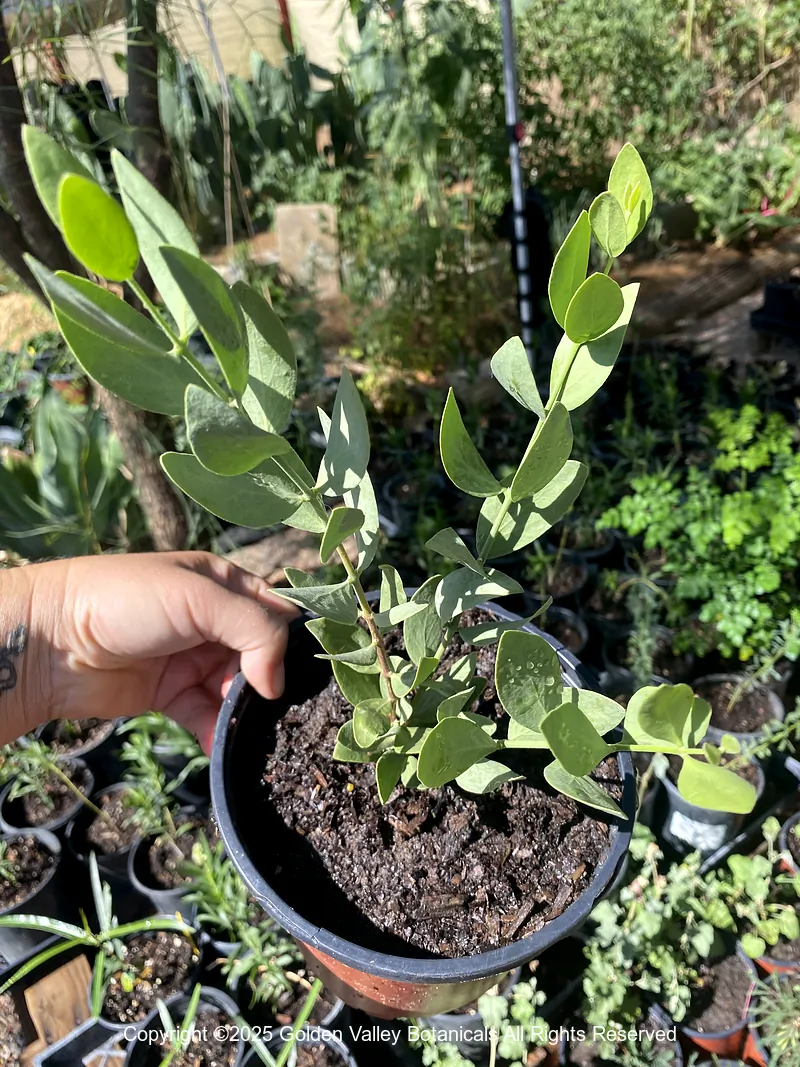
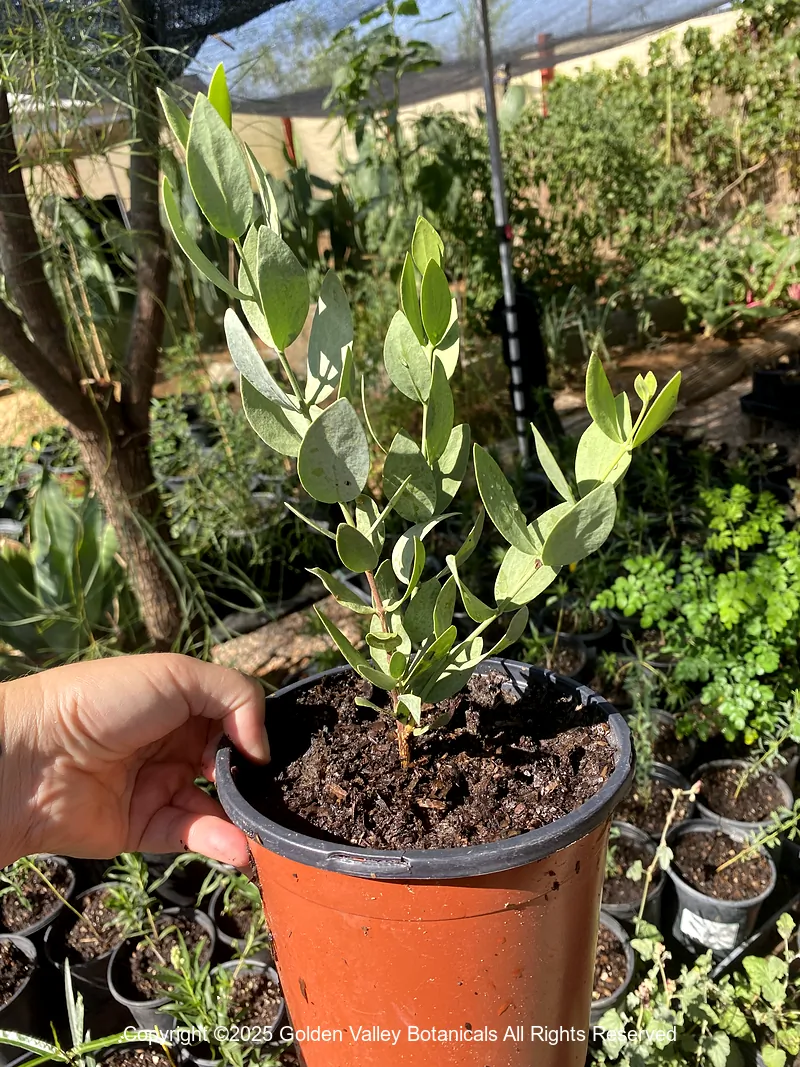
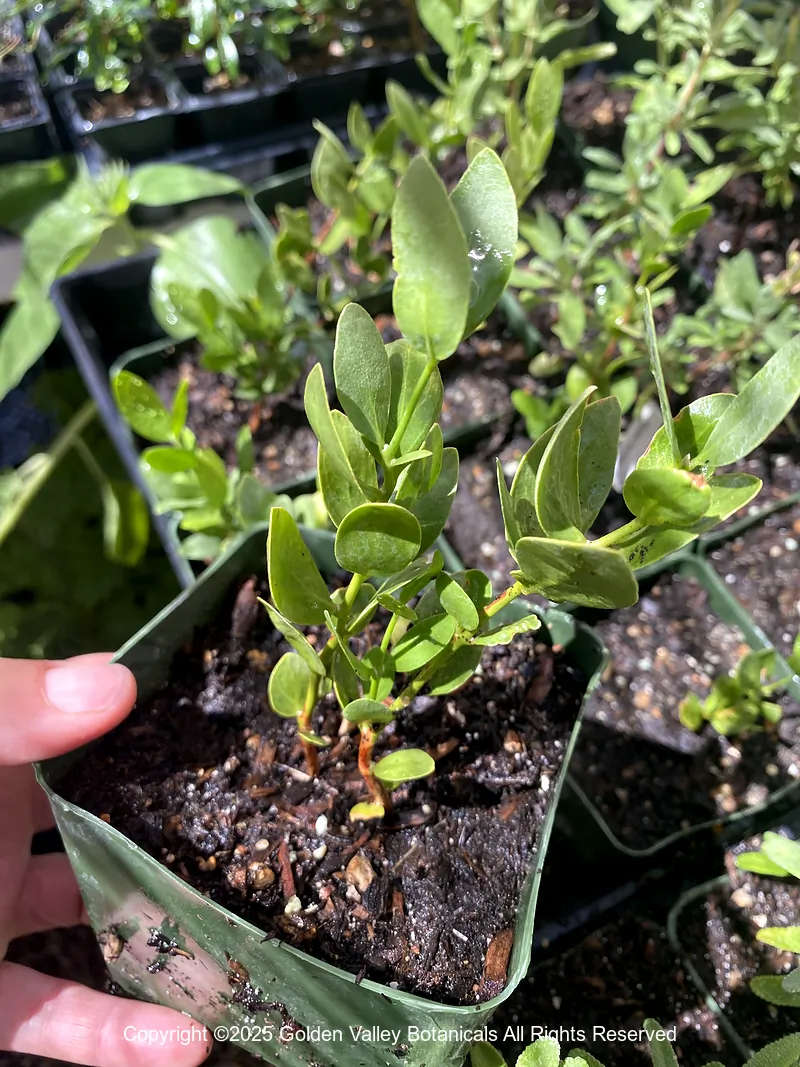
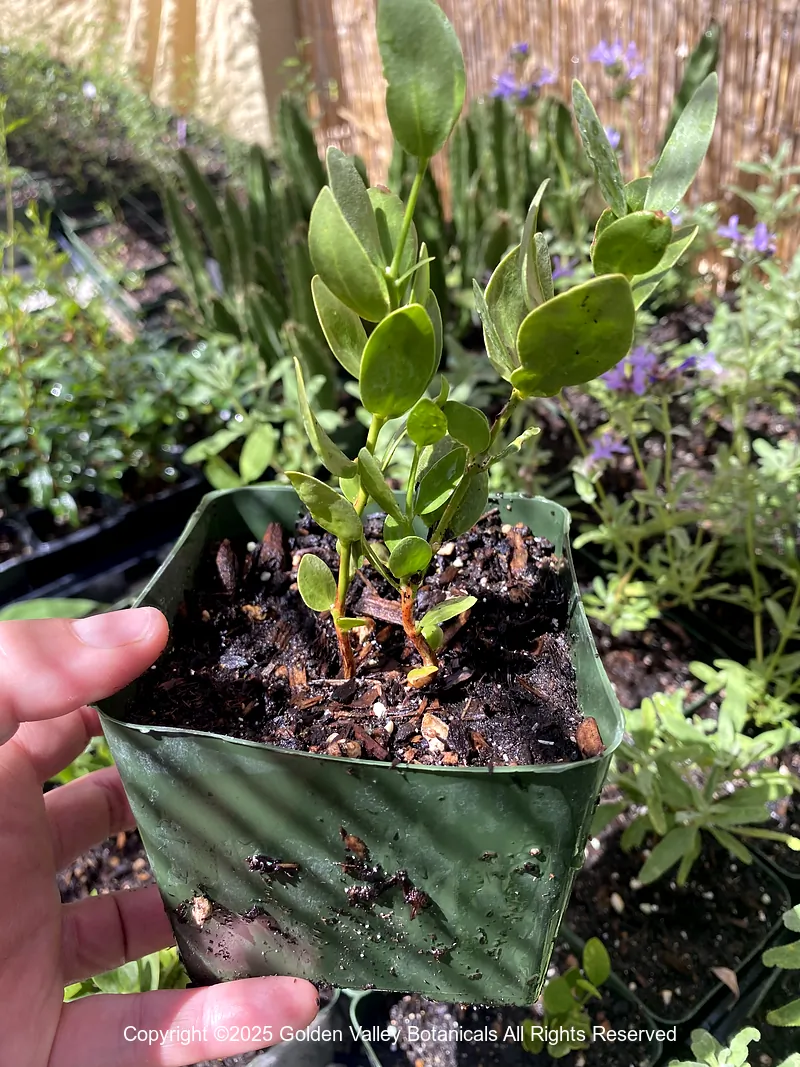
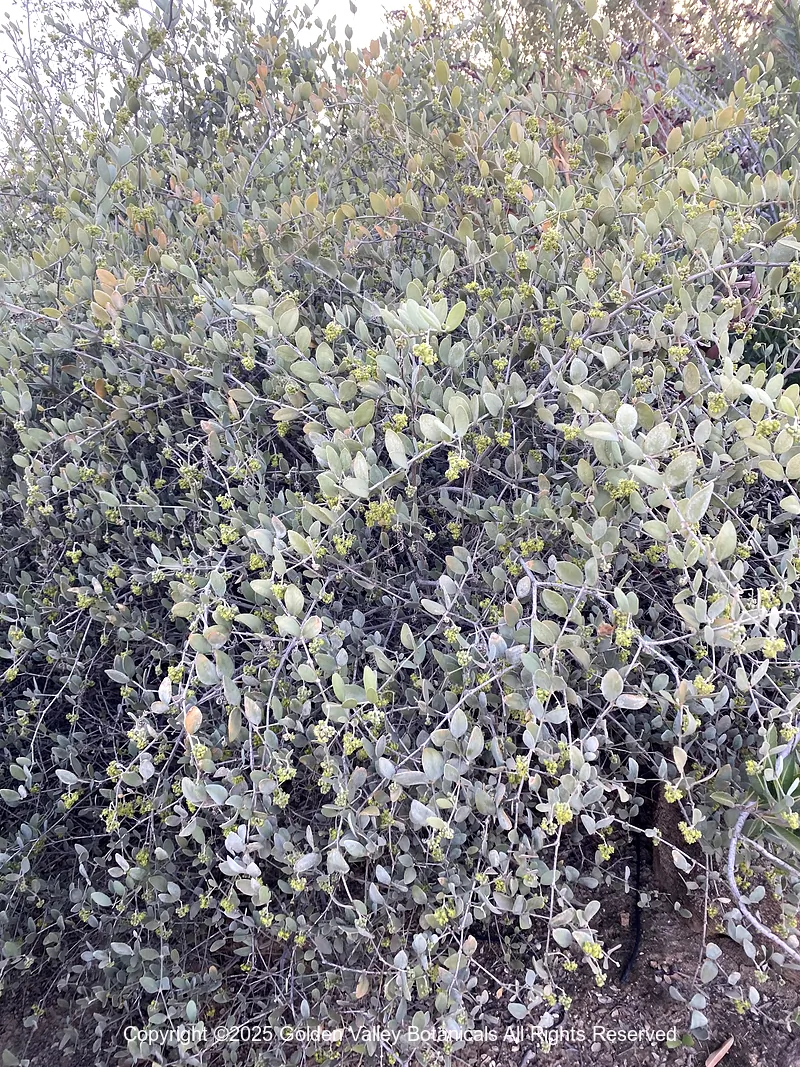
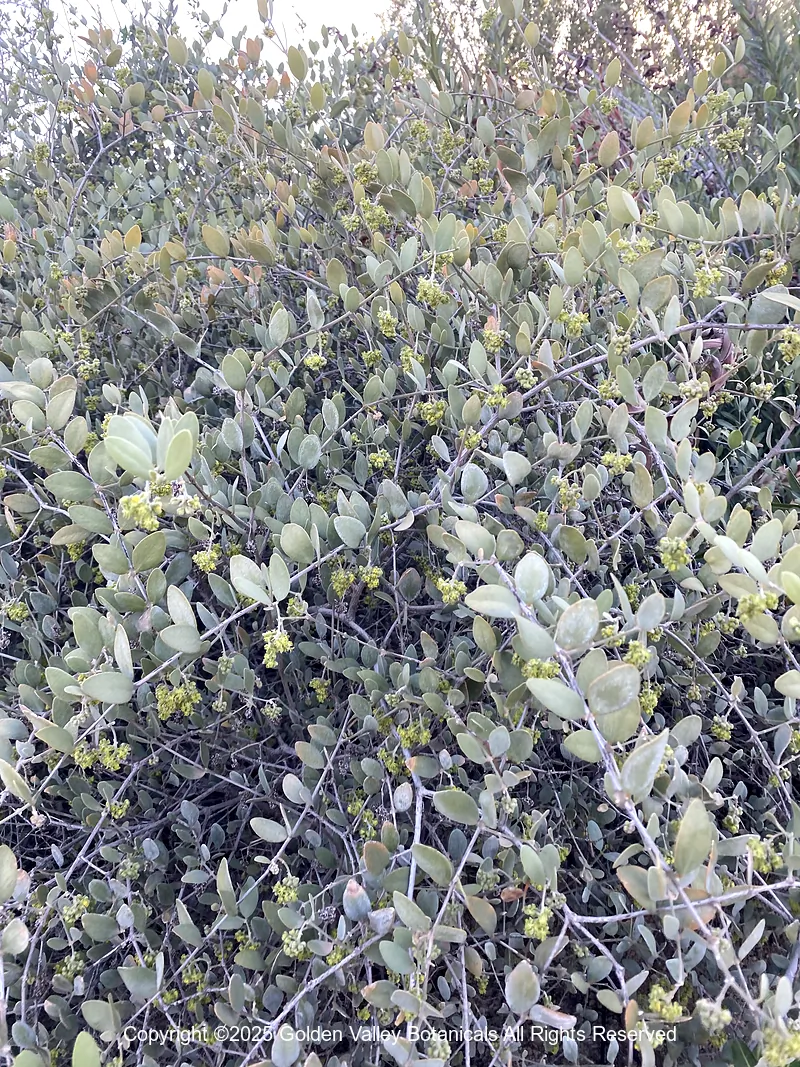
Simmondsia chinensis, better known as jojoba, is a rounded evergreen shrub that builds a dense mound of thick, leathery, gray-green leaves. The paired leaves stand at steep upward angles instead of lying flat – one of the ways this desert native reduces the amount of harsh sunlight striking each surface. It is a dioecious plant, meaning male and female flowers grow on separate individuals, so only female shrubs set the acorn-like fruit. The small greenish-yellow flowers are easy to overlook, and the plant earns its place through year-round foliage rather than showy bloom. Jojoba grows across the Sonoran Desert, where it is shaped by long dry spells and intense heat.
Plant Details
Quick Information
- Latin Name: Simmondsia chinensis
- Plant Family: Simmondsiaceae
- Common Names: Jojoba, Goat Nut, Deer Nut, Coffeeberry, Gray Box Bush
- Origin / Native Range: Sonoran Desert of southern Arizona, southern California, and northwestern Mexico (Baja California and Sonora), reaching into southwestern Utah
- Mature Height × Width: 3–6 ft × 4–8 ft (occasionally to about 10 ft)
- Exposure Requirements: Full Sun
- Irrigation Requirements: Very Low to Low
- USDA Hardiness Zones: 9–11
- Cold Hardiness: 15°F–20°F
- Bloom Time: Late Winter through Spring
- Bloom Color: Greenish-Yellow
General Information
Jojoba grows slowly to moderately into a broad, rounded shrub packed with stiff, upright branches. Left alone, it forms a dense wall of foliage that reaches the ground, which is why gardeners often grow it as a screen or clipped hedge. Because male and female plants are separate, the two look a little different in bloom. Male shrubs carry their small flowers in clusters that hang like tiny bunches of grapes and release pollen to the wind. Female shrubs bear their pale flowers singly where the leaves join the stem and, once pollinated, they ripen a hard, acorn-shaped seed in summer. A single plant can live well past 100 years, so an established jojoba becomes a long-term part of the landscape.
This shrub is built for dry, sun-baked ground. A deep, far-reaching root system lets it pull moisture from well below the surface, and its thick, waxy leaves lose very little water to the hot air. It performs best in full sun and grows open and leggy in too much shade, so an exposed spot suits it well. Jojoba handles rocky, sandy, and alkaline soils, tolerates some salt, and shrugs off reflected heat from walls and pavement, though it does need good drainage. One thing to plan for is browsing: the year-round foliage is important forage for mule deer, javelina, bighorn sheep, and jackrabbits, and its seeds feed rodents and birds. Where those animals are common, they may keep a young plant trimmed for you.
Jojoba is best known for what fills its seeds. Roughly half of each seed is a liquid wax ester: a wax rather than a true oil or fat, which is unusual among plants and is chemically closer to oil from the sperm whale than to common vegetable oils. This made jojoba a renewable stand-in for whale oil in cosmetics and skin care. The name comes from the O’odham word Hohowi, and the O’odham people of the Sonoran Desert grind the seeds into a paste used to soothe skin and burns. The raw seeds are not a snack, however. They contain a compound called simmondsin along with the indigestible wax, and eating them in quantity can upset the stomach, so the nuts are best left to the wildlife adapted to them.
General Planting & Cultivation Information
Even drought-tolerant plants require regular watering until they are well established, good drainage is essential. If planting in containers, avoid pots without drainage holes.
Irrigate by watering deeply and then allowing the top several inches of soil to dry between waterings. This encourages the plant to send roots deep into the earth in search of moisture, helping it to become established, prevent root rot, build drought tolerance, and resilience to wind, heat, and cold.
The length of time between waterings will vary depending on your growing conditions and environment. Use a moisture meter for precise irrigation.
When planting, set the plant at the same depth as it was in its current container. For trees, ensure the top of the root flare is at soil level.
Young plants are vulnerable to harsh conditions, so consider growing them in larger containers until mature.
When planting in the ground, research the optimal planting season for your climate zone and protect young plants from frost.
To support establishment, consider creating a microclimate with nurse plants, shade, or wind protection. This can reduce stress, conserve soil moisture, and increase long-term success.
Protect the small, immature plants from rabbits and deer.
Check out our FAQ page for more tips on desert gardening.