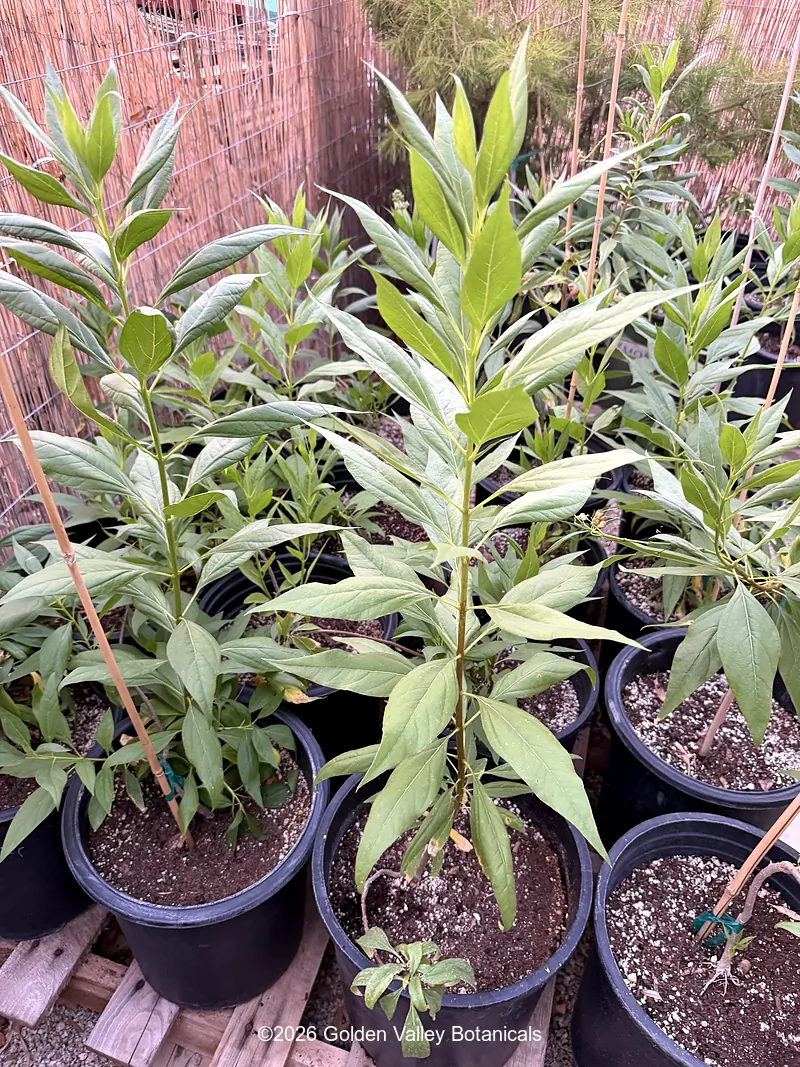
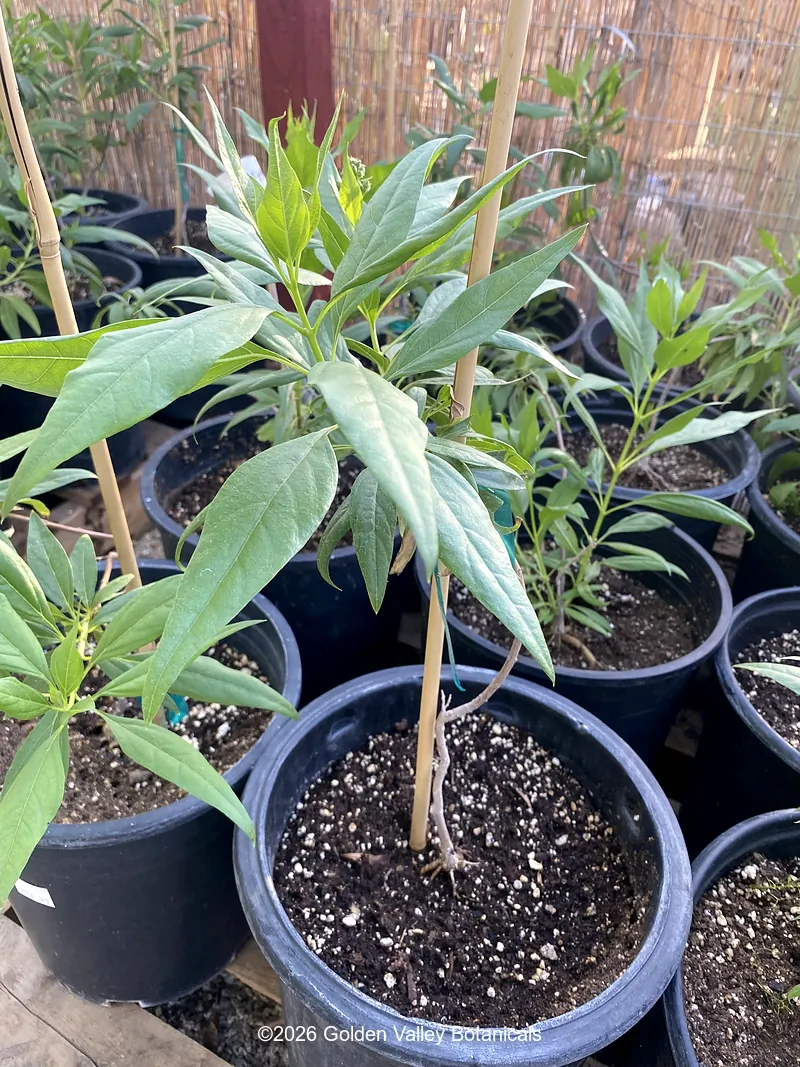
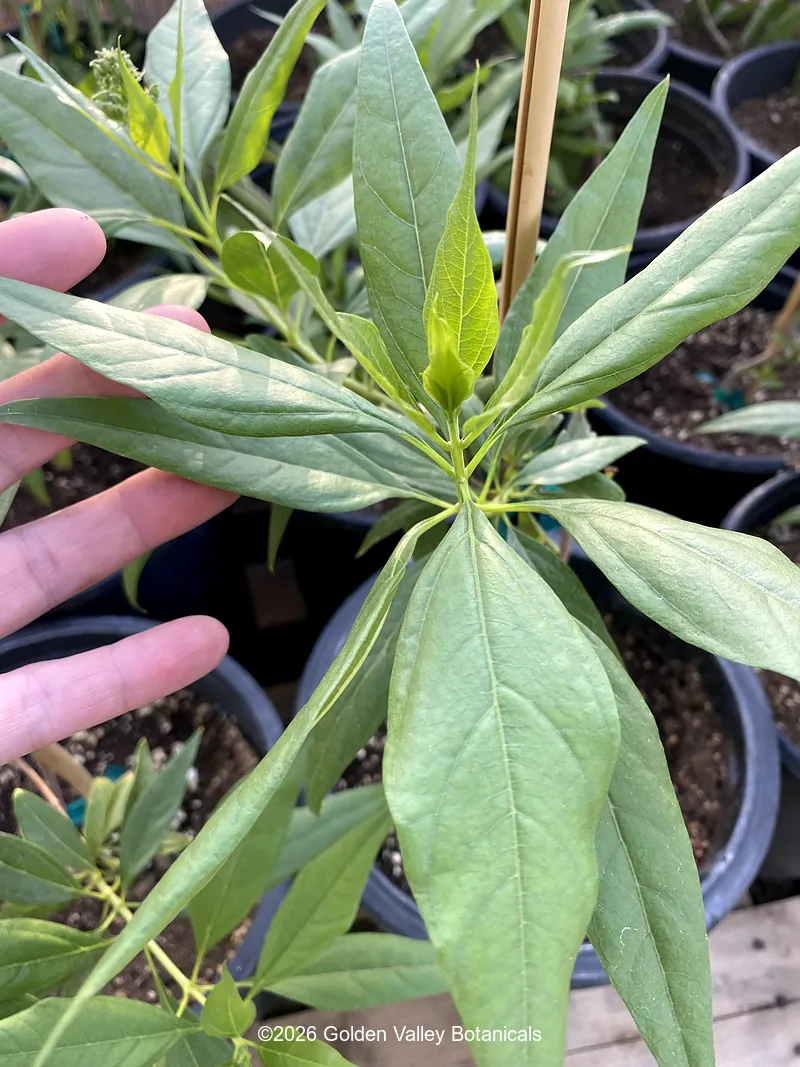
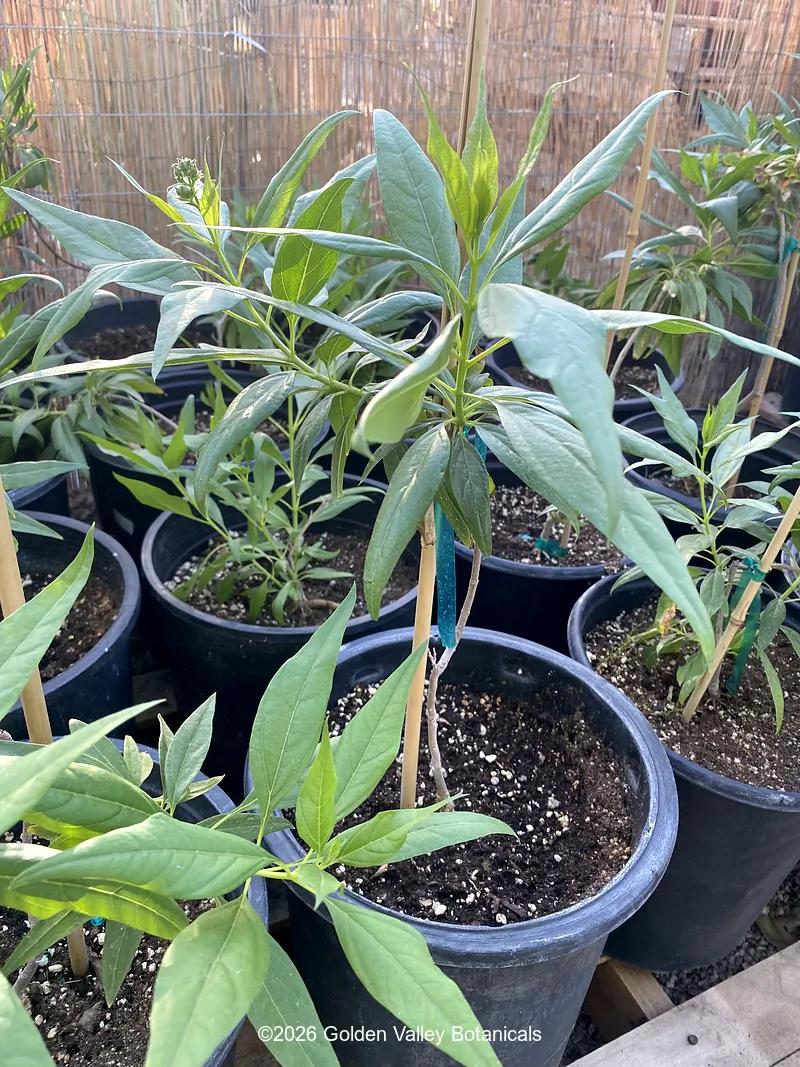
Chitalpa
Latin Name: x Chitalpa tashkentensis
Price range: $16.95 through $28.95
- Pot Size: 4 Inch, 1 Gallon, 5 Gallon (Local Pickup Only)
- Hardiness Zone: Zone 6, Zone 7, Zone 8, Zone 9
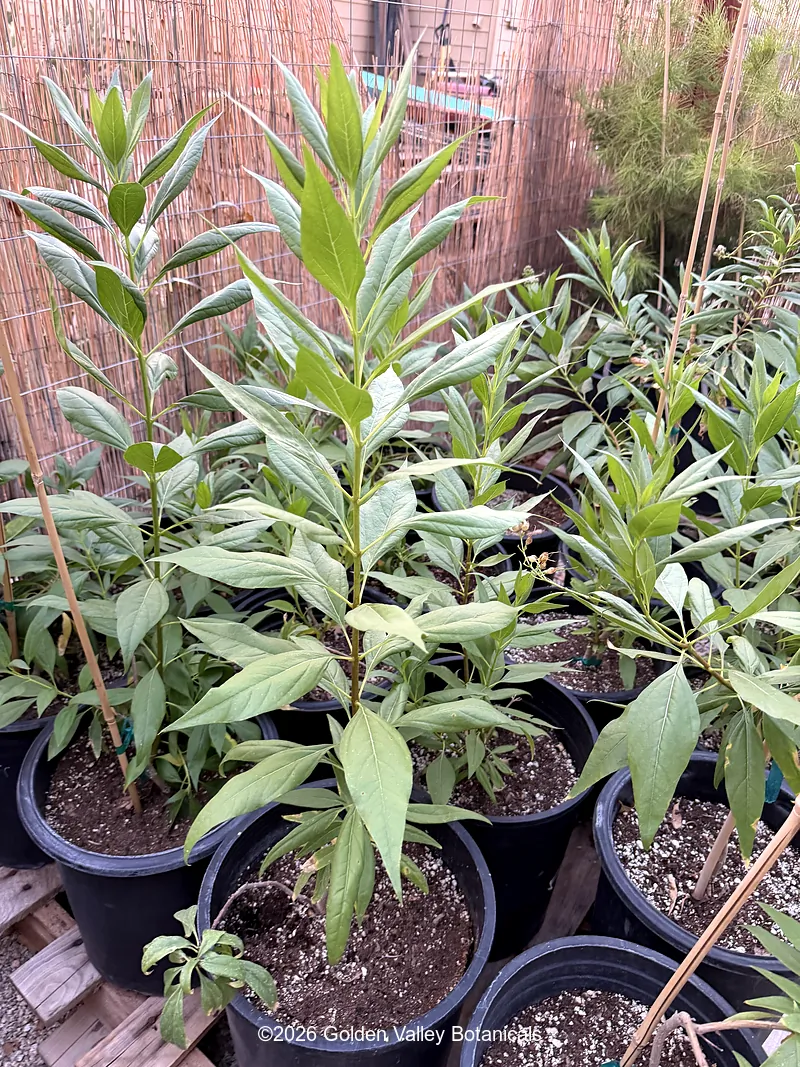
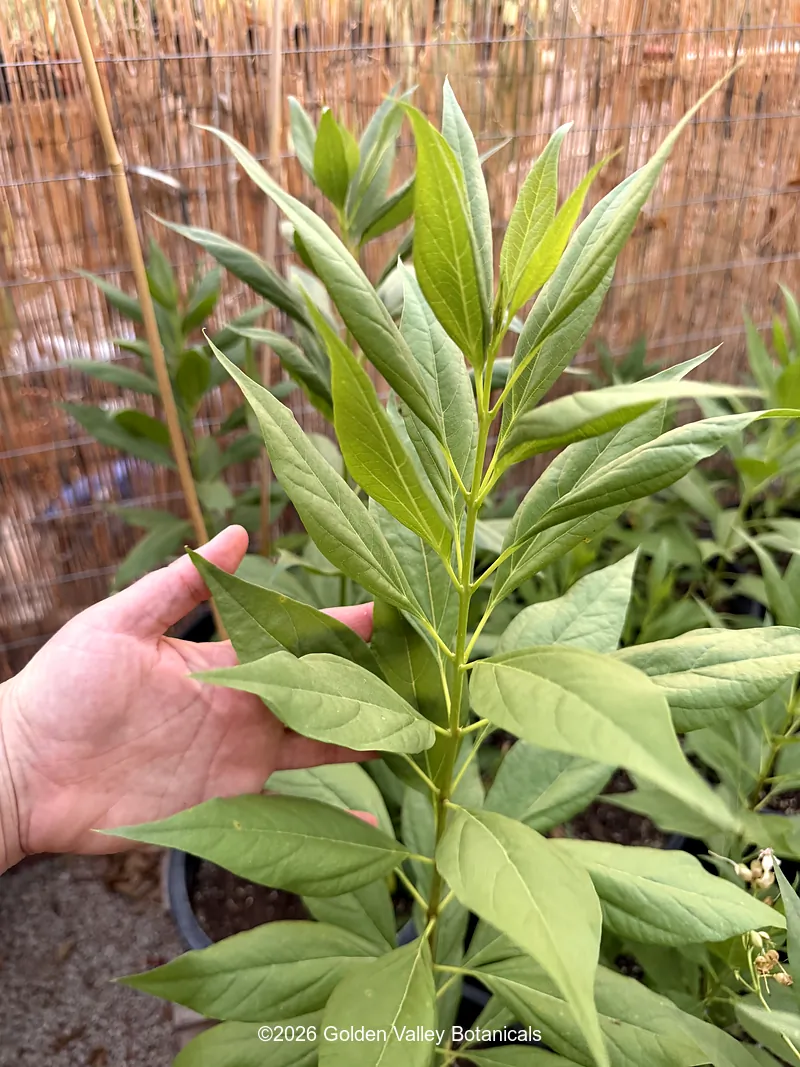
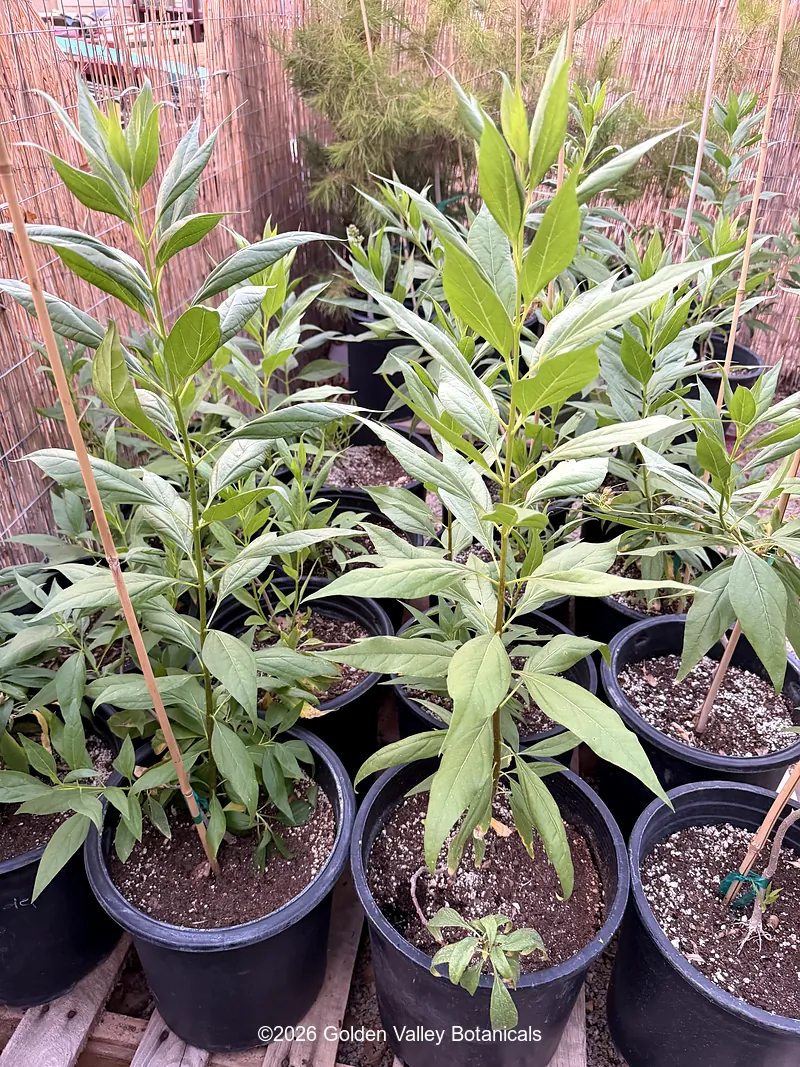
× Chitalpa tashkentensis, or chitalpa for short, is a small deciduous tree with a mixed family background. Its narrow, lance-shaped leaves taper at both ends and let soft light filter through the crown. Through the warm months, loose clusters of trumpet-shaped flowers open at the branch tips, shaded pink to nearly white. Young trees often grow with several trunks and an open shape, then fill in and spread as they age. Chitalpa is an intergeneric hybrid, so its two parents come from different plant groups. That cross gave it the larger blooms of catalpa and the slim, drought-hardy leaves of desert willow.
Plant Details
Quick Information
- Latin Name: × Chitalpa tashkentensis
- Plant Family: Bignoniaceae
- Common Names: Chitalpa
- Origin / Native Range: Garden hybrid; does not occur in the wild. Created at the Tashkent Botanical Garden, Uzbekistan. Parent species are native to the southwestern and southeastern United States
- Mature Height × Width: 20–30 ft × 20–25 ft
- Exposure Requirements: Full Sun
- Irrigation Requirements: Low to Moderate
- USDA Hardiness Zones: 6–9
- Cold Hardiness: –10°F to 0°F
- Bloom Time: Early Summer through Early Fall
- Bloom Color: Pink to White
General Information
A young chitalpa starts out with an open, uneven shape and several stems. As it ages, it fills in and forms a rounded, spreading crown. Its leaves show its mixed parentage. They are longer and thinner than a catalpa’s broad, heart-shaped leaves, yet fuller than the very narrow leaves of a desert willow. Each leaf is dull green on top and softly hairy beneath. From early summer into fall, short upright flower clusters appear at the branch tips, each bloom shaped like a trumpet and shaded pink to near-white. The tree is sterile, so it never forms the long seed pods that hang from a true catalpa, which keeps the ground beneath it cleaner. In winter, the leaves drop, and the pale gray bark and open branches give the tree a light, airy frame.
Chitalpa is a plant of two worlds, and its parents explain how it grows. One parent, desert willow, comes from the dry washes of the Southwest and nearby Mexico. It gives chitalpa its heat tolerance and its knack for handling dry spells once settled in. The other parent, southern catalpa, comes from the wetter Southeast, and it adds larger flowers and better cold hardiness. The result is a tree that blooms best in full sun and fast-draining soil, and that struggles where the ground stays wet or shady. In those damp or shaded spots, it often gets powdery mildew, a whitish fungus that coats the leaves. In hot, windy desert gardens, the young bark can scald or dry out. The thin canopy casts only light shade, so it is easy to plant beneath, and its tube-shaped flowers draw nectar-feeding bees and other insects. Many trees also send up suckers, or new shoots, from the base, which gardeners often trim to keep one clean trunk.
The name records the tree’s beginnings. Chitalpa joins Chilopsis and Catalpa, the two genera that were crossed to make it, while the species name tashkentensis points to Tashkent, Uzbekistan. That is where the hybrid was first raised, at a botanical garden in the 1960s. It reached the United States in 1977 and was formally named in 1991. Most trees sold today are one of two selections: ‘Pink Dawn’, with deeper pink flowers, and ‘Morning Cloud’, with paler, near-white blooms. Because the cross is so recent, botanists have even rechecked which catalpa species stands behind some of these trees. Even so, chitalpa stands out as an unusual small flowering tree, valued for pairing a long summer bloom with real tolerance for dry, sunny sites.
General Planting & Cultivation Information
Even drought-tolerant plants require regular watering until they are well established, good drainage is essential. If planting in containers, avoid pots without drainage holes.
Irrigate by watering deeply and then allowing the top several inches of soil to dry between waterings. This encourages the plant to send roots deep into the earth in search of moisture, helping it to become established, prevent root rot, build drought tolerance, and resilience to wind, heat, and cold.
The length of time between waterings will vary depending on your growing conditions and environment. Use a moisture meter for precise irrigation.
When planting, set the plant at the same depth as it was in its current container. For trees, ensure the top of the root flare is at soil level.
Young plants are vulnerable to harsh conditions, so consider growing them in larger containers until mature.
When planting in the ground, research the optimal planting season for your climate zone and protect young plants from frost.
To support establishment, consider creating a microclimate with nurse plants, shade, or wind protection. This can reduce stress, conserve soil moisture, and increase long-term success.
Protect the small, immature plants from rabbits and deer.
Check out our FAQ page for more tips on desert gardening.