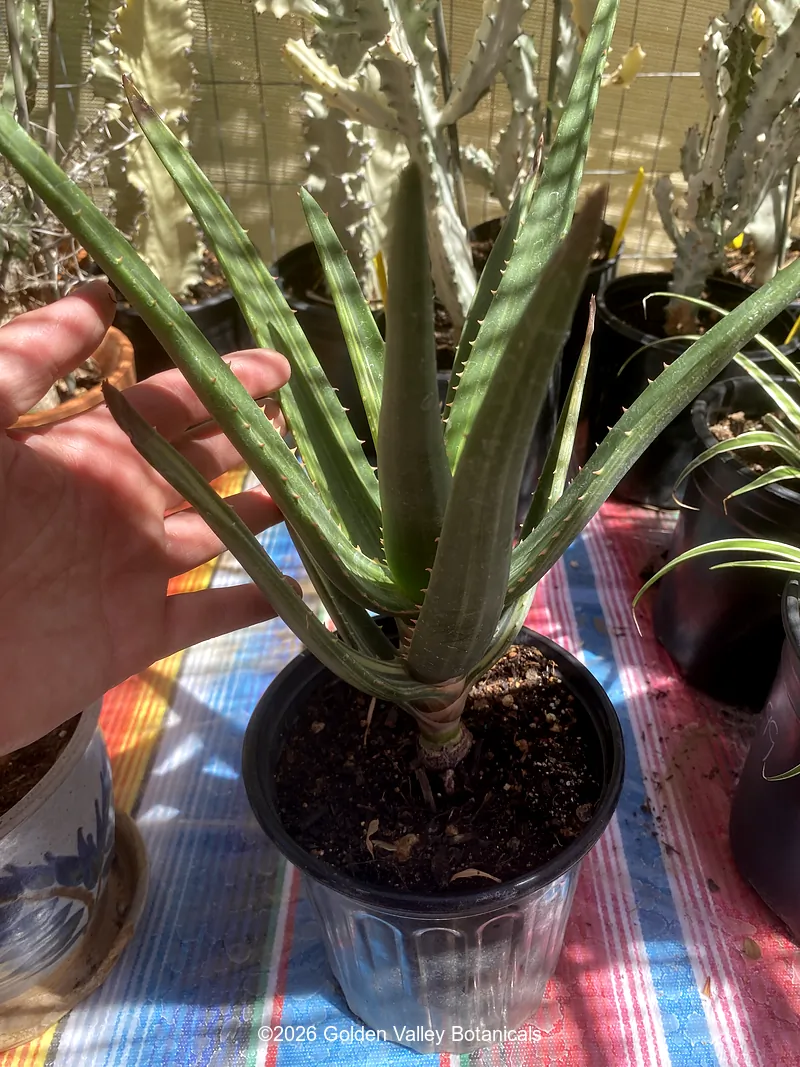
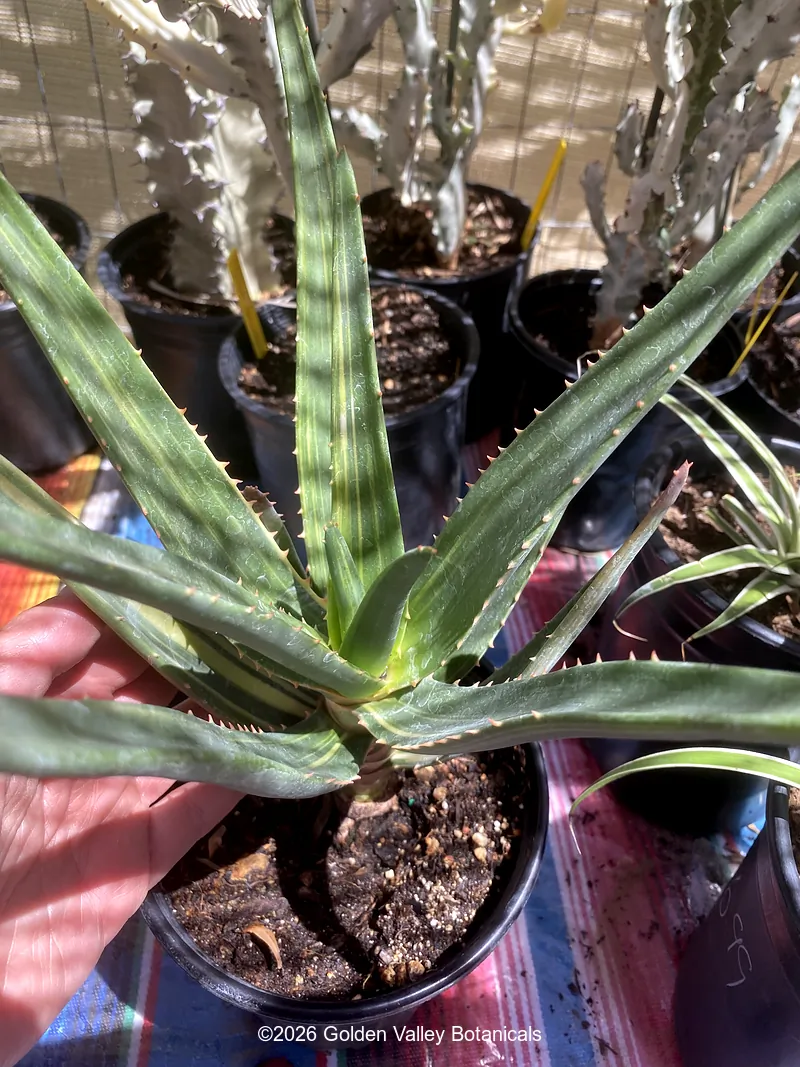
Variegated Hercules Aloe Tree
Latin Name: Aloidendron ‘Hercules’ f. variegata
Product Category: Succulent
$105.95
- Pot Size: 1 Gallon
- Hardiness Zone: Zone 9, Zone 10, Zone 11
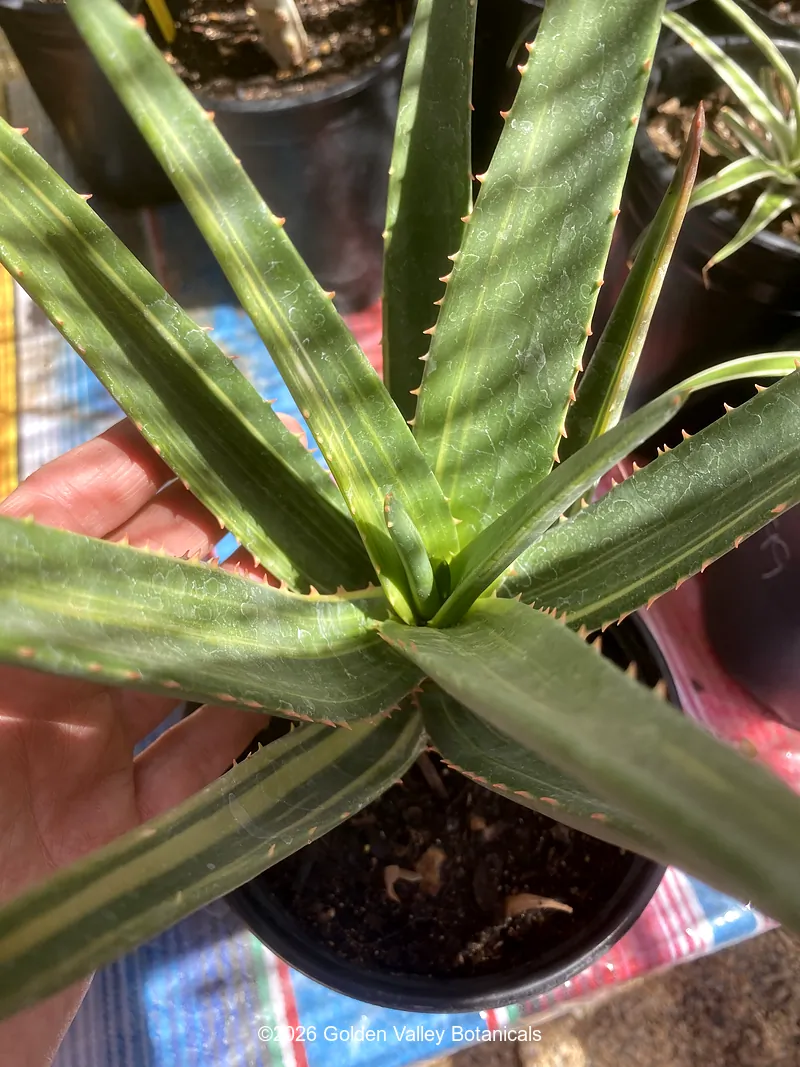
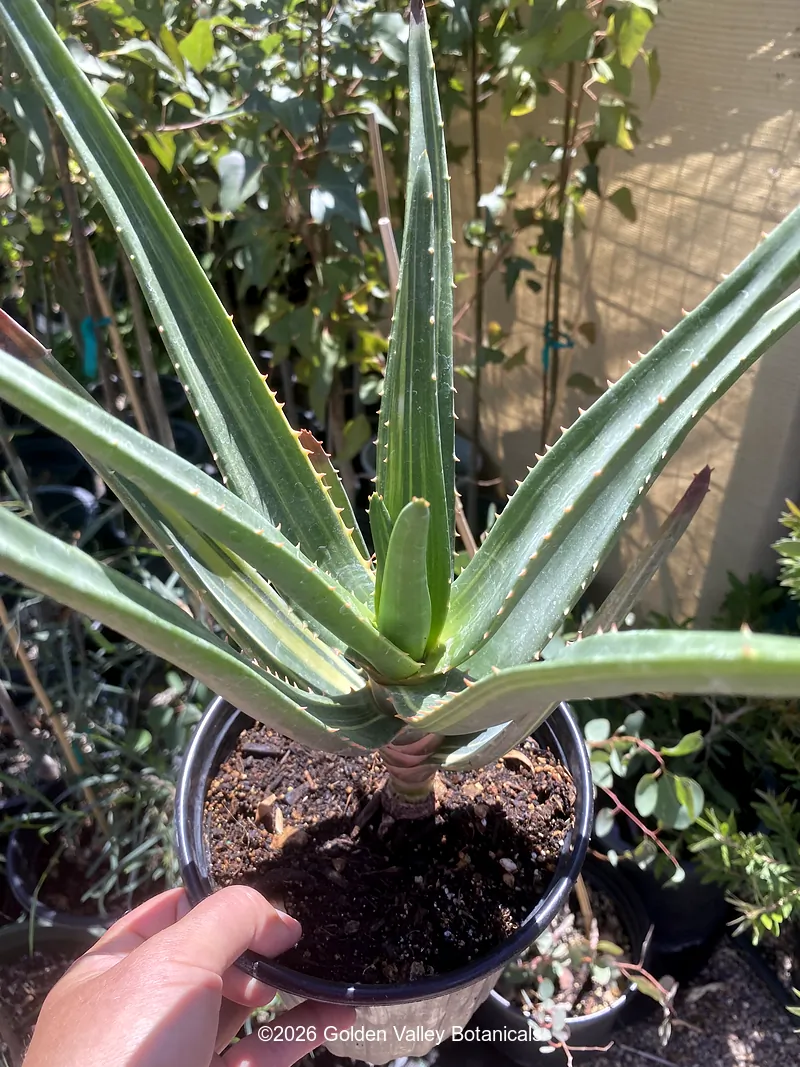
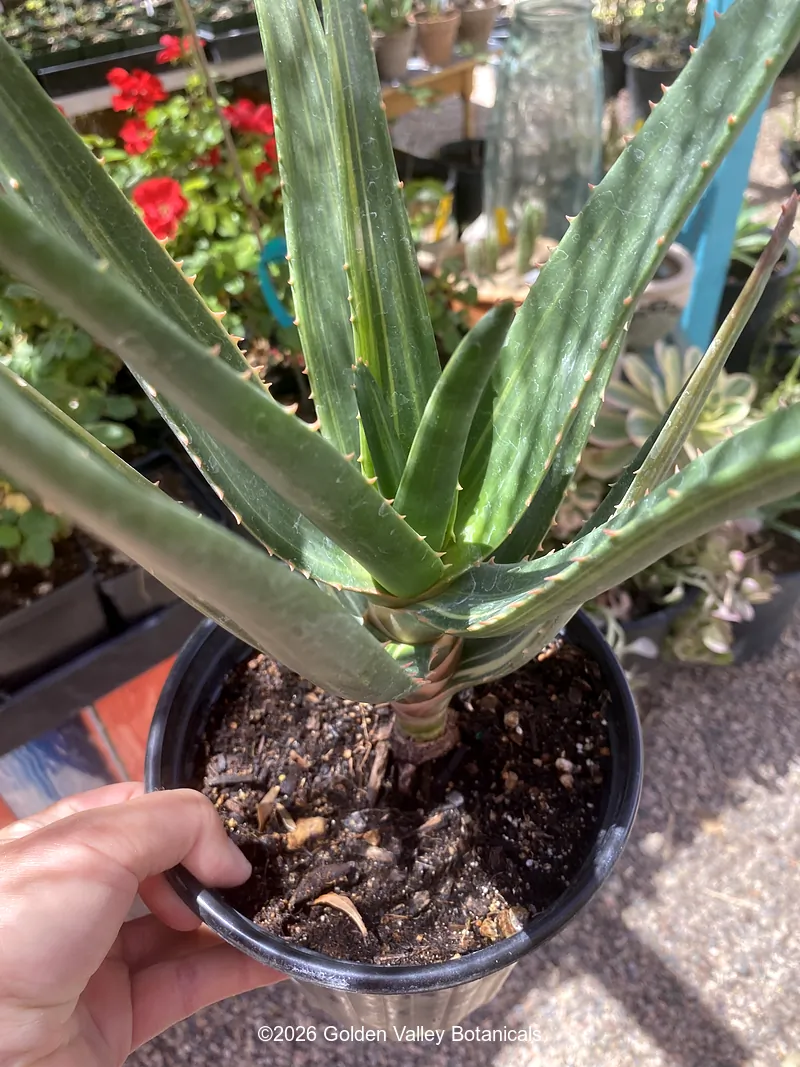
Aloidendron ‘Hercules’ is a hybrid tree aloe, and this is its uncommon variegated form. Each thick, sword-shaped leaf is painted with lengthwise stripes of soft yellow that break up the usual blue-green. The effect gives the rosette a pale, marbled look you can spot from across a garden. Those stripes are tissue with almost no green pigment, so the plant trades some vigor and size for its color. With age, the lowest leaves fall away and lift the crown on a smooth, thickening trunk. It rewards patience, grown for slow color and form rather than fast height.
In stock
Plant Details
Quick Information
- Latin Name: Aloidendron ‘Hercules’ f. variegata
- Plant Family: Asphodelaceae
- Common Names: Variegated Hercules Tree Aloe, Variegated Tree Aloe
- Origin / Native Range: Garden hybrid; parent species native to South Africa (A. barberae, Eastern Cape to Mozambique; A. dichotomum, Northern Cape and Namibia)
- Mature Height × Width: 10–15 ft × 6–10 ft
- Exposure Requirements: Full Sun to Light Afternoon Shade
- Irrigation Requirements: Low
- USDA Hardiness Zones: 9b–11
- Cold Hardiness: 20°F–25°F (when dry)
- Bloom Time: Spring through Fall, intermittent on mature plants
- Bloom Color: Salmon-Pink with Green Tips
General Information
The name ‘Hercules’ belongs to a cross between two of Africa’s largest aloes. One is Aloidendron barberae; the other is Aloidendron dichotomum, the quiver tree. From the first parent it inherits a fast, upright trunk and true tree size. From the second it takes a habit of forking, where a growing tip divides into two. Young plants stay a single dense rosette. Only older, well-grown specimens begin to branch into the arm-like crown of an old tree aloe. This variegated form follows the same path on a slower clock, and its striping is never fixed. The pattern comes from a chance change in the growing tissue, so the amount of yellow shifts from leaf to leaf.
Both parent species come from dry corners of southern Africa, where rain is seasonal and scarce. Their thick leaves and swollen trunks work as water tanks. Once the plant settles in, those reserves carry it through long droughts. That same design has a limit: watered too freely, the rosette grows heavier than the trunk can hold, and the plant may lean or topple. Lean soil and sharp drainage serve it far better than rich, wet ground. The variegated form asks for a little more shelter than the green plant. With less green pigment to fuel growth and protect its tissue, it sunburns more easily in strong reflected heat. It is also slower to recover from frost, so many growers keep it in a pot they can move on cold nights. On mature plants, salmon-pink flowers tipped in green rise above the leaves from spring into fall and draw nectar-feeding birds. In the wild, the parent species are pollinated by sunbirds.
Many gardeners still know this plant as an Aloe, since for a long time every aloe carried that name. In 2014, botanists divided the group and moved the tree aloes into a new genus, Aloidendron, meaning aloe-tree. The trick behind their drought tolerance is worth knowing too. Like many desert succulents, these aloes open the pores in their leaves at night rather than in the day’s heat. That timing lets them take in the gases they need for growth while losing far less water. The variegated form carries all of this with a little less vigor. It earns its place through leaf color rather than speed. Handle it with some care, since the leaf edges are lined with small, firm teeth.
General Planting & Cultivation Information
Even drought-tolerant plants require regular watering until they are well established, good drainage is essential. If planting in containers, avoid pots without drainage holes.
Irrigate by watering deeply and then allowing the top several inches of soil to dry between waterings. This encourages the plant to send roots deep into the earth in search of moisture, helping it to become established, prevent root rot, build drought tolerance, and resilience to wind, heat, and cold.
The length of time between waterings will vary depending on your growing conditions and environment. Use a moisture meter for precise irrigation.
When planting, set the plant at the same depth as it was in its current container. For trees, ensure the top of the root flare is at soil level.
Young plants are vulnerable to harsh conditions, so consider growing them in larger containers until mature.
When planting in the ground, research the optimal planting season for your climate zone and protect young plants from frost.
To support establishment, consider creating a microclimate with nurse plants, shade, or wind protection. This can reduce stress, conserve soil moisture, and increase long-term success.
Protect the small, immature plants from rabbits and deer.
Check out our FAQ page for more tips on desert gardening.