Parry’s Penstemon
Latin Name: Penstemon parryi
$16.95
- Pot Size: 4 Inch
- Hardiness Zone: Zone 8, Zone 9, Zone 10
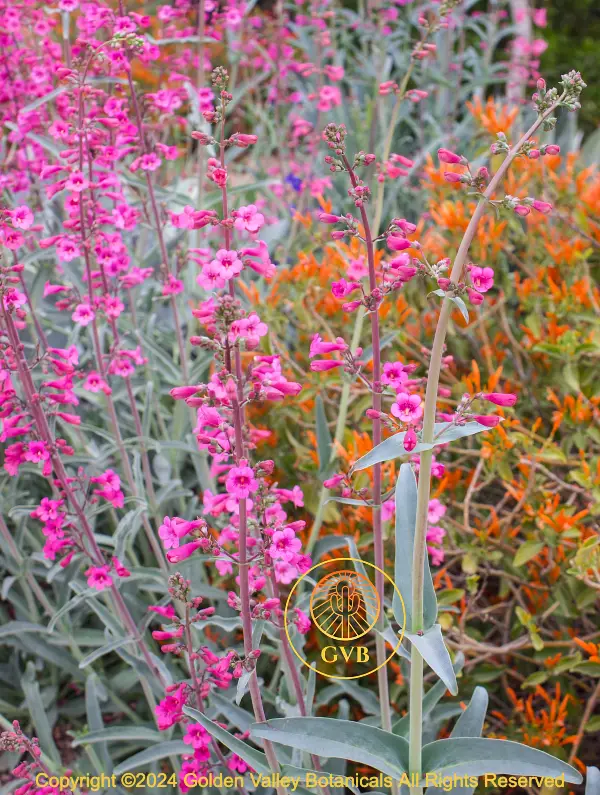
Penstemon parryi spends much of the year as a low, tidy rosette of narrow blue-gray leaves near the ground. In late winter, its character shifts, and slender stalks rise two to three feet tall. Each stalk is lined with hot pink, tubular flowers built for hummingbirds. As the birds sip nectar from deep inside, they carry pollen from bloom to bloom. The blue-gray leaf color comes from a thin waxy coating that helps the rosette handle strong desert sun. Native to the Sonoran Desert, it often reseeds into loose colonies across washes and rocky slopes.
In stock
Plant Details
Quick Information
- Latin Name: Penstemon parryi
- Plant Family: Plantaginaceae
- Common Names: Parry’s Penstemon, Parry’s Beardtongue, Desert Penstemon
- Origin / Native Range: Southern and central Arizona south into Sonora, Mexico
- Mature Height × Width: 2–3 ft × 1–2 ft (in bloom)
- Exposure Requirements: Full Sun
- Irrigation Requirements: Low
- USDA Hardiness Zones: 8–10
- Cold Hardiness: 10°F–15°F
- Bloom Time: Late Winter to Mid-Spring
- Bloom Color: Pink to Rose-Magenta
General Information
For much of its first year, Parry’s penstemon builds only a rosette of smooth, blue-gray leaves that lie close to the soil. Each leaf is lance-shaped and can reach four to five inches long, clasping the base of the plant. Growth happens mostly during the cool months, when the desert is wet and mild. In its second year, the plant bolts, meaning it stretches upward and produces its tall flowering stalks. Look closely at a single flower and you can see how the plant earned the name beardtongue. Tucked inside each bloom is a slender, sterile stamen tipped with fine yellow hairs, called a staminode. A true stamen carries pollen, but this fifth one is barely more than a fuzzy thread, and it gives the flower its whiskered look.
In the wild, Parry’s penstemon grows along desert washes, outwash slopes, and rocky hillsides from about 1,500 to 5,000 feet. This is a plant tuned to the desert’s cool season. It does most of its growing when winter rains arrive, then flowers just as spring hummingbirds move through. Fast drainage matters more than rich soil. Sandy or gravelly ground suits it well, while heavy, wet soil often leads to root rot, a decay of the roots in airless, soggy conditions. It flowers best in full sun. In too much shade, it makes fewer blooms and becomes more prone to powdery mildew, a gray fungal film on the leaves. Once established, it needs little water, though extra water during the cool season can improve the next round of flowers.
Parry’s penstemon is short-lived, and individual plants may last only a few years. It makes up for this by reseeding freely. If spent stalks are left to ripen, seed scatters and new rosettes fill in, so a planting tends to persist and spread on its own rather than fade away. The plant carries two names worth knowing. The species name honors Charles Christopher Parry, a nineteenth-century botanist who collected across the American West. The genus name Penstemon is often said to mean five stamens, but it more likely comes from words meaning nearly a thread, a nod to that slender fifth staminode inside each flower.
General Planting & Cultivation Information
Even drought-tolerant plants require regular watering until they are well established, good drainage is essential. If planting in containers, avoid pots without drainage holes.
Irrigate by watering deeply and then allowing the top several inches of soil to dry between waterings. This encourages the plant to send roots deep into the earth in search of moisture, helping it to become established, prevent root rot, build drought tolerance, and resilience to wind, heat, and cold.
The length of time between waterings will vary depending on your growing conditions and environment. Use a moisture meter for precise irrigation.
When planting, set the plant at the same depth as it was in its current container. For trees, ensure the top of the root flare is at soil level.
Young plants are vulnerable to harsh conditions, so consider growing them in larger containers until mature.
When planting in the ground, research the optimal planting season for your climate zone and protect young plants from frost.
To support establishment, consider creating a microclimate with nurse plants, shade, or wind protection. This can reduce stress, conserve soil moisture, and increase long-term success.
Protect the small, immature plants from rabbits and deer.
Check out our FAQ page for more tips on desert gardening.