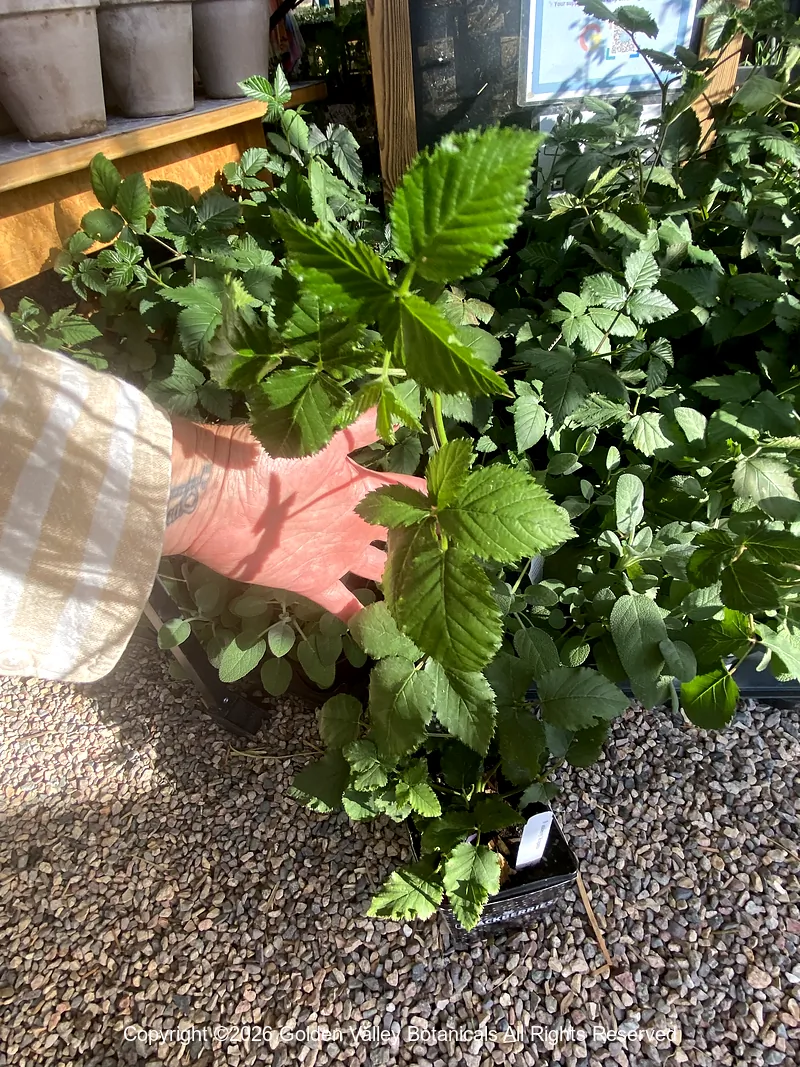
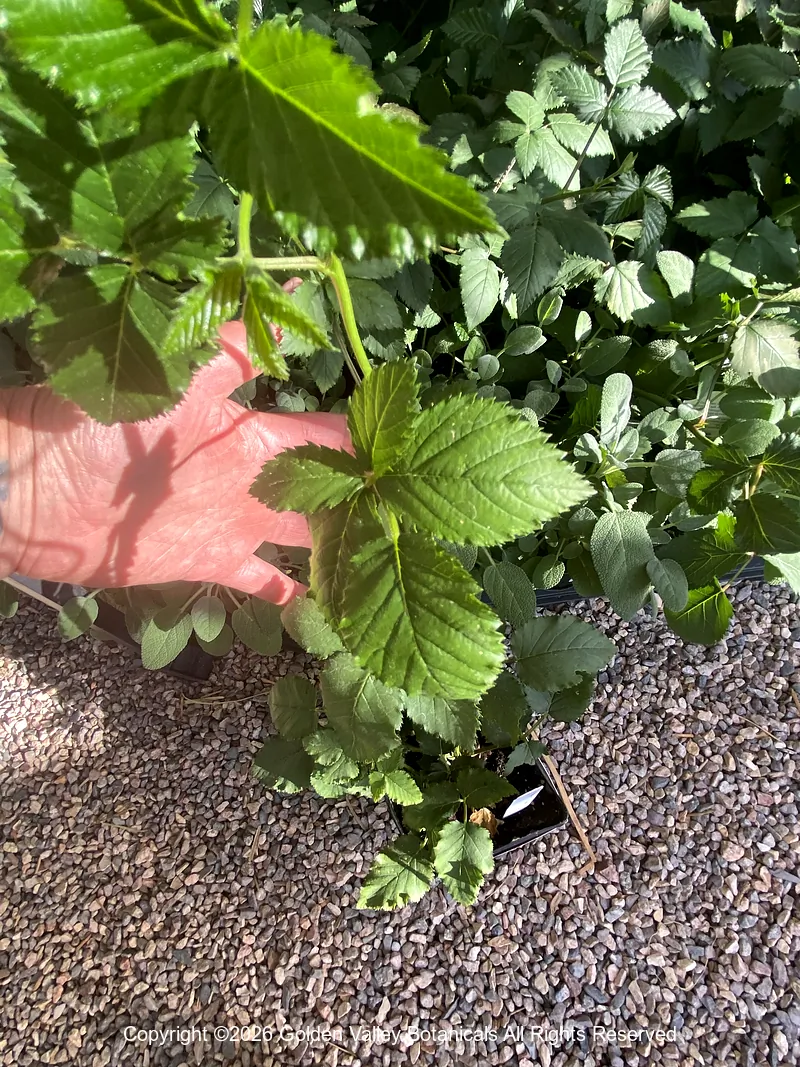
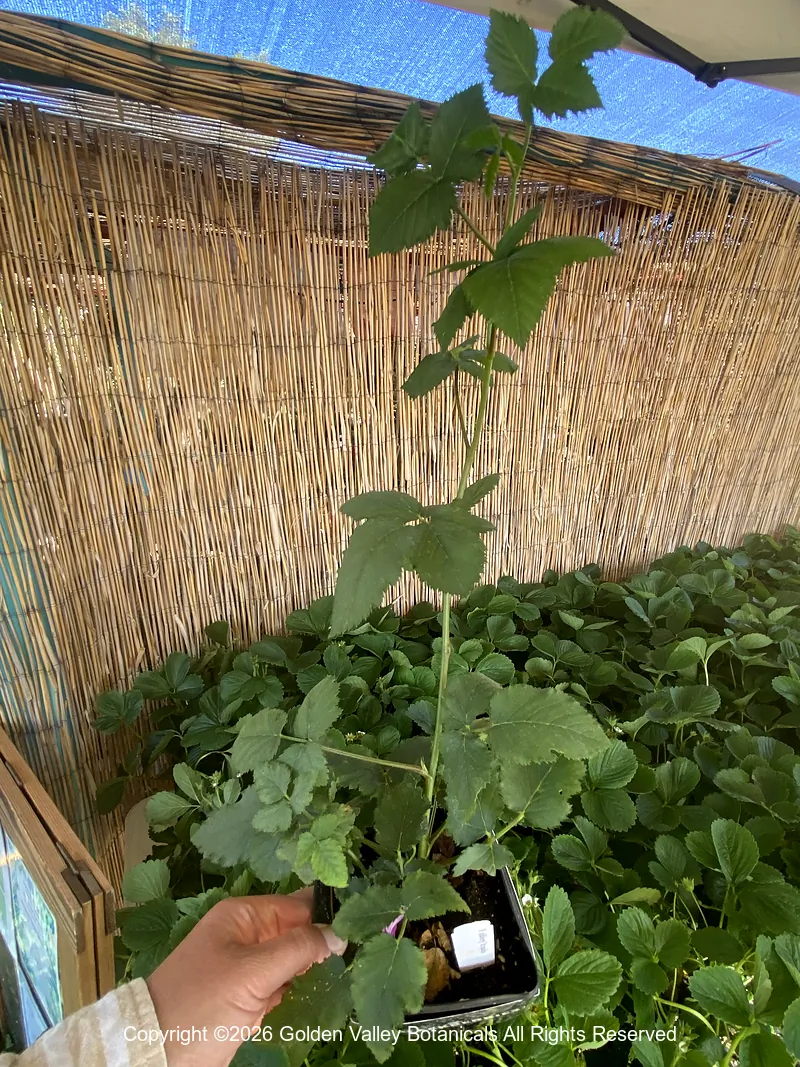
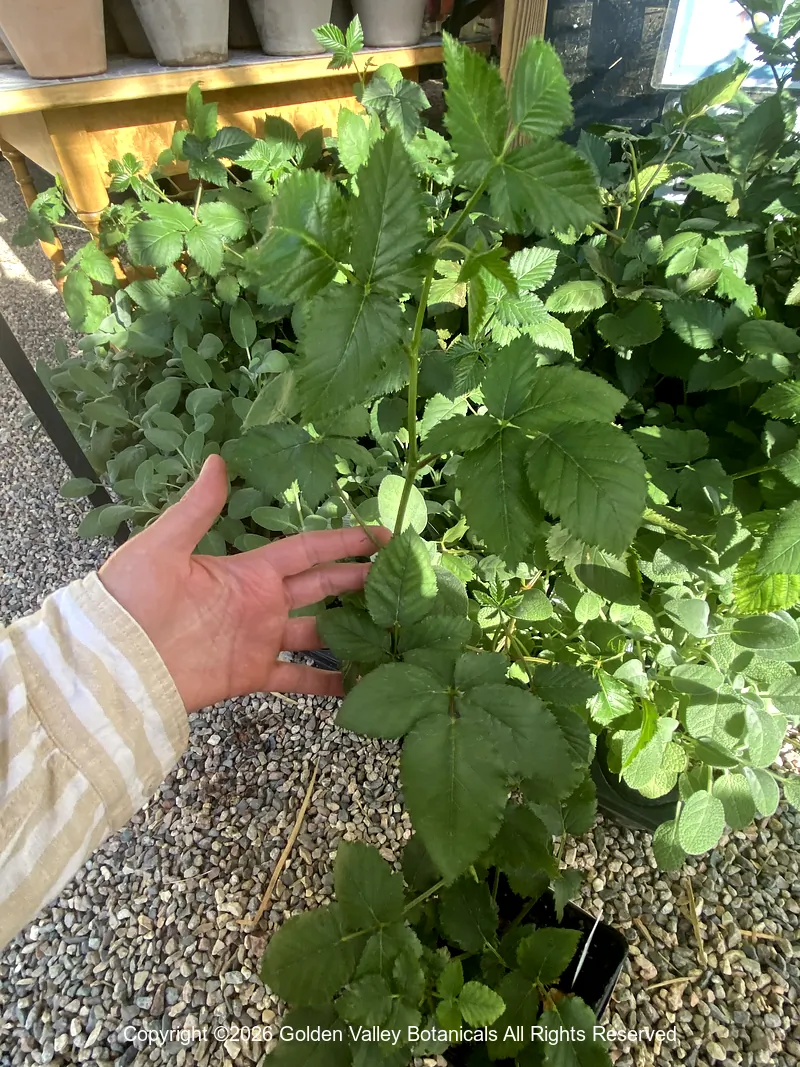
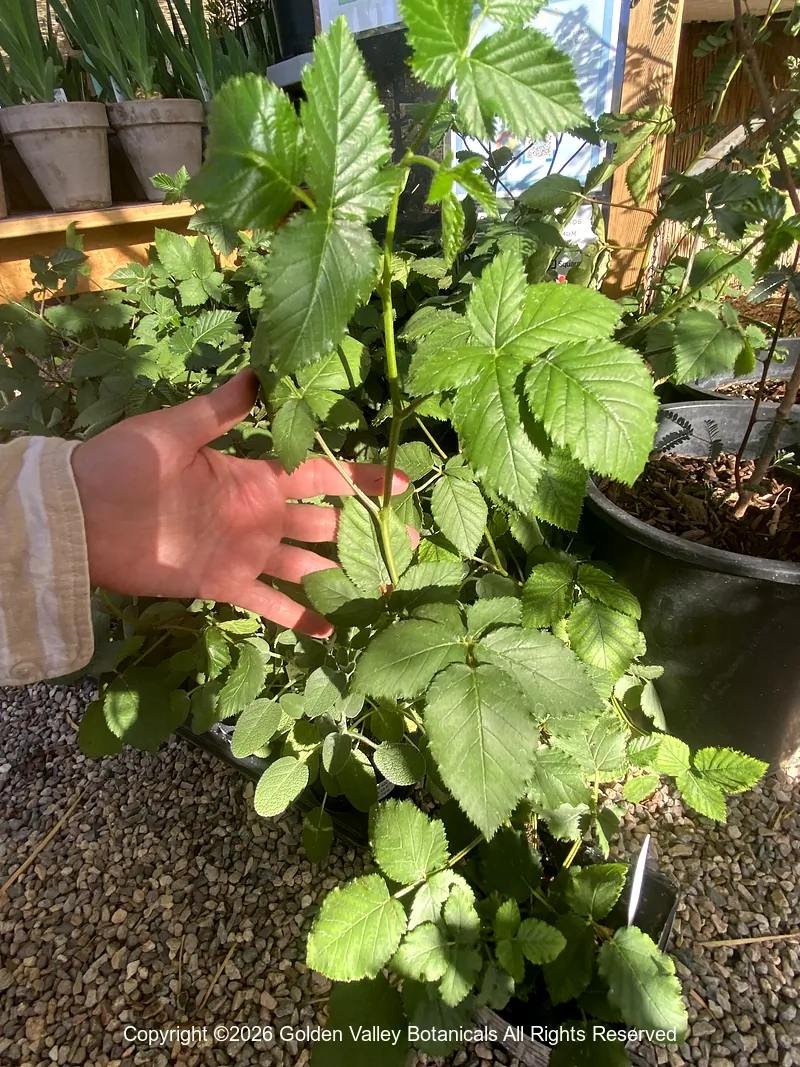
Arapaho Thornless Blackberry
Latin Name: Rubus fruticosus ‘Arapaho’
Price range: $21.95 through $28.95
- Pot Size: 4 Inch, 3 Gallon (Local Pickup Only)
- Hardiness Zone: Zone 5, Zone 6, Zone 7, Zone 8, Zone 9
Picking blackberries usually means reaching past thorns, but ‘Arapaho’ lets you skip that. Its canes are completely smooth, so you can gather the fruit by the handful without a scratch. It is also one of the earliest thornless blackberries to ripen, bringing sweet, glossy black berries in the first weeks of summer. The berries are firm and full-flavored, with seeds small enough that they rarely get in the way. Each plant stands on its own upright canes, with no trellis needed, and slowly fills in to a low, fruit-laden row. In spring, clusters of white to pale-pink flowers hint at the harvest to come.
Plant Details
Quick Information
- Latin Name: Rubus fruticosus ‘Arapaho’
- Plant Family: Rosaceae
- Common Names: Arapaho blackberry, Arapaho thornless blackberry, erect thornless blackberry
- Origin / Native Range: Cultivar developed by the University of Arkansas, Clarksville, Arkansas, USA (released 1993); parent species native to central and eastern North America
- Mature Height × Width: 4–6 ft × 3–4 ft
- Exposure Requirements: Full Sun
- Irrigation Requirements: Moderate
- USDA Hardiness Zones: 5–9
- Cold Hardiness: –20°F to –10°F
- Bloom Time: Mid to Late Spring
- Bloom Color: White to Pale Pink
General Information
Each ‘Arapaho’ plant is a cluster of upright canes. They rise from a single crown, the woody base where roots and stems meet. Blackberry canes live for two years and change their job as they age. First-year canes, called primocanes, are green and leafy and do not flower. In their second year, those same canes become floricanes, or flowering canes. They bloom, set fruit, and then die back. Fresh primocanes take their place each season. Because of this rhythm, a settled plant carries both new and fruiting canes at once. The fruit is not one berry. It is a tight cluster of tiny segments called drupelets, each holding a single small seed. That cluster is why a blackberry feels bumpy on the tongue.
This is a plant of sun and steady moisture, not dry ground. It fruits best in full sun. It also needs regular water through spring and early summer, while the canes fill out their fruit. It is not a drought-adapted choice: it will struggle in reflected heat or long dry spells without irrigation. ‘Arapaho’ was bred for the upper South and Midwest, and it flowers earlier than most thornless blackberries. Early bloom is a mixed blessing, as it brings an early harvest but also puts the open flowers at risk. In gardens prone to late spring frosts, a cold night can thin or ruin a crop. The plant is self-fertile, so a single one will set fruit on its own. Even so, bees working the spring flowers improve how fully each fruit fills out. In the landscape, it works as a low fruiting hedge, spreading by root suckers into an informal row.
Naming a cultivated blackberry is harder than it sounds – most garden blackberries are complex hybrids, and they carry several wild species in their background, so they are not tied to one species name. Botanists place them in the Rubus subgenus Rubus and simply attach the cultivar name. The label Rubus fruticosus, often seen in the trade, really belongs to the European blackberry group. It is not an exact match for American-bred selections like this one. ‘Arapaho’ traces mainly to blackberries native to central and eastern North America. It came from the University of Arkansas program that Dr. James Moore began in 1964. Released in 1993, it followed ‘Navaho’ as one of the first erect thornless blackberries. It also carries useful resistance to orange rust and to rosette, also called double blossom. Both are fungal diseases that trouble many blackberries. Its thornless canes are a bred trait, not a natural one, which makes the plant easy to pick and prune.
General Planting & Cultivation Information
Even drought-tolerant plants require regular watering until they are well established, good drainage is essential. If planting in containers, avoid pots without drainage holes.
Irrigate by watering deeply and then allowing the top several inches of soil to dry between waterings. This encourages the plant to send roots deep into the earth in search of moisture, helping it to become established, prevent root rot, build drought tolerance, and resilience to wind, heat, and cold.
The length of time between waterings will vary depending on your growing conditions and environment. Use a moisture meter for precise irrigation.
When planting, set the plant at the same depth as it was in its current container. For trees, ensure the top of the root flare is at soil level.
Young plants are vulnerable to harsh conditions, so consider growing them in larger containers until mature.
When planting in the ground, research the optimal planting season for your climate zone and protect young plants from frost.
To support establishment, consider creating a microclimate with nurse plants, shade, or wind protection. This can reduce stress, conserve soil moisture, and increase long-term success.
Protect the small, immature plants from rabbits and deer.
Check out our FAQ page for more tips on desert gardening.