Azul Lady Slipper
Latin Name: Euphorbia lomelii 'Azul'
$19.95
- Pot Size: 1 Gallon
- Hardiness Zone: Zone 9, Zone 10, Zone 11
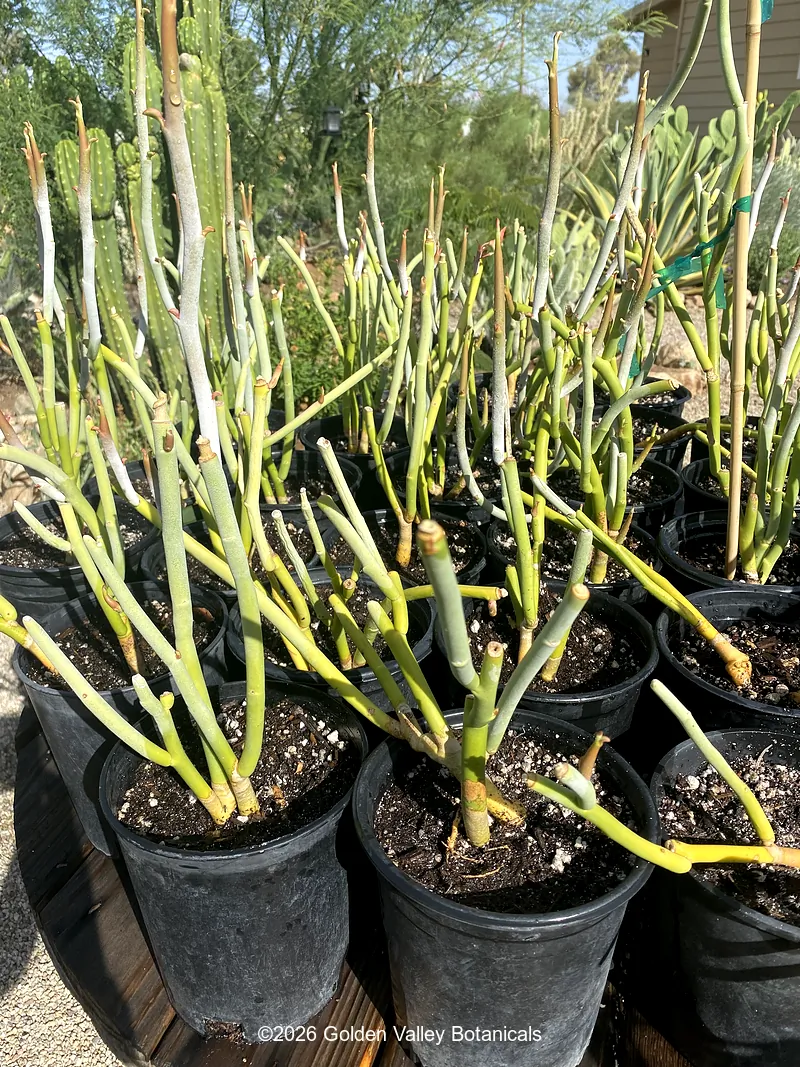
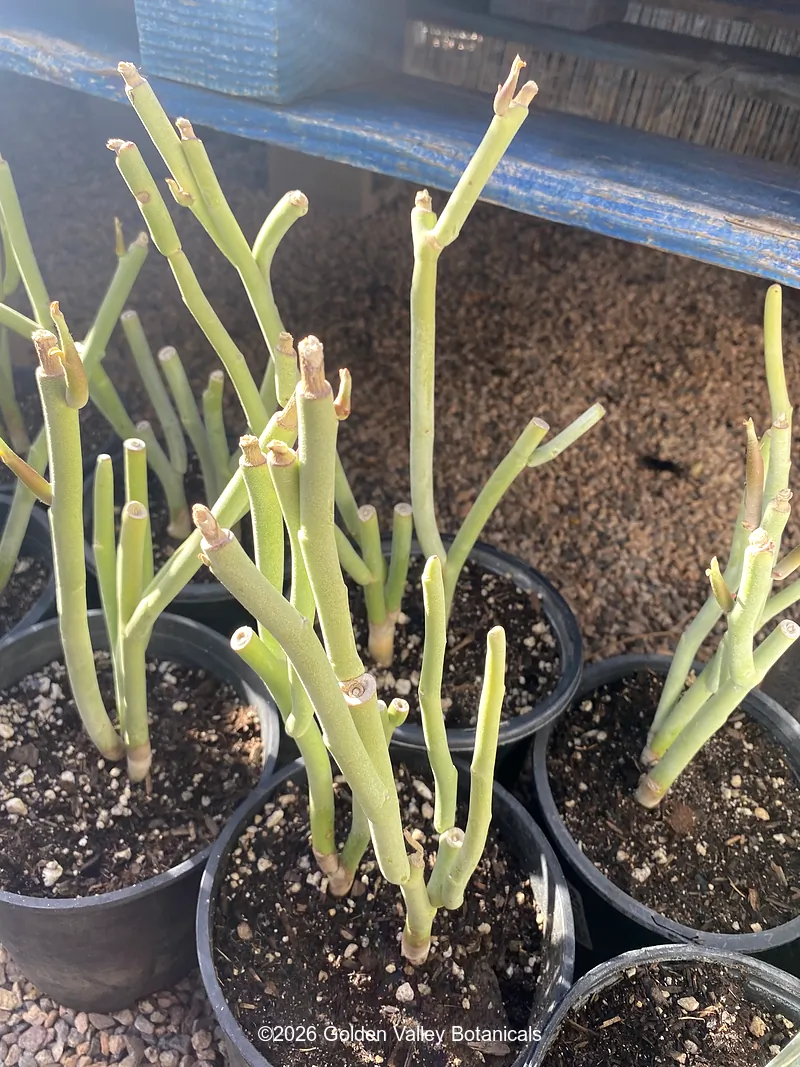
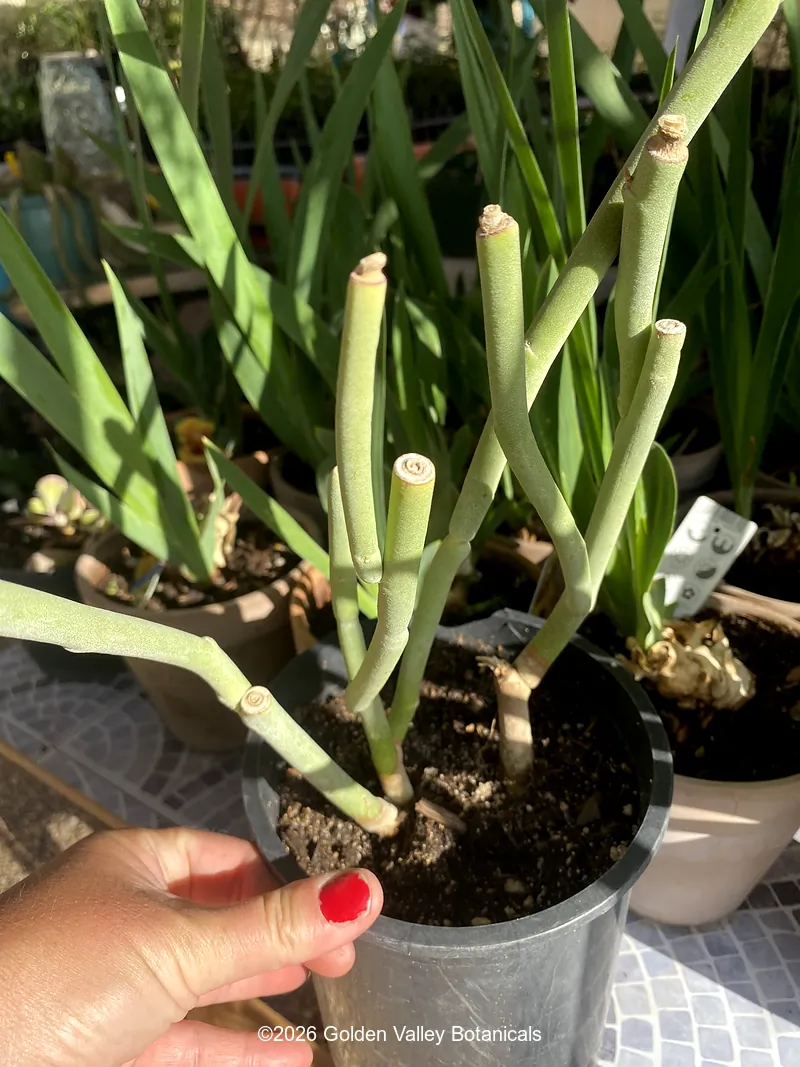
Euphorbia lomelii ‘Azul’ is a leafless, clump-forming succulent with upright stems that arch outward with age. Unlike the lime-green species, this form wears a heavier waxy coating that turns the stems soft blue-gray. That same coating helps the plant hold water in the dry desert air. The candle-like stems do most of the plant’s food-making, so it thrives where broad leaves would dry out. From summer into fall, small orange-red flowers shaped like slippers open at the stem tips and draw hummingbirds. Native to the Sonoran Desert of Mexico, it forms a narrow, upright clump for containers and dry gardens.
In stock
Plant Details
Quick Information
- Latin Name: Euphorbia lomelii ‘Azul’
- Plant Family: Euphorbiaceae
- Common Names: Slipper Plant, Lady’s Slipper, Slipper Flower, Gallito
- Origin / Native Range: Sonoran Desert of northwestern Mexico (Baja California Peninsula and Sonora)
- Mature Height × Width: 3–5 ft × 2–4 ft
- Exposure Requirements: Full Sun to Light Shade
- Irrigation Requirements: Low
- USDA Hardiness Zones: 9–11
- Cold Hardiness: 25°F (when dry)
- Bloom Time: Summer to Fall
- Bloom Color: Orange-Red
General Information
The slipper plant grows as a clump of slender, mostly leafless stems. Each stem is about half an inch thick and tapers toward the tip like a candle. In ‘Azul’, a thicker waxy coating covers those stems, and it gives them a soft blue-gray color instead of the lime-green of typical plants. That waxy layer is called candelilla, meaning little candle, and it adds a faint sheen. New stems push up from underground runners, so a single plant slowly widens into a dense, upright clump. Young plants stand stiff and vertical. As the stems lengthen and gain weight, they begin to arch and lean, and older clumps often sprawl. ‘Azul’ grows more slowly than the green form, so it holds its neat shape longer. In cool weather, the stems may flush red. This is a normal response to winter chill, not a sign of trouble.
This succulent comes from the Sonoran Desert of northwestern Mexico. There it grows on sandy plains and rocky hillsides among creosote and other dry-country shrubs. Those roots explain its comfort with strong heat, bright light, and long dry spells once established. Light also shapes the plant: in full sun, the stems stay short and upright. In shade they stretch, loop, and sprawl. In the hottest low-desert gardens, harsh reflected sun can yellow the stems, so a little afternoon shade keeps their color. From summer into fall, small orange-red structures shaped like slippers open at the stem tips. Their color and narrow shape are matched to hummingbirds, which reach in for nectar and pollinate the plant as they feed. This plant needs fast-draining soil and only occasional deep watering in summer. Protect it where winter lows fall below the mid-20s.
Like all members of the genus Euphorbia, the slipper plant does not bloom the way most flowers do. What looks like one slipper is actually a cyathium. This is a tight cluster of much-reduced male and female flowers around a central nectar gland. Such structures are a signature of the spurge family. The plant also has a tangled name history. It was long known as Pedilanthus macrocarpus. When the genus Pedilanthus was folded into Euphorbia in the early 2000s, the name Euphorbia macrocarpa was already taken. So botanist Victor Steinmann renamed it Euphorbia lomelii, honoring Mexican botanist José Lomelí. One caution is worth noting. Like other spurges, the stems hold a milky sap that can irritate skin and eyes. Wear gloves when pruning, keep the sap from your face, and wash after handling.
General Planting & Cultivation Information
Even drought-tolerant plants require regular watering until they are well established, good drainage is essential. If planting in containers, avoid pots without drainage holes.
Irrigate by watering deeply and then allowing the top several inches of soil to dry between waterings. This encourages the plant to send roots deep into the earth in search of moisture, helping it to become established, prevent root rot, build drought tolerance, and resilience to wind, heat, and cold.
The length of time between waterings will vary depending on your growing conditions and environment. Use a moisture meter for precise irrigation.
When planting, set the plant at the same depth as it was in its current container. For trees, ensure the top of the root flare is at soil level.
Young plants are vulnerable to harsh conditions, so consider growing them in larger containers until mature.
When planting in the ground, research the optimal planting season for your climate zone and protect young plants from frost.
To support establishment, consider creating a microclimate with nurse plants, shade, or wind protection. This can reduce stress, conserve soil moisture, and increase long-term success.
Protect the small, immature plants from rabbits and deer.
Check out our FAQ page for more tips on desert gardening.