Berggarten Culinary Sage
Latin Name: Salvia officinalis ‘Berggarten’
Price range: $12.95 through $16.95
- Pot Size: 4 Inch, 1 Gallon
- Hardiness Zone: Zone 5, Zone 6, Zone 7, Zone 8, Zone 9
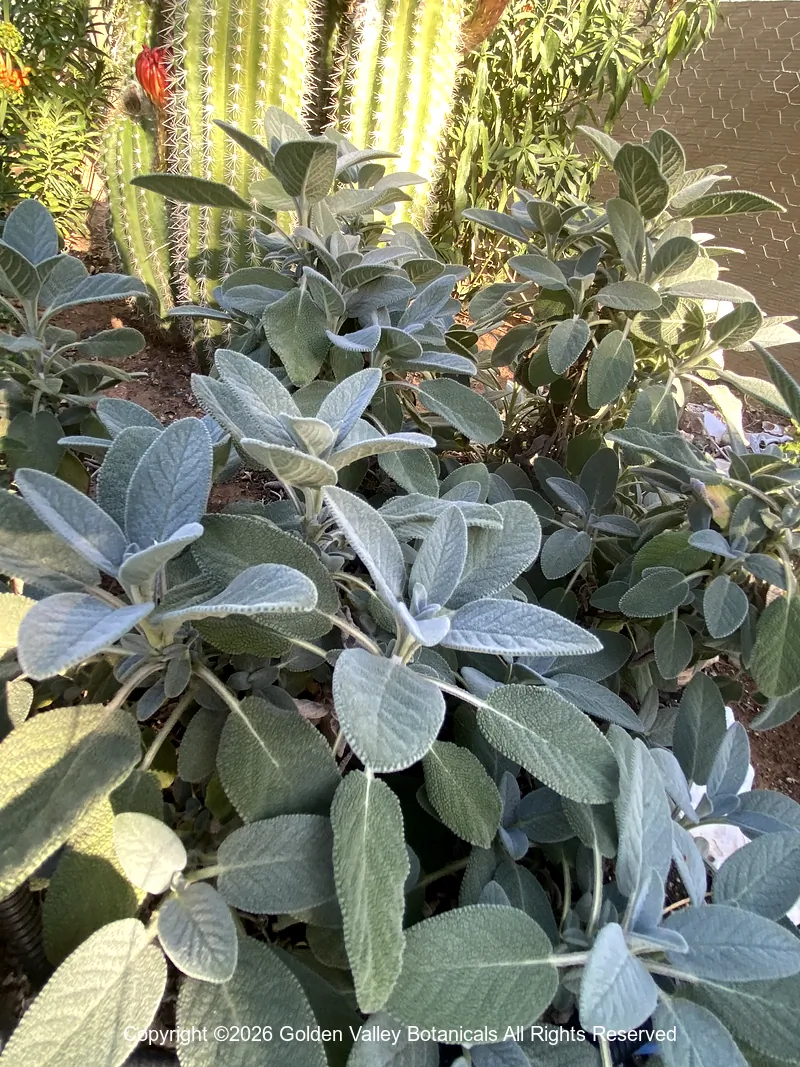
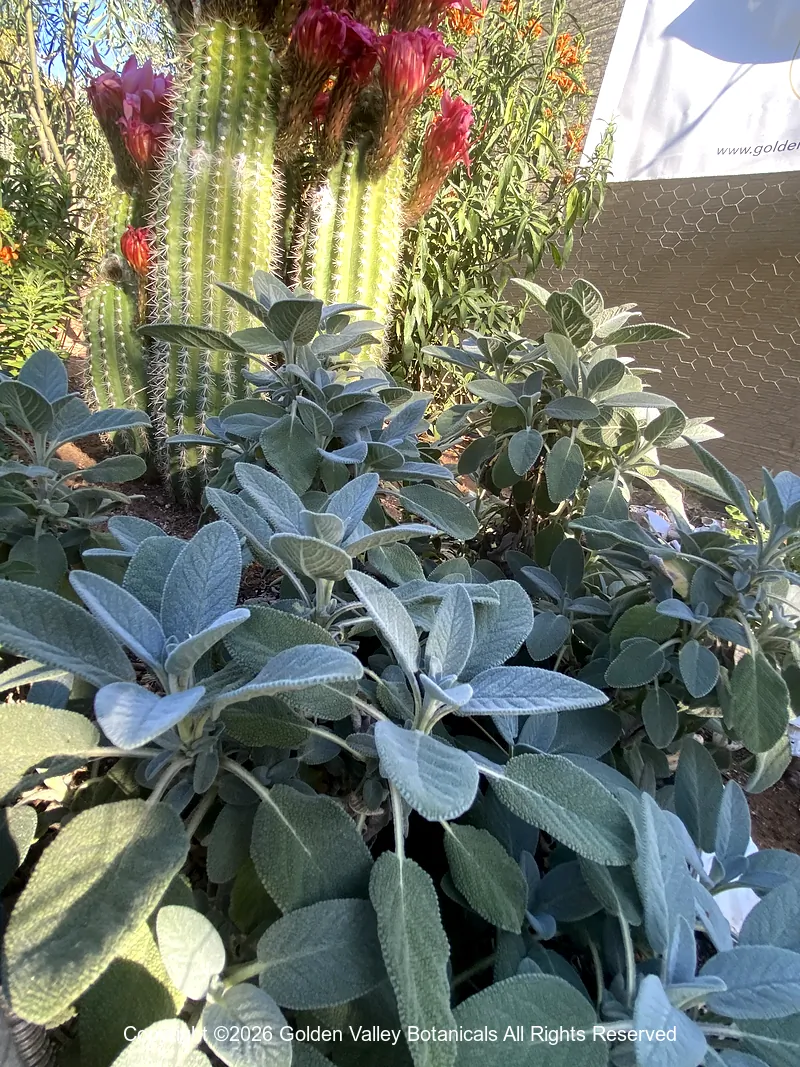
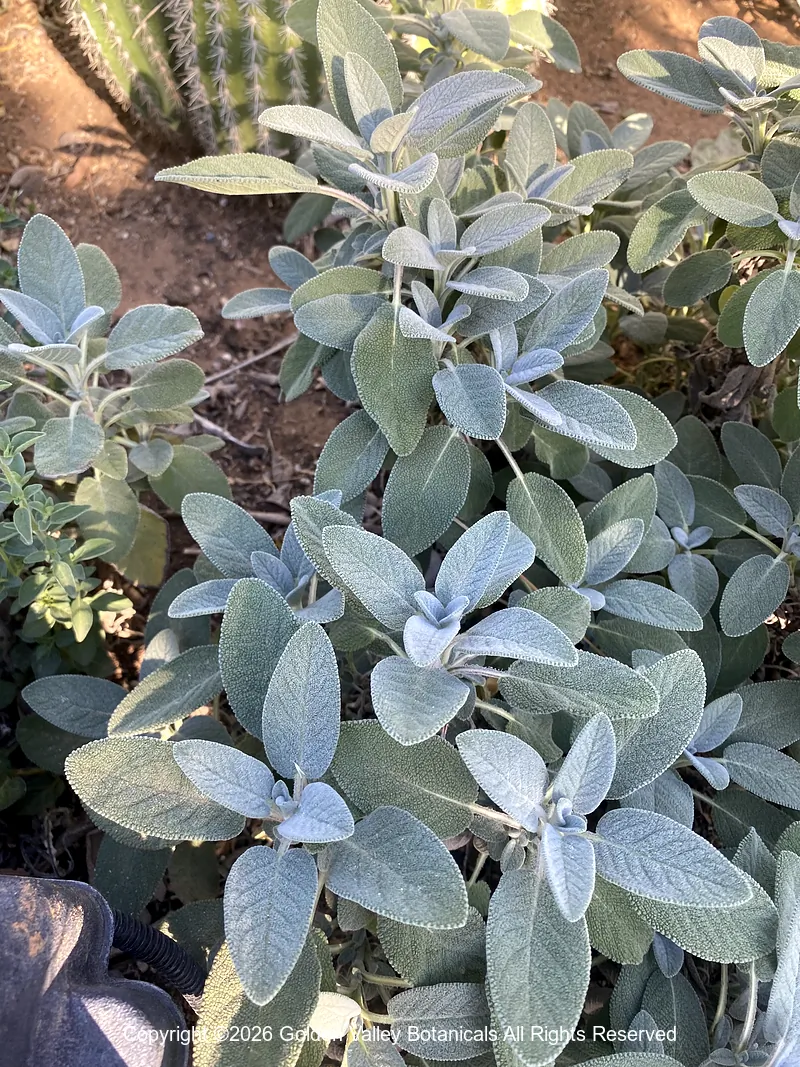
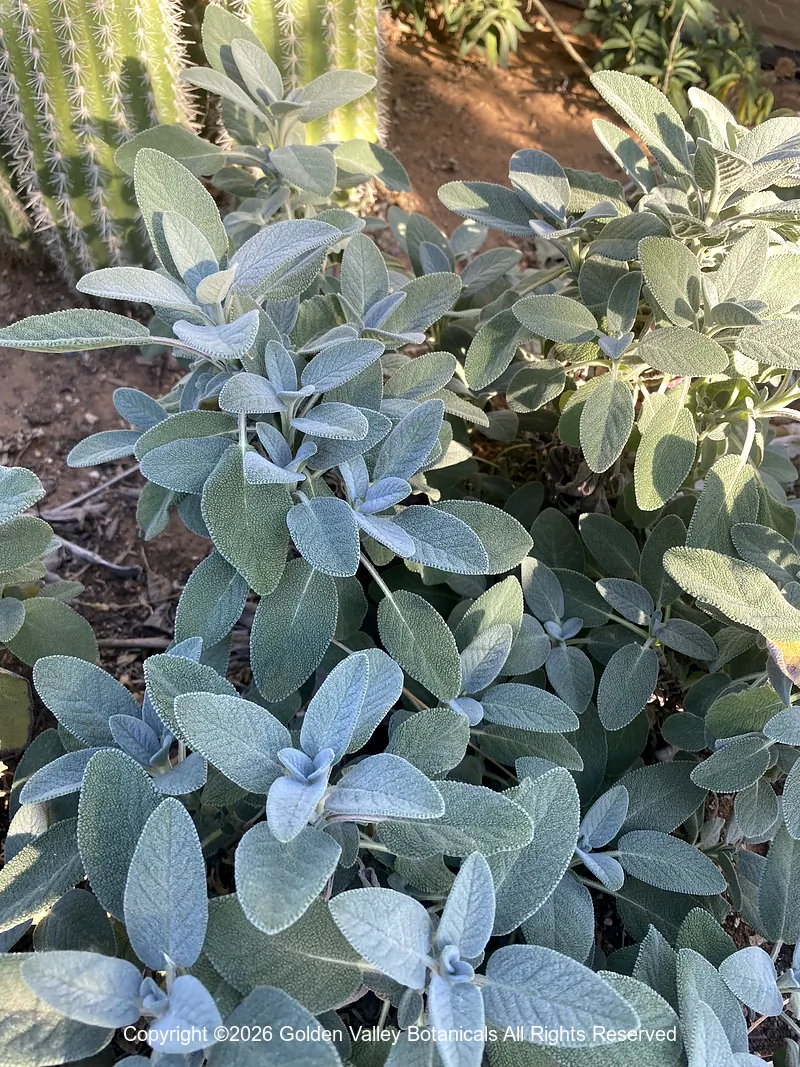
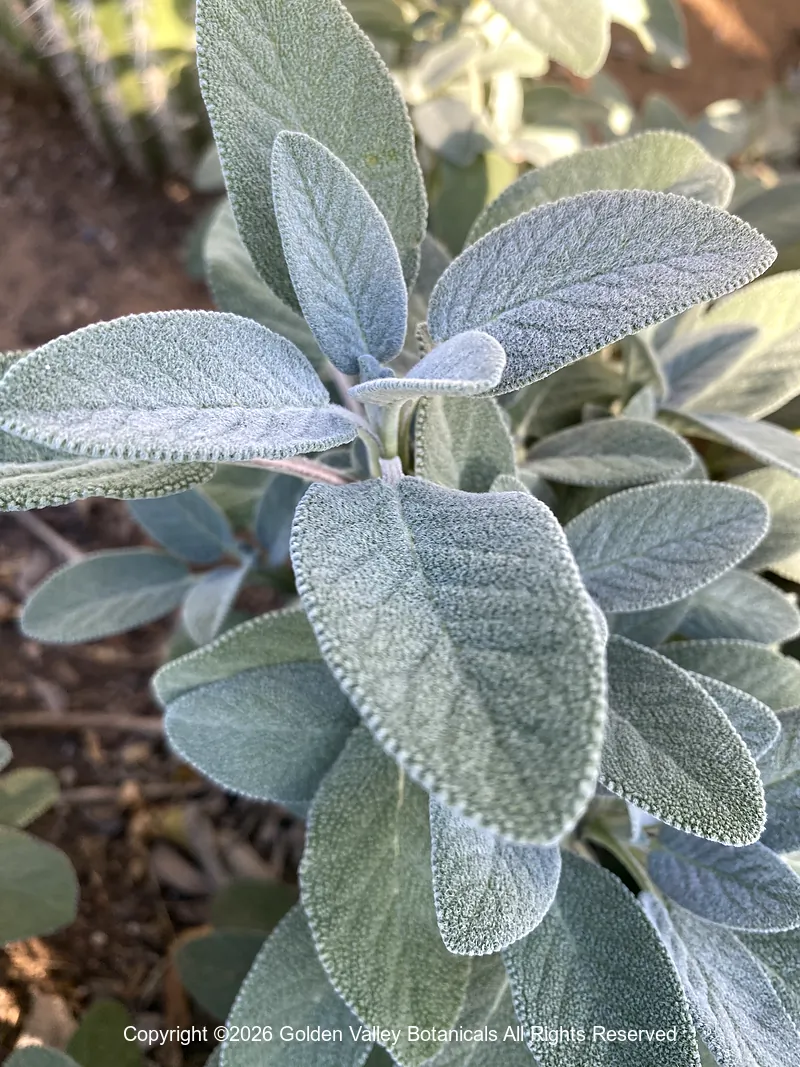
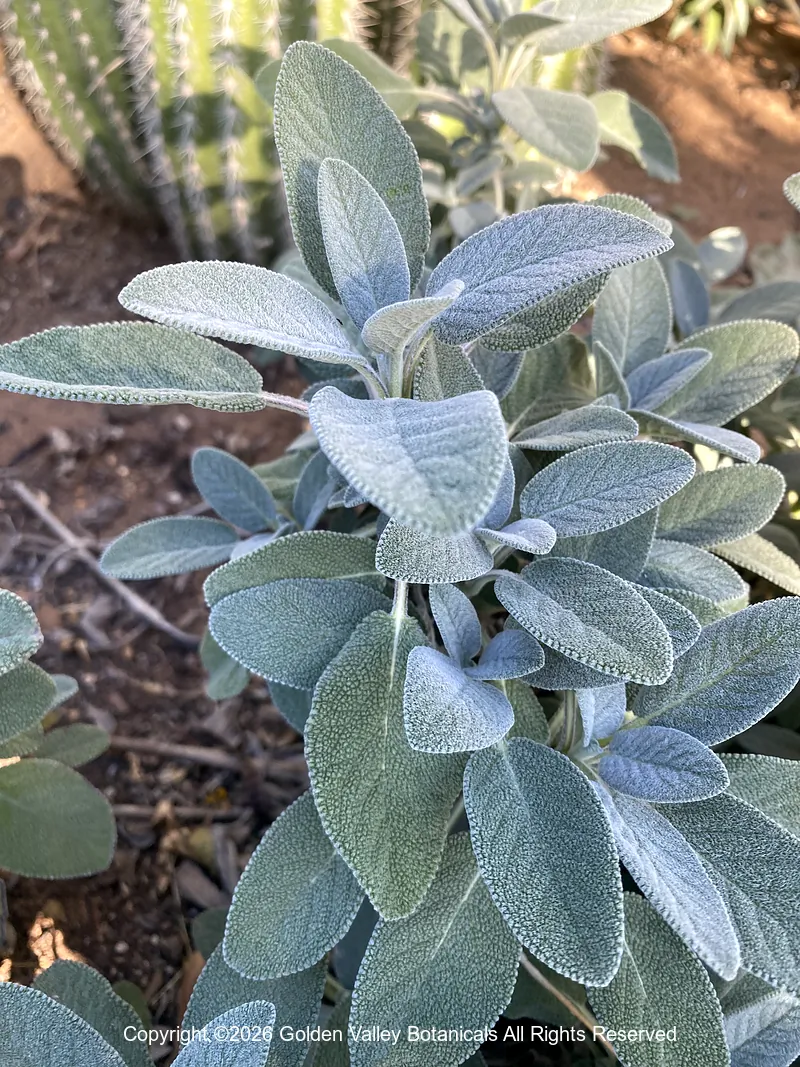
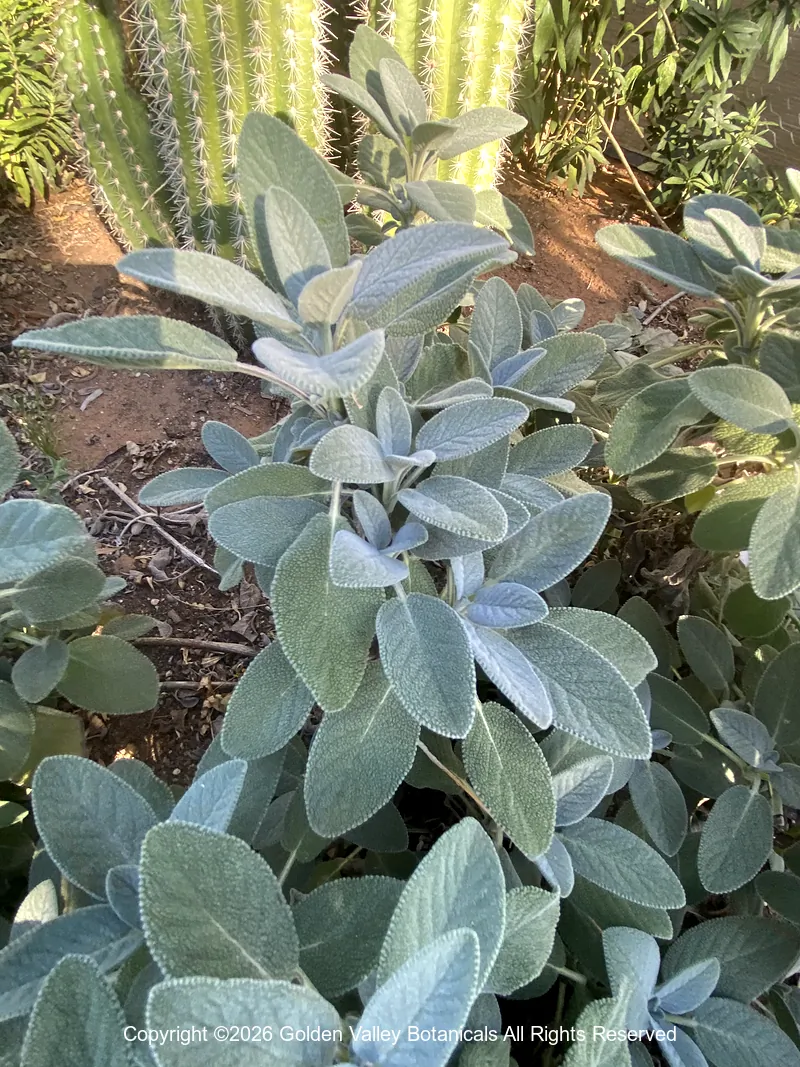
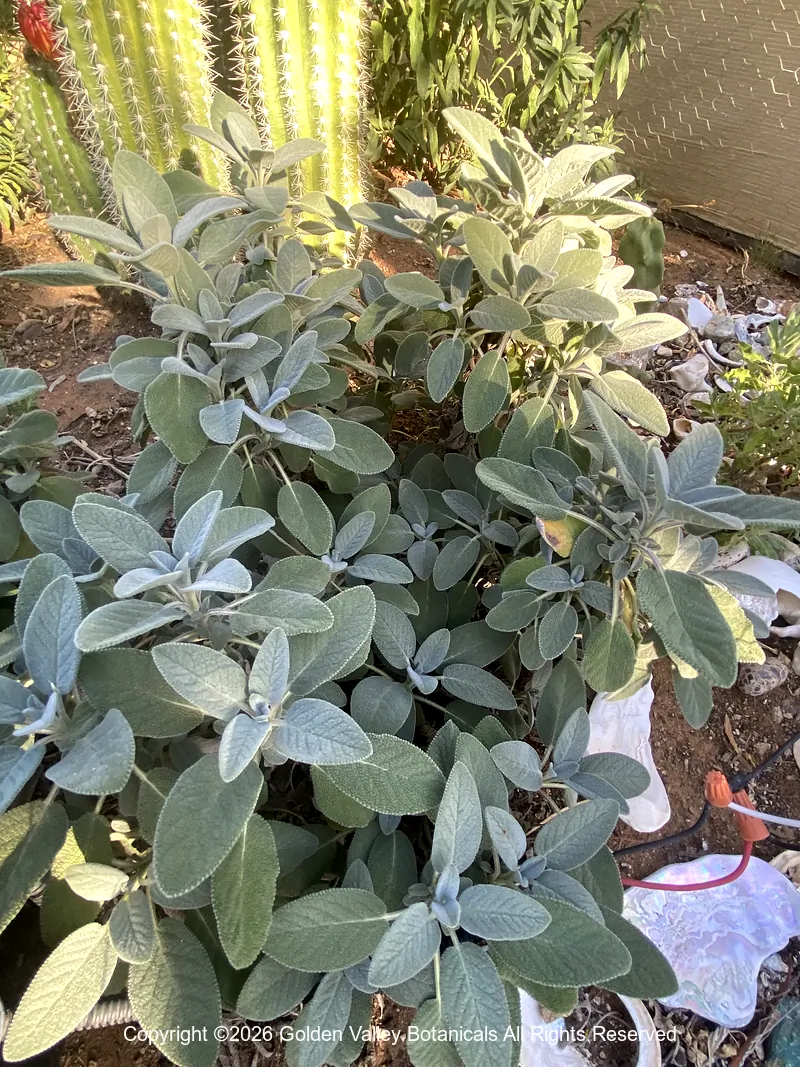
Salvia officinalis ‘Berggarten’ is a low, spreading form of common sage grown for its broad, rounded leaves rather than its flowers. It forms a dense, evergreen mound of soft gray-green foliage that holds through the year. The leaves are wider and more rounded than those of ordinary garden sage, and a fine coat of pale hairs gives them a silvery, almost powdery surface. That downy layer is a Mediterranean adaptation, helping the plant reflect strong sunlight and slow water loss through hot, dry summers. New spring growth emerges brighter and cooler in tone before older leaves settle into their familiar downy gray.
Plant Details
Quick Information
- Latin Name: Salvia officinalis ‘Berggarten’
- Plant Family: Lamiaceae
- Common Names: Berggarten sage, common sage, garden sage, culinary sage
- Origin / Native Range: Mediterranean region (species); ‘Berggarten’ selected at Herrenhausen, Hanover, Germany
- Mature Height × Width: 1.5–2 ft × 2–3 ft
- Exposure Requirements: Full Sun
- Irrigation Requirements: Low
- USDA Hardiness Zones: 5–9
- Cold Hardiness: –10°F–0°F
- Bloom Time: Early to Mid-Summer (blooms sparingly)
- Bloom Color: Violet-Blue
General Information
Berggarten sage is a subshrub, meaning it stays woody at the base while its upper growth remains soft and leafy. It grows as a low, spreading mound and keeps its foliage through winter in mild climates. The leaves set this selection apart from ordinary sage: they are broad, oval, and rounded at the tip, rather than the narrow, pointed leaves of the common form. New spring growth emerges bright and cool-toned, then settles into a soft, downy gray as it ages, and plants grown in full sun often take on a faint purple cast. This cultivar flowers less freely than typical garden sage. When it does, it sends up short, upright spikes of two-lipped violet-blue flowers arranged in whorls, meaning rings of blooms that circle the stem. Over several years, the base becomes noticeably woody.
The species comes from the Mediterranean region, where summers are hot and dry, and winters are mild and wet. That background shapes how the plant behaves in the garden. It grows best in full sun and fast-draining soil, and once established it needs little water. It also tolerates alkaline soils, which are common across the arid Southwest. Its main weakness is wet ground in winter: cold, soggy soil can rot the woody base and shorten the plant’s life, so sharp drainage matters more than any amount of cold protection. Because it blooms sparingly, it offers less to pollinators than free-flowering sages, though the summer flowers it does produce provide nectar for bees and butterflies. In the landscape, it works well as a low-edging plant, in herb gardens, in containers, and among other water-thrifty plantings.
The genus name Salvia comes from the Latin salveo, meaning to heal or save, a nod to the healing powers once linked to sages. The species name officinalis points to the officina, the storeroom of a monastery or apothecary where useful herbs were kept, and marks sage’s long role as both medicine and seasoning. The cultivar name honors the Berggarten, or mountain garden, one of the historic garden areas at Herrenhausen in Hanover, Germany, where this form was selected. Gardeners still grow Berggarten sage for the kitchen as much as for looks, and its large, rounded leaves are easy to gather and use fresh or dried.
General Planting & Cultivation Information
Even drought-tolerant plants require regular watering until they are well established, good drainage is essential. If planting in containers, avoid pots without drainage holes.
Irrigate by watering deeply and then allowing the top several inches of soil to dry between waterings. This encourages the plant to send roots deep into the earth in search of moisture, helping it to become established, prevent root rot, build drought tolerance, and resilience to wind, heat, and cold.
The length of time between waterings will vary depending on your growing conditions and environment. Use a moisture meter for precise irrigation.
When planting, set the plant at the same depth as it was in its current container. For trees, ensure the top of the root flare is at soil level.
Young plants are vulnerable to harsh conditions, so consider growing them in larger containers until mature.
When planting in the ground, research the optimal planting season for your climate zone and protect young plants from frost.
To support establishment, consider creating a microclimate with nurse plants, shade, or wind protection. This can reduce stress, conserve soil moisture, and increase long-term success.
Protect the small, immature plants from rabbits and deer.
Check out our FAQ page for more tips on desert gardening.