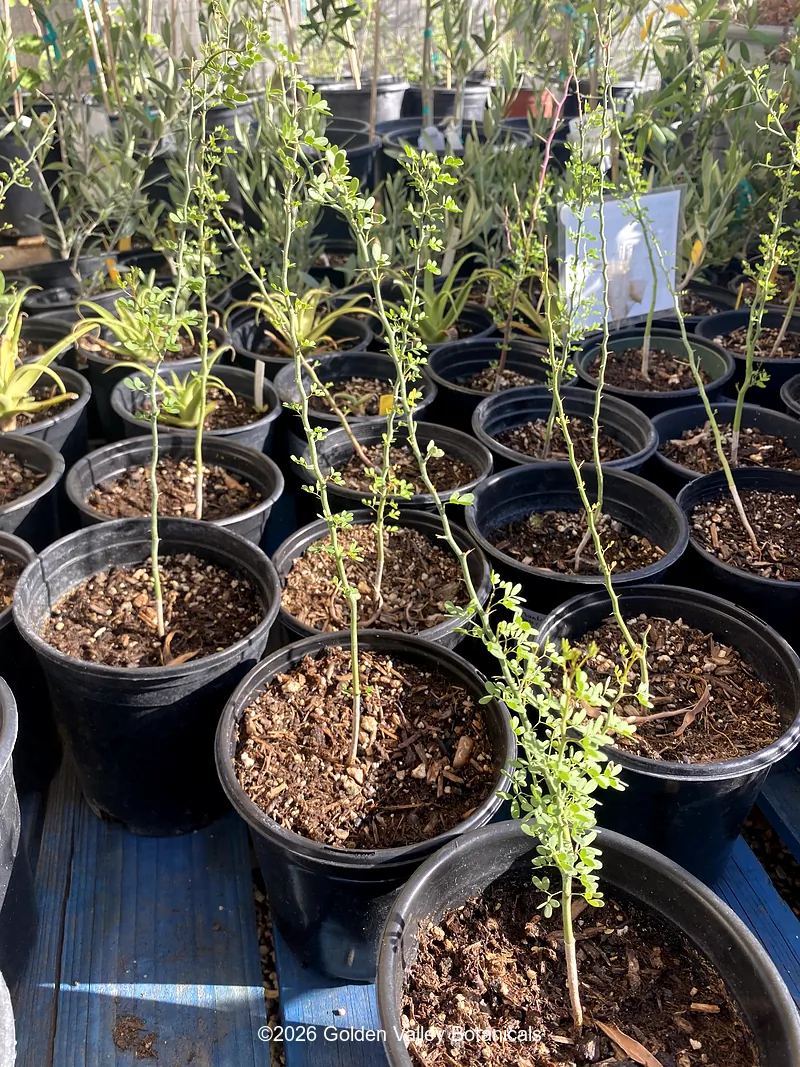
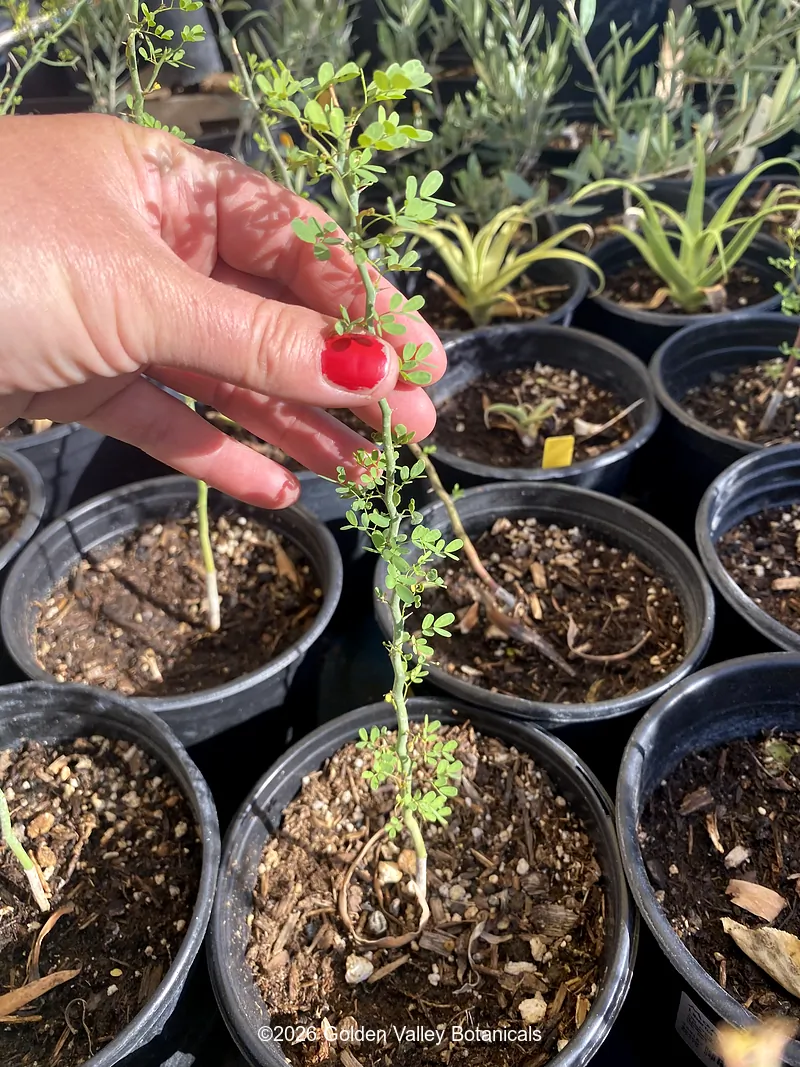
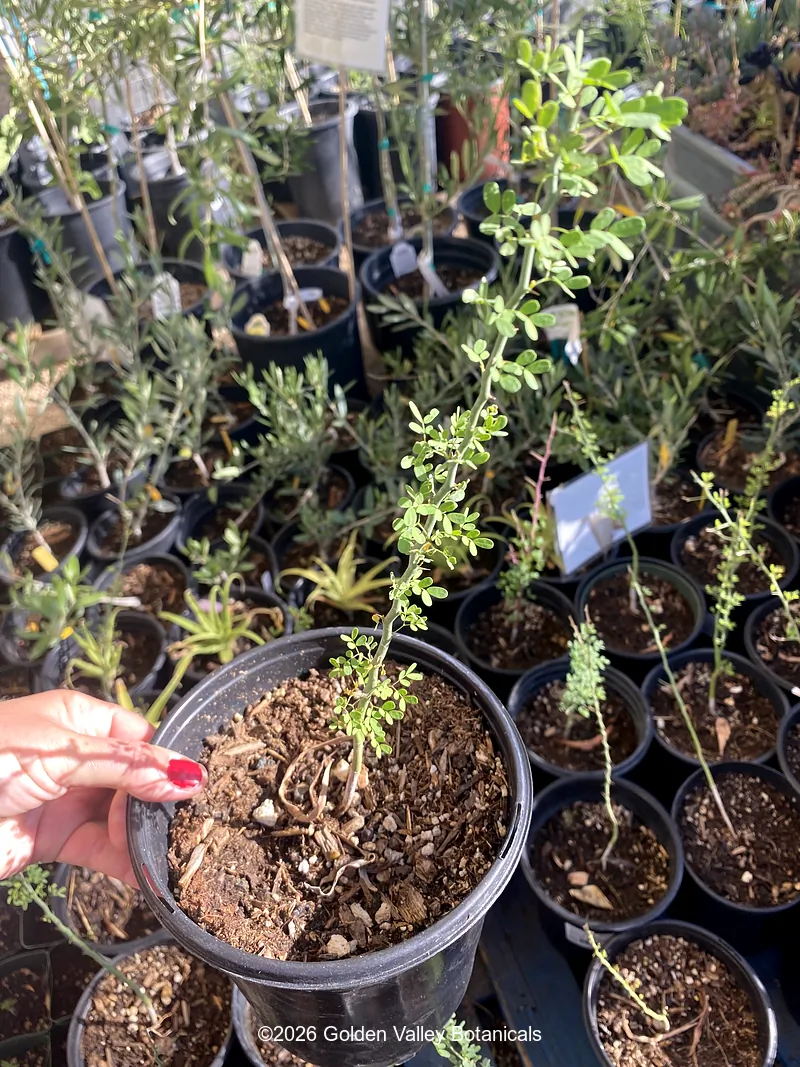
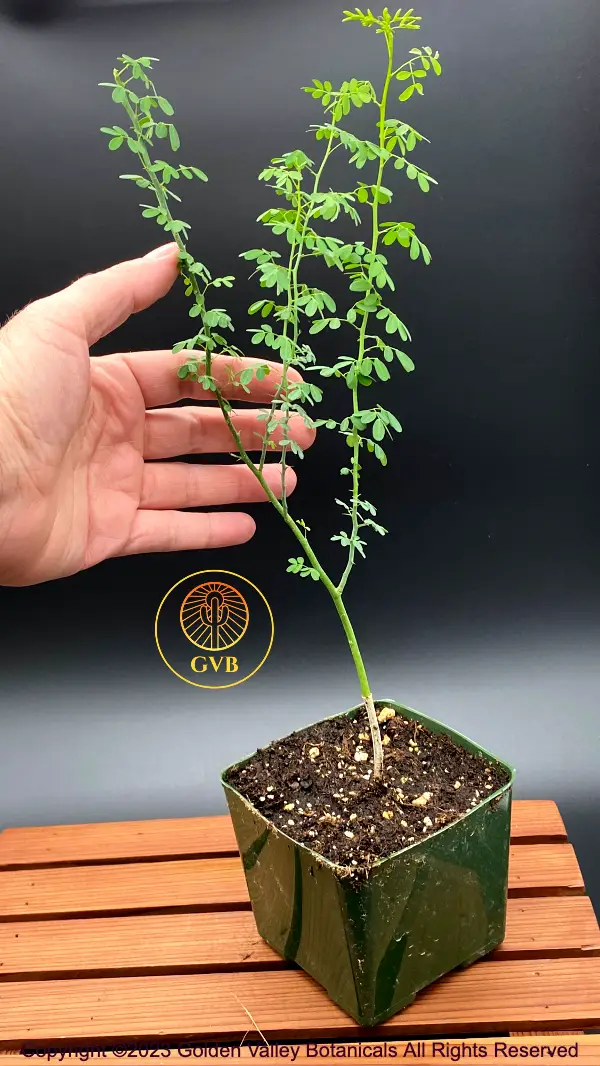
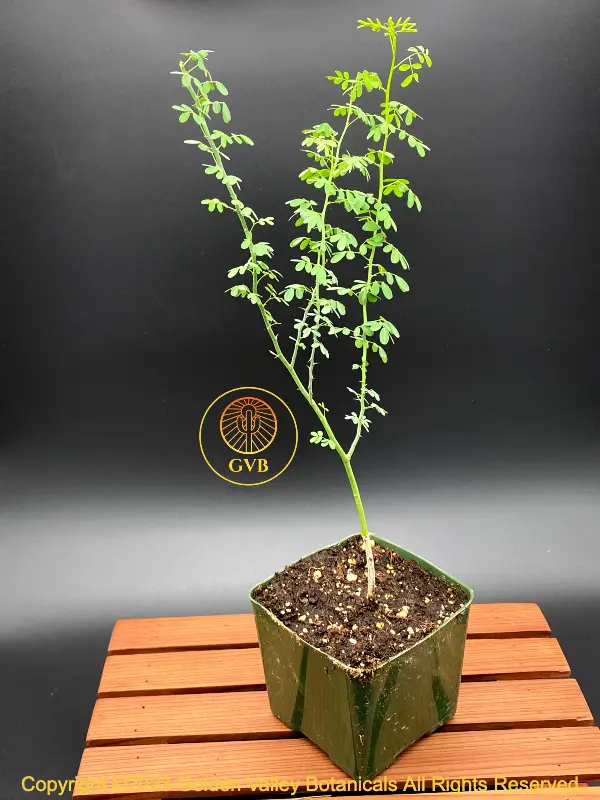

Blue Palo Verde
Latin Name: Parkinsonia florida
Price range: $16.95 through $19.95
- Pot Size: 4 Inch, 1 Gallon
- Hardiness Zone: Zone 9, Zone 10, Zone 11
Parkinsonia florida, commonly called blue palo verde, is a wide-spreading desert tree with an open, rounded crown and an airy, see-through canopy. What catches the eye first is the bark: smooth and blue-green across the trunk and younger branches, which is unusual among trees. For a few weeks each spring, the branches vanish under a wash of bright yellow, pea-like flowers. That green bark is more than a color, and it points to how the tree handles the long dry stretches of its native Sonoran Desert. In an open, sunny setting, blue palo verde reads as a soft, filtered silhouette rather than a solid block of shade.
Plant Details
Quick Information
- Latin Name: Parkinsonia florida
- Plant Family: Fabaceae (Legume Family)
- Common Names: Blue Palo Verde, Blue Paloverde
- Origin / Native Range: Sonoran Desert of southeastern California, southern Nevada, central and southern Arizona, and northwestern Mexico (Sonora and Baja California)
- Mature Height × Width: 20–30 ft × 20–30 ft
- Exposure Requirements: Full Sun
- Irrigation Requirements: Very Low
- USDA Hardiness Zones: 9–11
- Cold Hardiness: 10°F–15°F
- Bloom Time: Spring, occasionally again in late summer after monsoon rains
- Bloom Color: Yellow
General Information
Blue palo verde grows as a wide, spreading tree with a low, rounded crown that becomes open and irregular with age. The young trunk and branches are smooth and blue-green, while older trunks slowly develop rougher, fissured bark near the base. Its leaves are bipinnate, meaning each leaf is divided twice into many tiny leaflets, so the canopy looks feathery and lets a lot of light through. During dry spells the tree is drought-deciduous, dropping these small leaves to save water and standing nearly bare. In spring, and sometimes again after summer monsoon rains, short clusters of bright yellow, pea-like flowers cover the branches, followed by flat seed pods called legumes.
In the wild, blue palo verde grows along desert washes, bajadas (gently sloping aprons of gravel and sand at the base of mountains), and open flats across the Sonoran Desert, where roots can reach water that lingers after seasonal rains. Its green bark holds the key to surviving there: the bark itself carries out photosynthesis, the process plants use to make food from sunlight, so the tree keeps producing energy even when it has shed its leaves. This lets it wait out drought and put on quick growth when water returns. In the landscape it works best as a specimen tree or informal grouping in large, sunny, water-wise plantings, and it needs very little irrigation once its roots are established. Its naturally low, spreading branches make it a poor choice for street plantings, narrow spaces, or lawns.
The name palo verde comes from Spanish and means green stick or green pole, a nod to the photosynthetic bark, and the genus Parkinsonia honors the English botanist John Parkinson. Gardeners may still find this tree sold under its older name, Cercidium floridum. Where their ranges overlap it can cross with foothill palo verde (Parkinsonia microphylla), and a popular thornless hybrid sold as ‘Desert Museum’ traces back to this group. The spring flowers are an important nectar source for native bees, and the seeds are eaten by birds and small mammals. The Cahuilla, Pima, and other Indigenous peoples of the region grind the seeds and pods into meal. One note of caution: blue palo verde carries small, sharp spines along its branches, so plant it away from walkways and wear gloves when pruning.
General Planting & Cultivation Information
Even drought-tolerant plants require regular watering until they are well established, good drainage is essential. If planting in containers, avoid pots without drainage holes.
Irrigate by watering deeply and then allowing the top several inches of soil to dry between waterings. This encourages the plant to send roots deep into the earth in search of moisture, helping it to become established, prevent root rot, build drought tolerance, and resilience to wind, heat, and cold.
The length of time between waterings will vary depending on your growing conditions and environment. Use a moisture meter for precise irrigation.
When planting, set the plant at the same depth as it was in its current container. For trees, ensure the top of the root flare is at soil level.
Young plants are vulnerable to harsh conditions, so consider growing them in larger containers until mature.
When planting in the ground, research the optimal planting season for your climate zone and protect young plants from frost.
To support establishment, consider creating a microclimate with nurse plants, shade, or wind protection. This can reduce stress, conserve soil moisture, and increase long-term success.
Protect the small, immature plants from rabbits and deer.
Check out our FAQ page for more tips on desert gardening.