Cat Tail Euphorbia
Latin Name: Euphorbia alluaudii
$18.95
- Pot Size: 1 Gallon
- Hardiness Zone: Zone 9, Zone 10, Zone 11
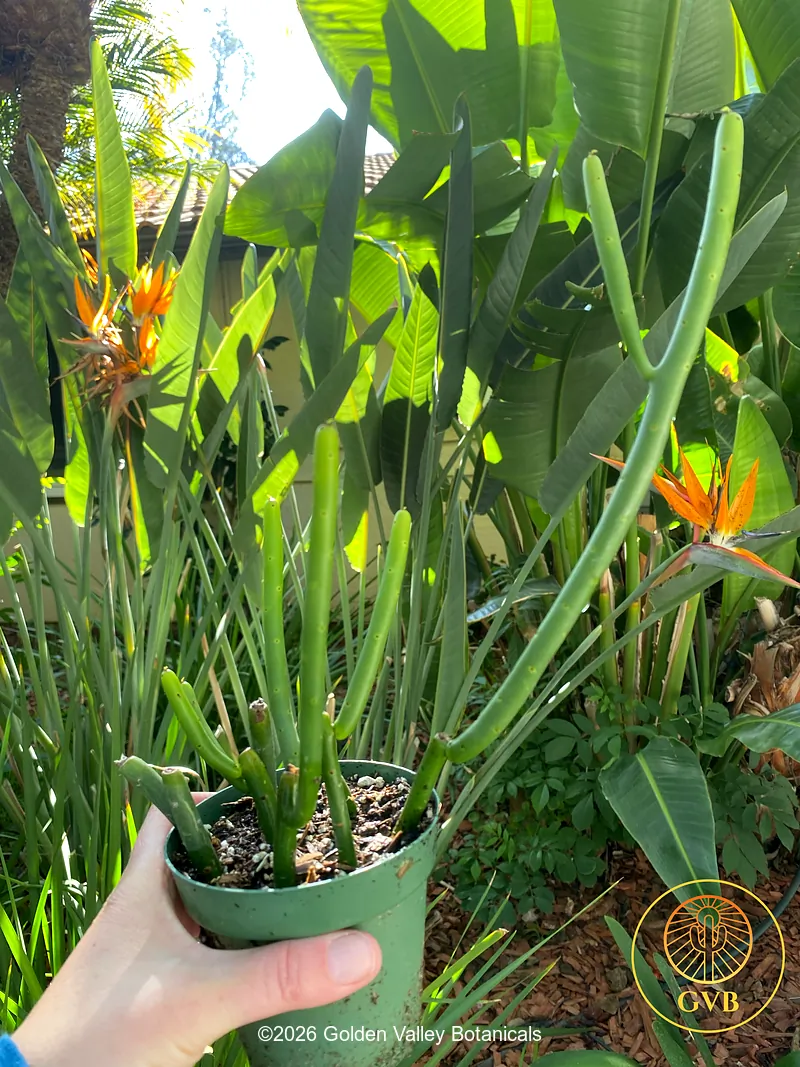
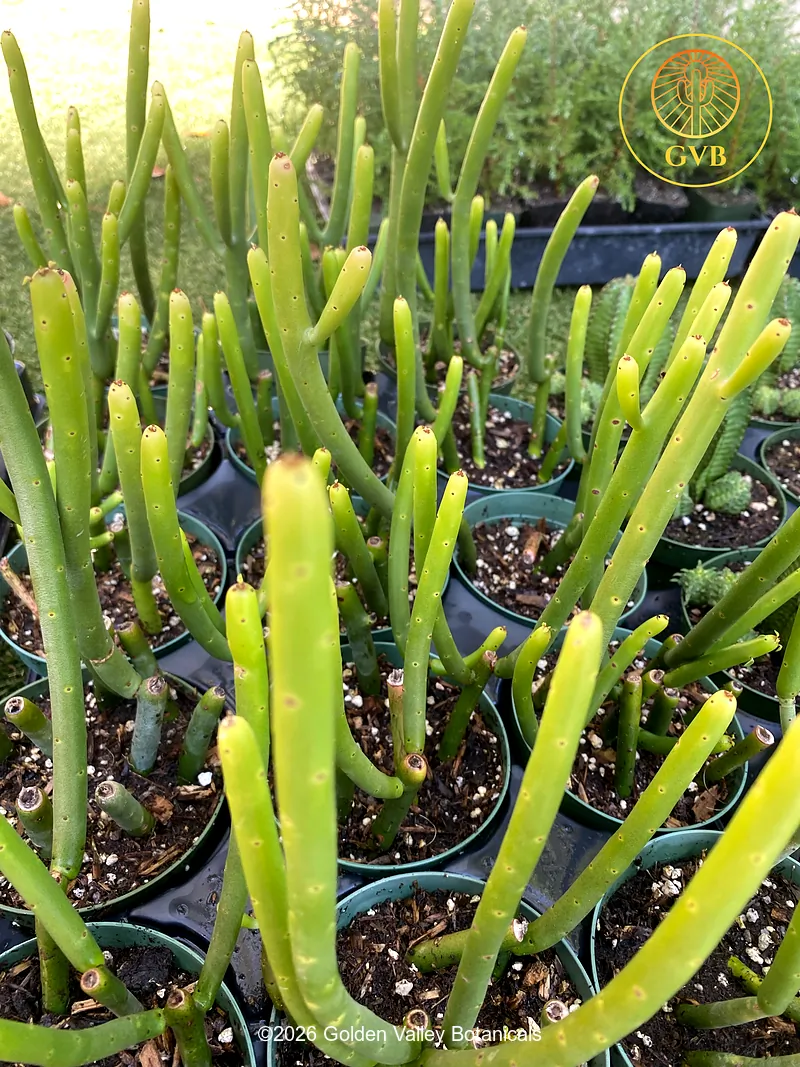
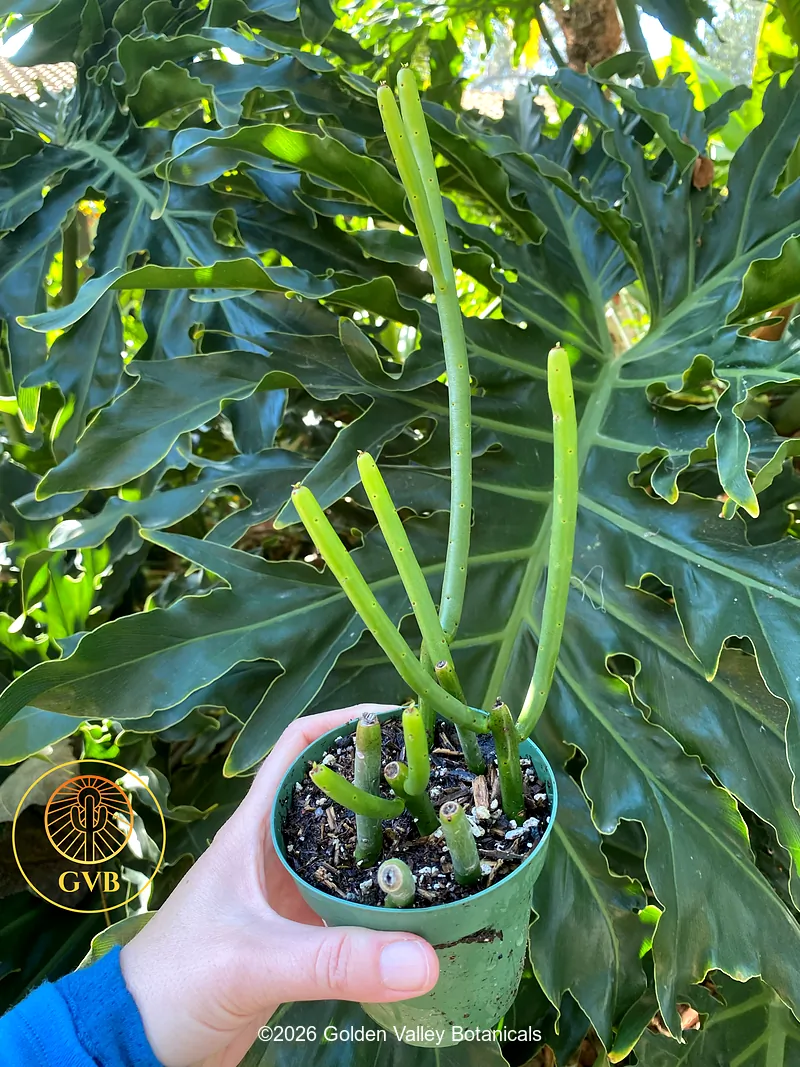
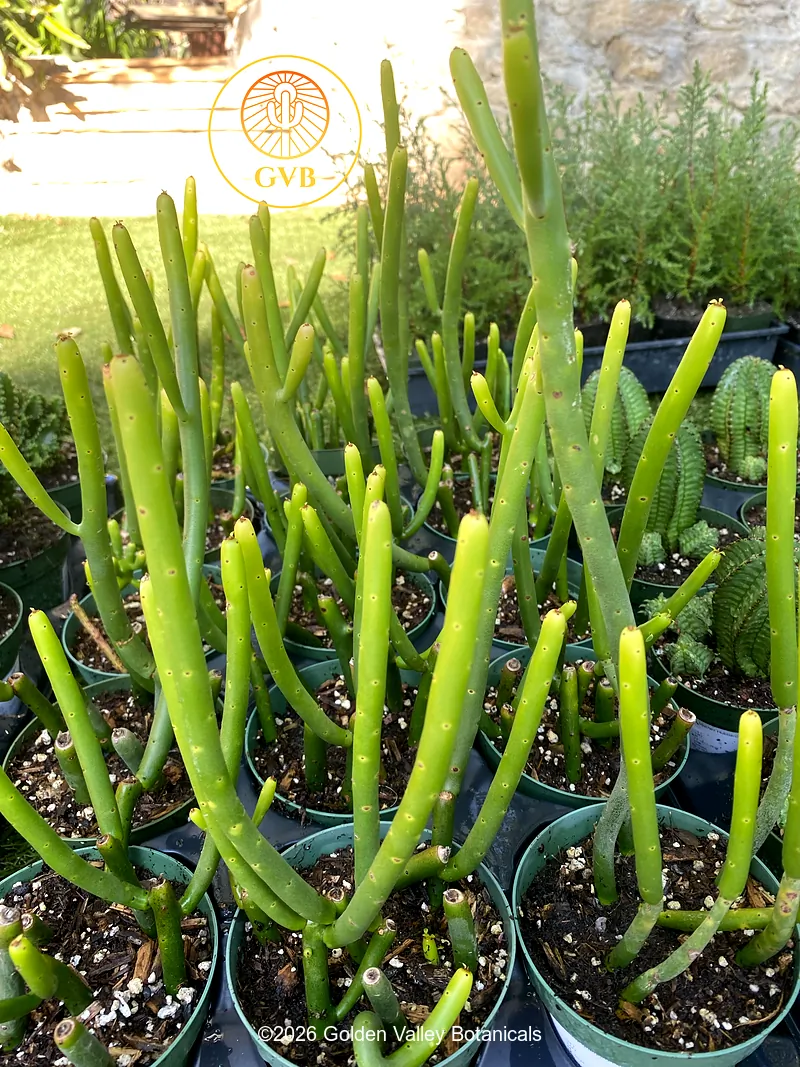
With its bundle of slim, arching stems, Euphorbia alluaudii brings the look of pale green coral to a pot or dry garden bed. The pencil-thin branches are smooth, jointed, and free of spines. They grow upright at first, then curve outward into a soft, rounded mound about as wide as it is tall. In warm weather, tiny leaves flush at the branch tips and then fall, freckling each stem with small brown dots. Those bare green stems store their own water, which is how this Madagascar native, often sold as Euphorbia leucodendron, shrugs off long dry spells. Up close, it reads as living sculpture; from across the room, it settles into a calm, feathery form.
In stock
Plant Details
Quick Information
- Latin Name: Euphorbia alluaudii
- Plant Family: Euphorbiaceae
- Common Names: Cat Tail Euphorbia, Milk Bush, Yellow-leaf Bush Euphorbia
- Origin / Native Range: Southern and southwestern Madagascar
- Mature Height × Width: 4–8 ft × 3–5 ft
- Exposure Requirements: Full Sun
- Irrigation Requirements: Low
- USDA Hardiness Zones: 9b–11
- Cold Hardiness: 25°F–30°F (when dry)
- Bloom Time: Spring through Summer
- Bloom Color: Yellow-Green
General Information
What looks like a plain bundle of stems is really the plant’s water tank and framework in one. The stems are semi-succulent, meaning their tissue swells with stored moisture that carries the plant through dry stretches. New growth pushes out from the stem tips in short, jointed segments, so the plant lengthens and fills in season by season. A young specimen stays low and tidy at first, often just a foot or two tall. Given years and frost-free warmth, it can rise to head height or taller and thicken into a broad, many-stemmed shrub that edges toward small-tree size. As the stems multiply and lean into one another, older plants gain weight and presence, and the whole form grows denser and more rounded with age.
This euphorbia comes from the hot, dry country of southern and southwestern Madagascar, where rain falls during only part of the year. Its whole form is built to save water. Because the green stems handle photosynthesis, the plant can shed its small leaves during dry spells and still feed itself. It also relies on a water-saving method called CAM photosynthesis, opening its pores at night when the air is cool rather than in the heat of day. Together these traits make it a tough, low-water plant once its roots take hold. It accepts full sun, reflected heat, and fast-draining, gritty soils in stride. Its main weakness is cold, since hard frost damages the stems. In places with freezing winters, it grows best in a container that can be moved to shelter. For that reason, gardeners most often use it as a sculptural specimen or a potted accent in dry gardens.
Like all euphorbias, this plant does not bloom the way most flowers do. Instead it forms tiny flower clusters called cyathia, each a small cup that holds several minute flowers so the group looks like a single bloom. The cyathia are yellow-green and appear near the branch tips in spring and summer. Plants are usually either male or female, a trait called dioecious, so both are needed for the red, three-part seed capsules to form. This species was known in the nursery trade for many years as Euphorbia leucodendron, a name now folded into Euphorbia alluaudii. One word of care: like its relatives, it carries a milky sap that is toxic if eaten and can irritate the skin and eyes. Wear gloves when pruning, keep the sap away from your face, and set the plant out of easy reach of children and pets.
General Planting & Cultivation Information
Even drought-tolerant plants require regular watering until they are well established, good drainage is essential. If planting in containers, avoid pots without drainage holes.
Irrigate by watering deeply and then allowing the top several inches of soil to dry between waterings. This encourages the plant to send roots deep into the earth in search of moisture, helping it to become established, prevent root rot, build drought tolerance, and resilience to wind, heat, and cold.
The length of time between waterings will vary depending on your growing conditions and environment. Use a moisture meter for precise irrigation.
When planting, set the plant at the same depth as it was in its current container. For trees, ensure the top of the root flare is at soil level.
Young plants are vulnerable to harsh conditions, so consider growing them in larger containers until mature.
When planting in the ground, research the optimal planting season for your climate zone and protect young plants from frost.
To support establishment, consider creating a microclimate with nurse plants, shade, or wind protection. This can reduce stress, conserve soil moisture, and increase long-term success.
Protect the small, immature plants from rabbits and deer.
Check out our FAQ page for more tips on desert gardening.