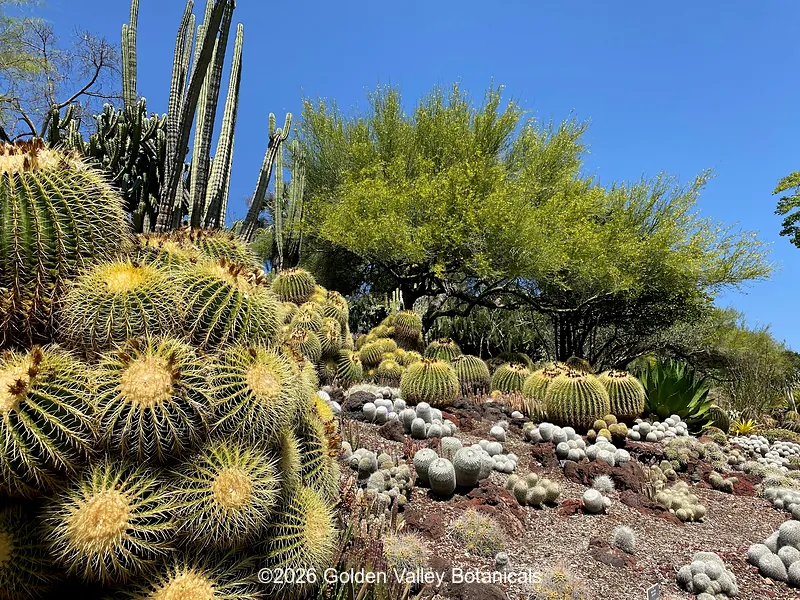
Golden Barrel Cactus
Latin Name: Kroenleinia grusonii
Price range: $16.95 through $19.95
- Pot Size: 4 Inch, 1 Gallon
- Hardiness Zone: Zone 9, Zone 10, Zone 11
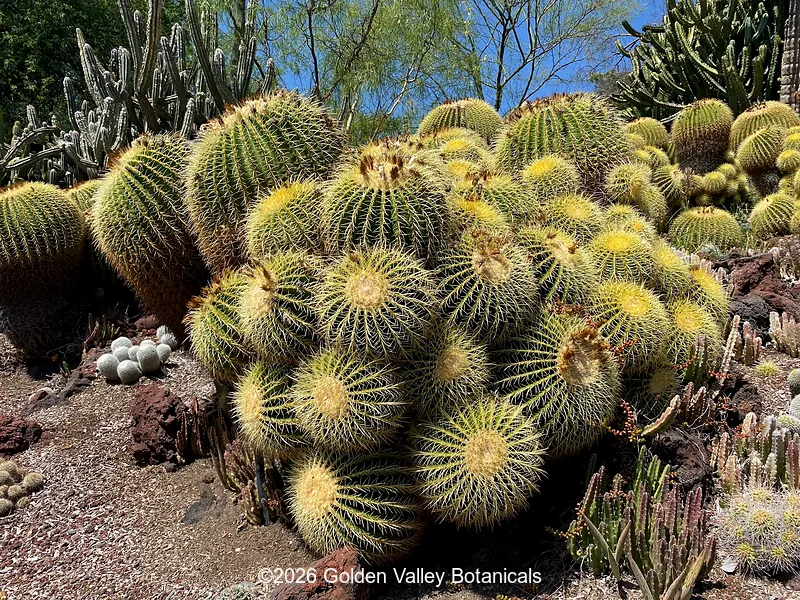
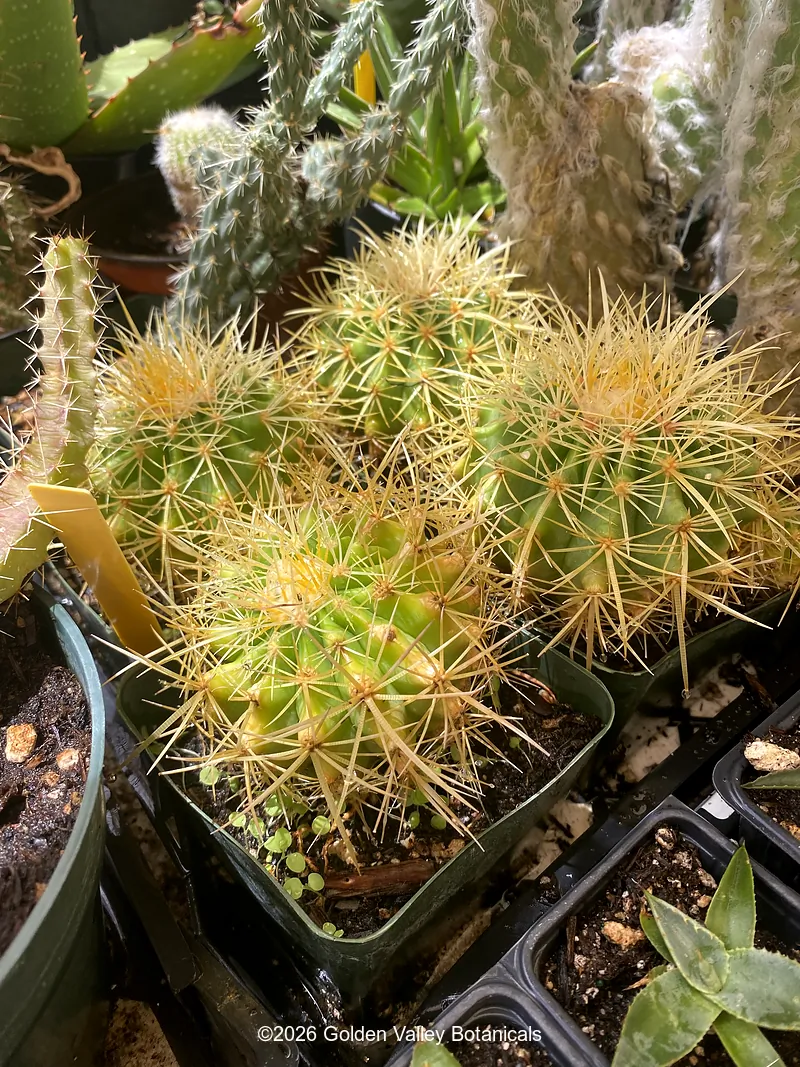
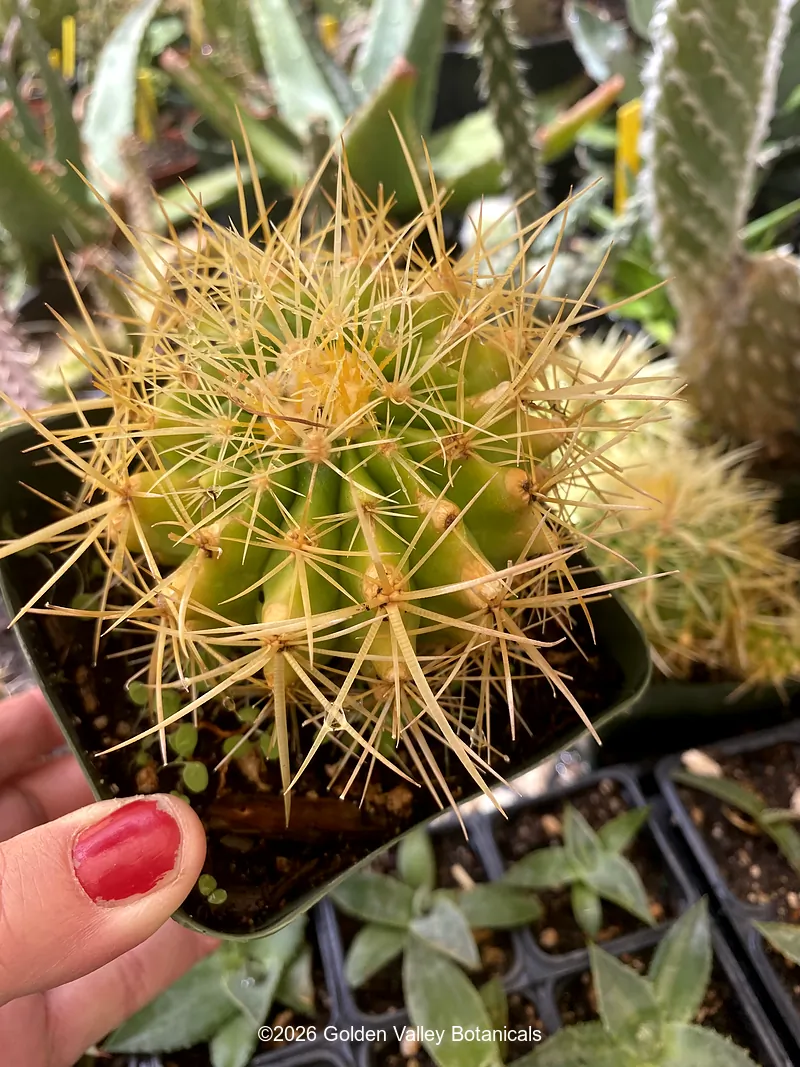
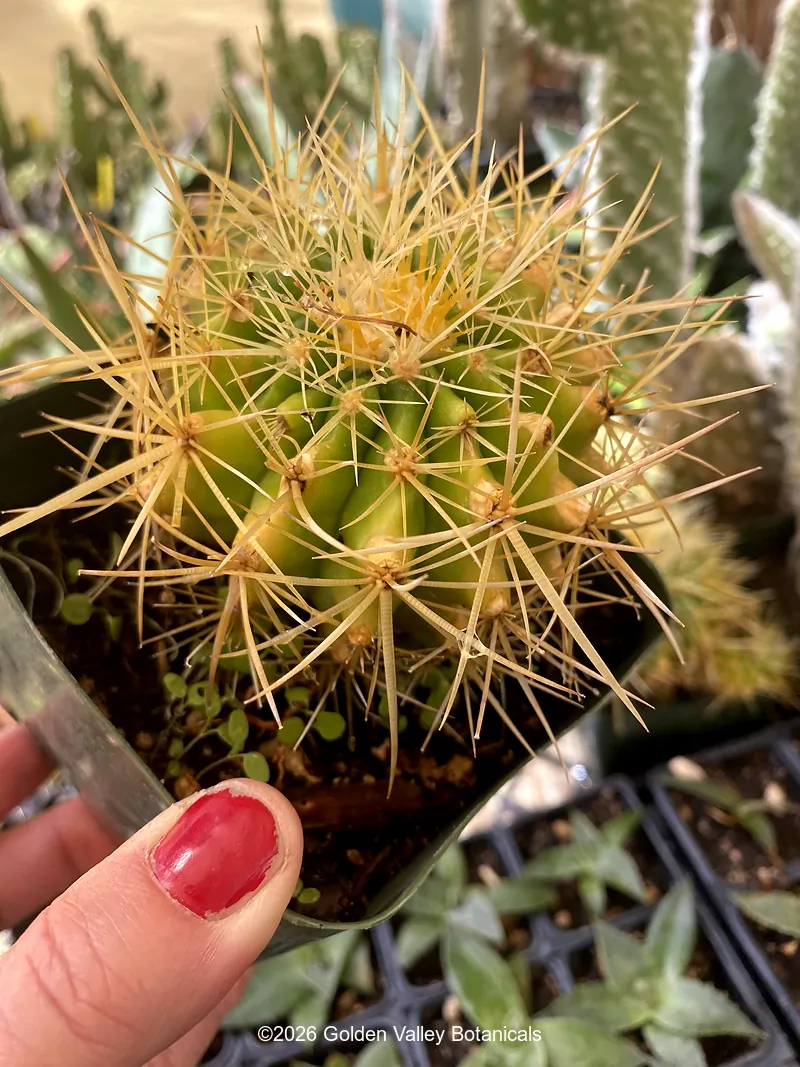
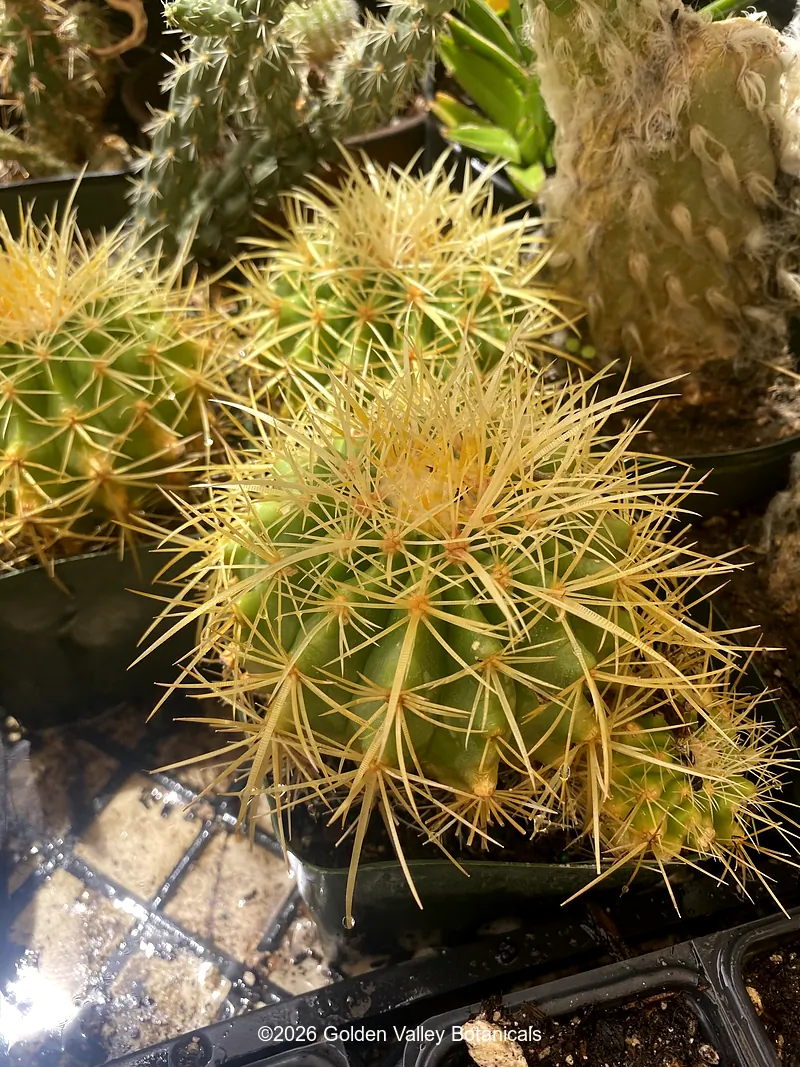
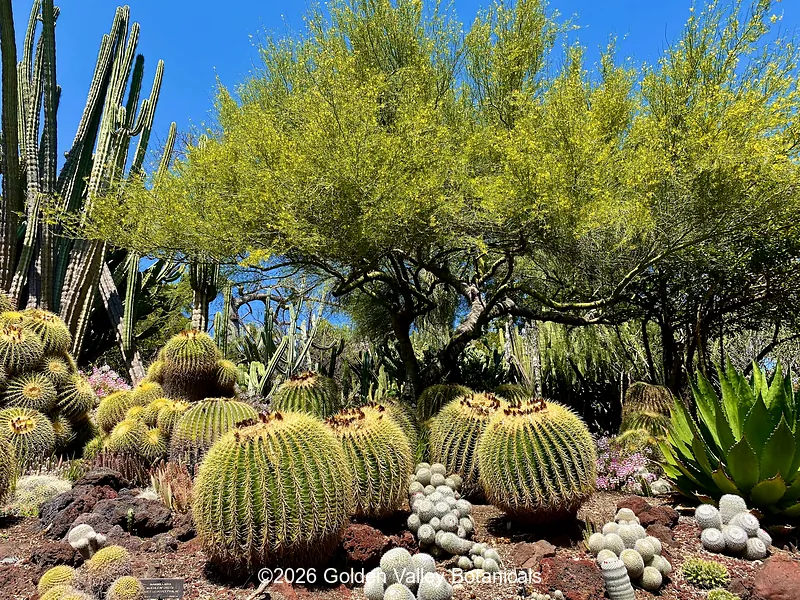
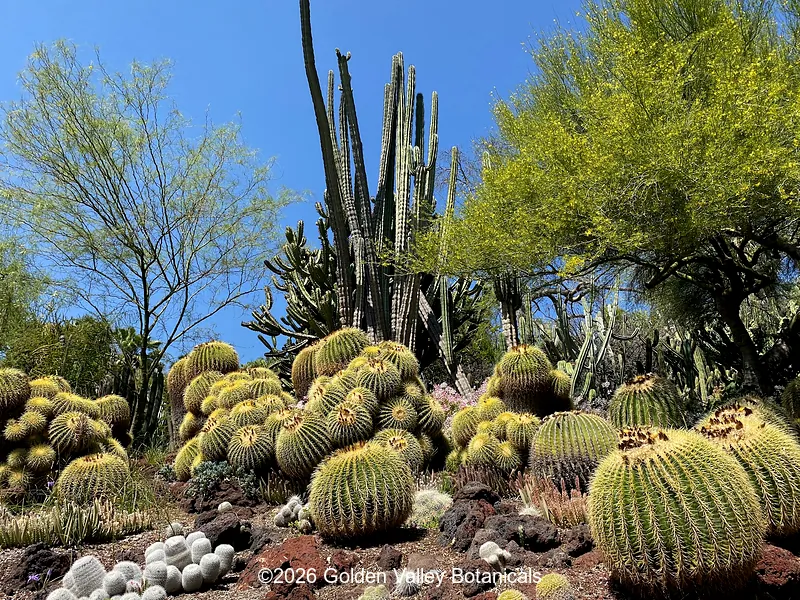
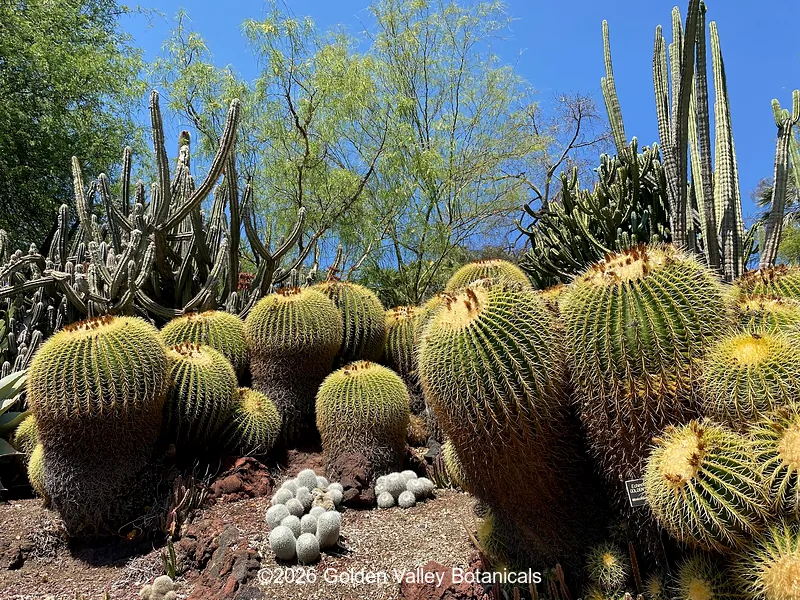
Kroenleinia grusonii, still sold under its older name Echinocactus grusonii, is a solitary cactus. It grows as a rounded ball and slowly widens into a broad barrel with age. Deep ribs run from base to crown. Their pleated shape lets the stem swell and shrink as it stores water. Each ridge carries clusters of stiff, golden-yellow spines, the source of its common name, the golden barrel cactus. New spines start bright gold at the woolly crown and fade with age, so the top glows more than the base.
Plant Details
Quick Information
- Latin Name: Kroenleinia grusonii
- Plant Family: Cactaceae
- Common Names: Golden Barrel Cactus, Golden Ball Cactus, Mother-in-Law's Cushion, Biznaga Dorada (syn. Echinocactus grusonii)
- Origin / Native Range: East-central Mexico (Querétaro and Hidalgo)
- Mature Height × Width: 2–3 ft × 2–3 ft
- Exposure Requirements: Full Sun
- Irrigation Requirements: Low
- USDA Hardiness Zones: 9–11
- Cold Hardiness: 15°F–20°F (when dry)
- Bloom Time: Summer (on mature plants)
- Bloom Color: Yellow
General Information
A young golden barrel looks little like the mature plant: seedlings start as small, soft-ribbed buttons. Only over many years do they firm into a deeply grooved sphere. A mature stem carries roughly twenty to forty ribs. Each ridge is set with areoles, the small cushion-like spots from which cacti grow their spines. After two decades or more, short flowers open in a ring near the crown. They are easy to overlook, since their yellow nearly matches the spines. Woolly fruit and small black seeds follow. With great age, a few plants branch at the base and form tight clusters of barrels.
In the wild, this cactus grows on rocky, sun-baked slopes, and nearly every feature reflects that life. Like other cacti, it uses CAM photosynthesis. This means it opens the tiny pores in its skin at night rather than in the day's heat. That way it takes in the air it needs while losing very little water. Its dense spines do more than guard against animals. Packed close together, they also shade the green surface and slow drying winds. In the garden, it needs fast-draining, gritty or sandy soil and full sun. In the hottest low-desert summers, though, the exposed south and west sides can scald, so young plants welcome light afternoon shade. Grown plants take brief cold into the mid-teens if their tissues stay dry. Damp winter soil invites rot, and potted or young plants are far more tender.
The shift from the familiar Echinocactus grusonii to Kroenleinia grusonii followed DNA work. It set this species apart from the true barrel cacti. The cactus is among the most widely grown in the world, yet it has become scarce in nature. Much of its narrow home range in the Río Moctezuma canyon was flooded behind a dam, and it is now listed as Endangered in the wild. Nursery plants, by contrast, are easy to find and long-lived. They reward patient gardeners with decades of steady growth. One caution: the stiff spines are sharp and can pierce skin. Move barrels with folded towels or thick gloves, and keep them away from walkways and play areas.
General Planting & Cultivation Information
Even drought-tolerant plants require regular watering until they are well established, good drainage is essential. If planting in containers, avoid pots without drainage holes.
Irrigate by watering deeply and then allowing the top several inches of soil to dry between waterings. This encourages the plant to send roots deep into the earth in search of moisture, helping it to become established, prevent root rot, build drought tolerance, and resilience to wind, heat, and cold.
The length of time between waterings will vary depending on your growing conditions and environment. Use a moisture meter for precise irrigation.
When planting, set the plant at the same depth as it was in its current container. For trees, ensure the top of the root flare is at soil level.
Young plants are vulnerable to harsh conditions, so consider growing them in larger containers until mature.
When planting in the ground, research the optimal planting season for your climate zone and protect young plants from frost.
To support establishment, consider creating a microclimate with nurse plants, shade, or wind protection. This can reduce stress, conserve soil moisture, and increase long-term success.
Protect the small, immature plants from rabbits and deer.
Check out our FAQ page for more tips on desert gardening.