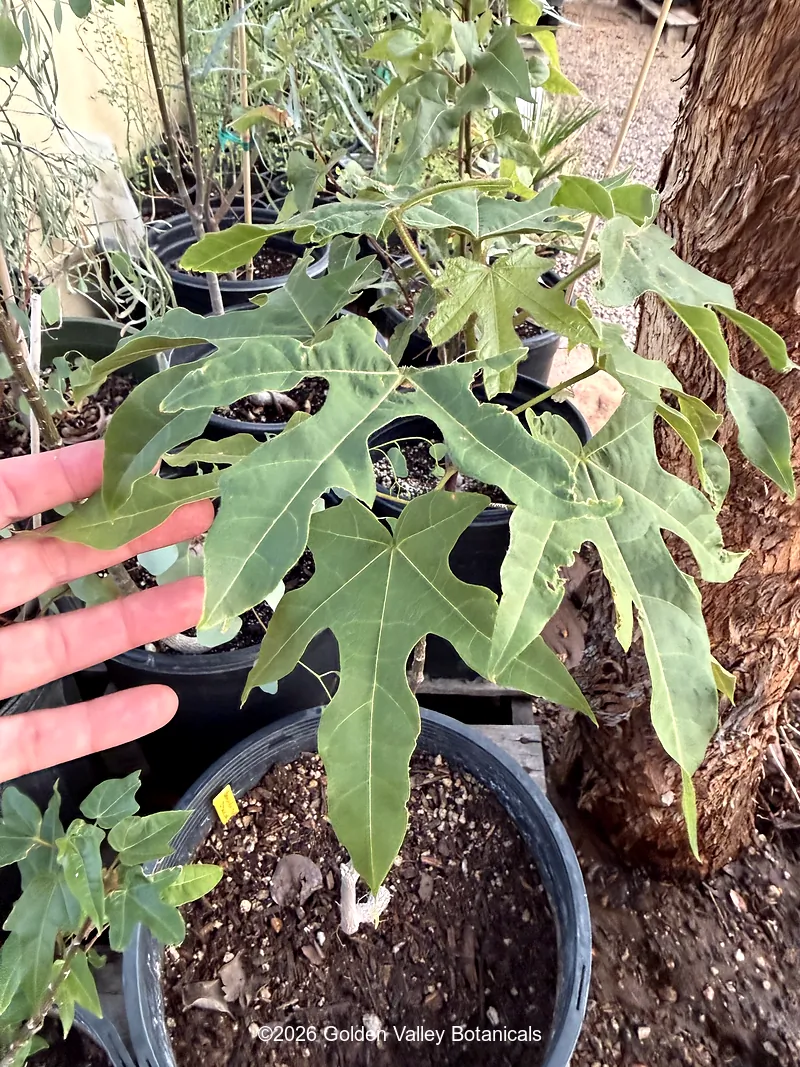
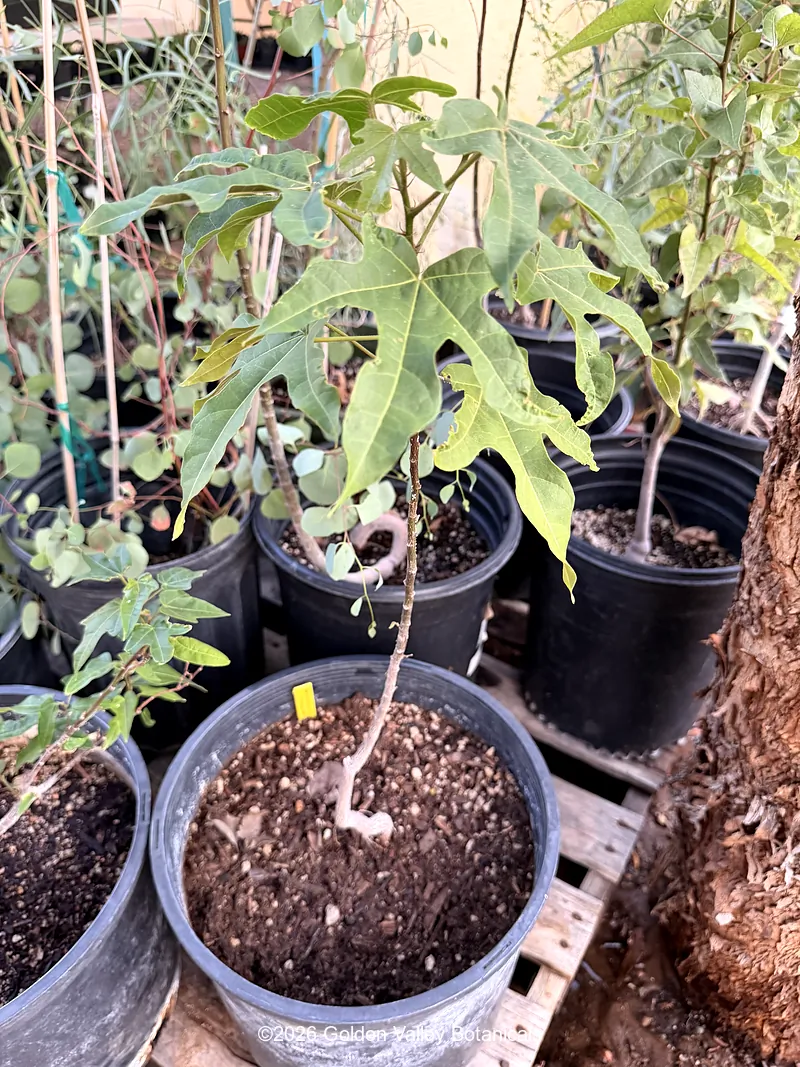
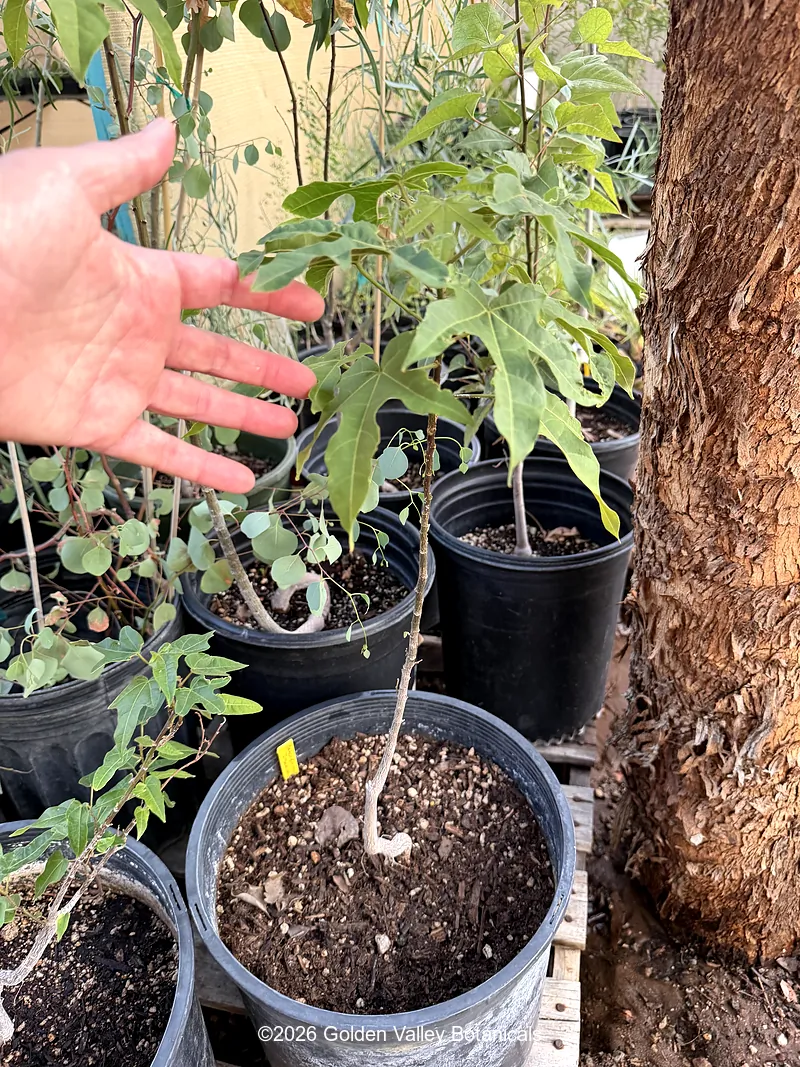
Lacebark Tree / Pink Flame Tree
Latin Name: Brachychiton discolor
Price range: $24.95 through $64.95
- Pot Size: 4 Inch, 1 Gallon, 5 Gallon (Local Pickup Only)
- Hardiness Zone: Zone 9, Zone 10, Zone 11
When summer comes, Brachychiton discolor drops much of its foliage and covers its bare branches with clusters of deep pink, bell-shaped flowers. This slow-growing tree from eastern Australia has a stout grey trunk and a rounded crown of large leaves. Each leaf is shaped like an open hand, glossy dark green on top and pale and felted beneath. That two-toned look gives the tree its name, since discolor means of two colors. The flowers open with no petals at all, in a deep pink that softens as the blooms age. At its peak, the canopy can hold several shades at once, from fresh buds to fading blossoms.
Plant Details
Quick Information
- Latin Name: Brachychiton discolor
- Plant Family: Malvaceae
- Common Names: Lacebark, Lace Kurrajong, Pink Kurrajong, Scrub Bottle Tree, Pink Flame Tree
- Origin / Native Range: Dry rainforests of eastern Australia, from southeastern Queensland to northeastern New South Wales
- Mature Height × Width: 30–50 ft × 20–30 ft
- Exposure Requirements: Full Sun
- Irrigation Requirements: Low
- USDA Hardiness Zones: 9b–11
- Cold Hardiness: 20°F–25°F
- Bloom Time: Summer
- Bloom Color: Deep Pink
General Information
A mature lacebark tree has a stout grey trunk that swells slightly near the base. This hints at the water-storing habit that gives its relatives the name bottle tree. Above the trunk sits a compact, rounded crown of large leaves. Each leaf is cut into three to seven pointed lobes. New bark is smooth and greenish. Over the years it splits into a web of shallow ridges and grooves, and this lacy pattern gives the tree its common name. The lacebark grows slowly. Wild trees in Australian forests can top 90 feet, but garden trees usually stay much smaller and take decades to fill out.
In its native dry rainforests, the lacebark faces a long dry season each year. It copes by dropping most or all of its leaves before it blooms. Bare branches let the summer flowers show clearly, which helps pollinators find them. In Australia, these visitors include native stingless bees and several nectar-feeding birds. The same drought-tuned roots make a grown tree fairly self-reliant. Once its roots spread through fast-draining soil, it needs only occasional deep watering. It grows best in full sun and slowly builds a broad canopy of shade. Its compact roots also make it a manageable street or lawn tree. Young trees are tender to frost and need cover through hard cold. The woody seed pods that follow the flowers can drop litter below the canopy.
The lacebark is monoecious, which means one tree carries separate male and female flowers. Look closely and you will see the blooms have no petals. Their deep pink cups are formed from the calyx instead: the ring of sepals that usually sits green beneath a flower. Here it takes on the color and role that petals normally play, a pattern seen across the mallow family. The genus name Brachychiton comes from Greek words for short tunic. It points to the fine bristles that wrap the seeds inside each boat-shaped pod. Those bristles, and the downy hairs on the flower buds, can irritate skin. It is wise to wear gloves when you handle the pods or clean the seeds.
General Planting & Cultivation Information
Even drought-tolerant plants require regular watering until they are well established, good drainage is essential. If planting in containers, avoid pots without drainage holes.
Irrigate by watering deeply and then allowing the top several inches of soil to dry between waterings. This encourages the plant to send roots deep into the earth in search of moisture, helping it to become established, prevent root rot, build drought tolerance, and resilience to wind, heat, and cold.
The length of time between waterings will vary depending on your growing conditions and environment. Use a moisture meter for precise irrigation.
When planting, set the plant at the same depth as it was in its current container. For trees, ensure the top of the root flare is at soil level.
Young plants are vulnerable to harsh conditions, so consider growing them in larger containers until mature.
When planting in the ground, research the optimal planting season for your climate zone and protect young plants from frost.
To support establishment, consider creating a microclimate with nurse plants, shade, or wind protection. This can reduce stress, conserve soil moisture, and increase long-term success.
Protect the small, immature plants from rabbits and deer.
Check out our FAQ page for more tips on desert gardening.