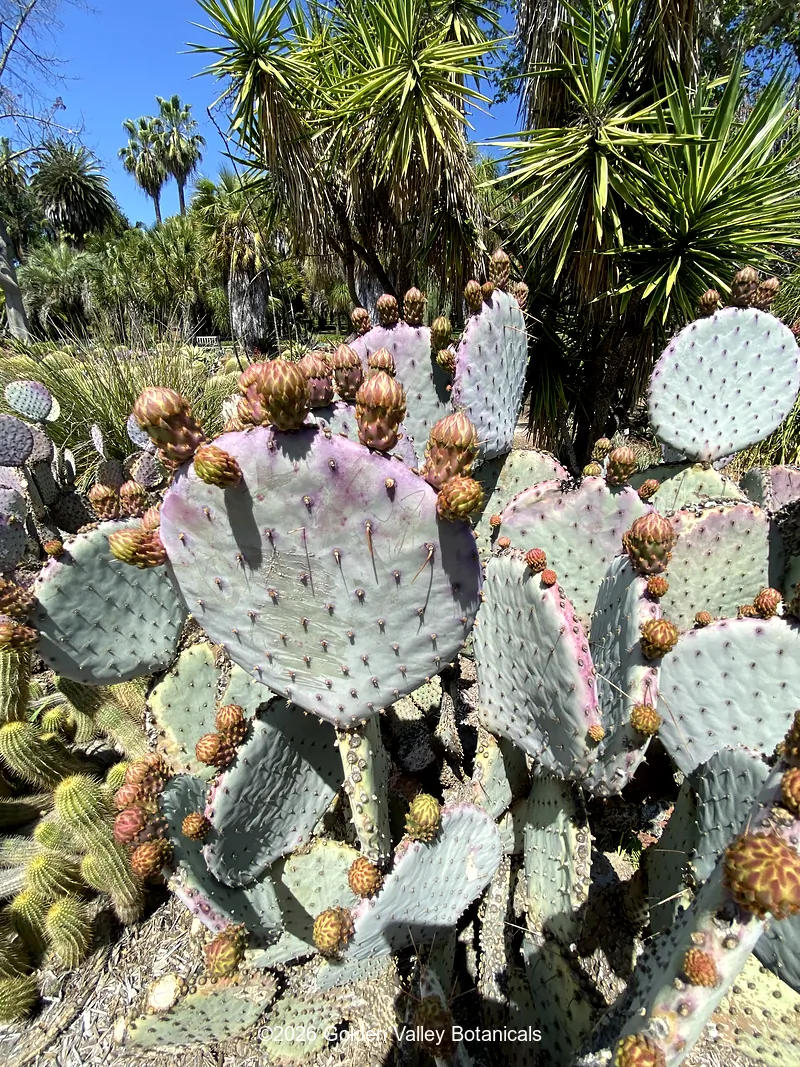
Long Spined Purple Prickly Pear
Latin Name: Opuntia macrocentra
Price range: $16.95 through $19.95
- Pot Size: 4 Inch, 1 Gallon
- Hardiness Zone: Zone 7, Zone 8, Zone 9, Zone 10
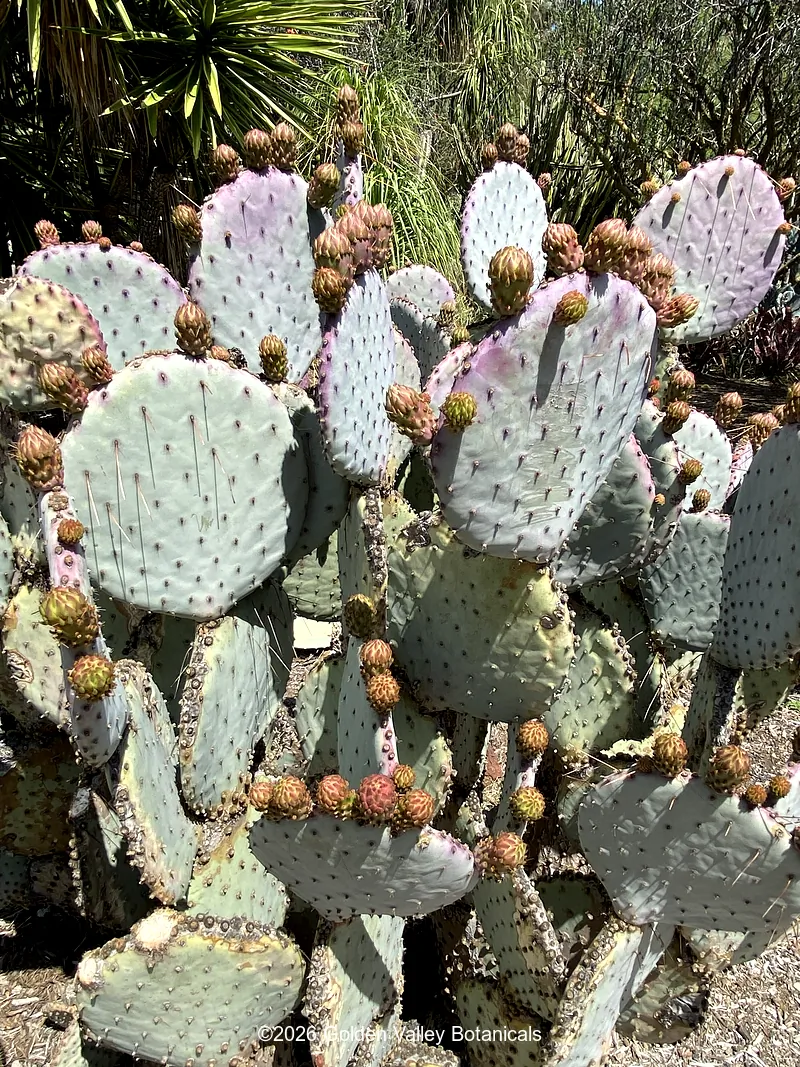
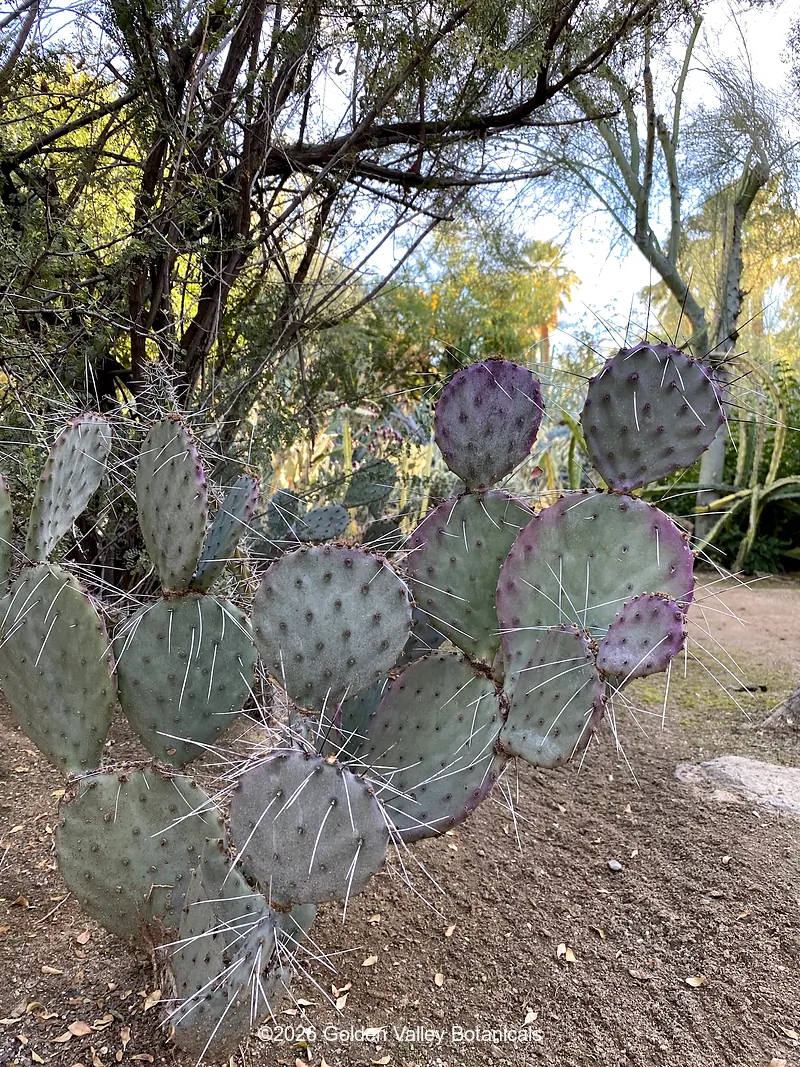
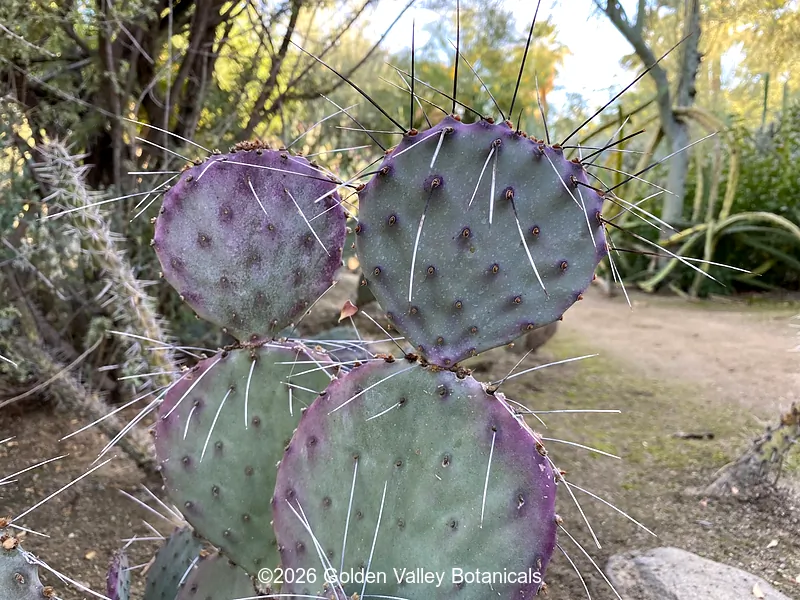
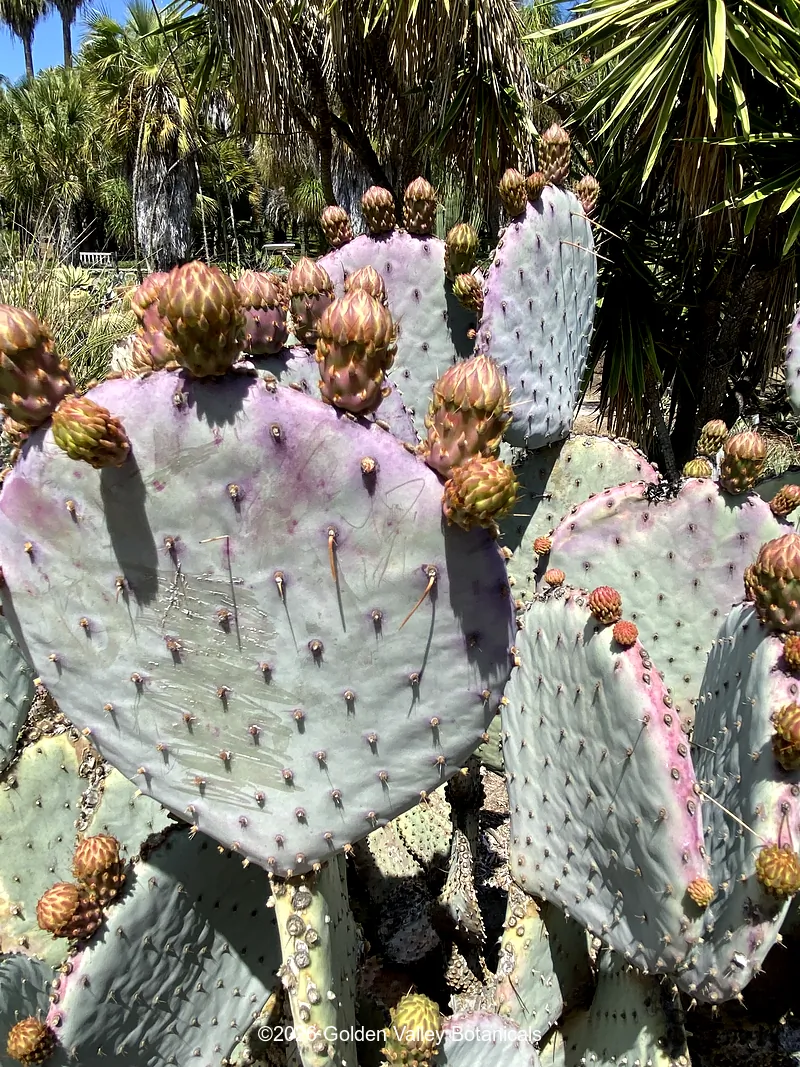
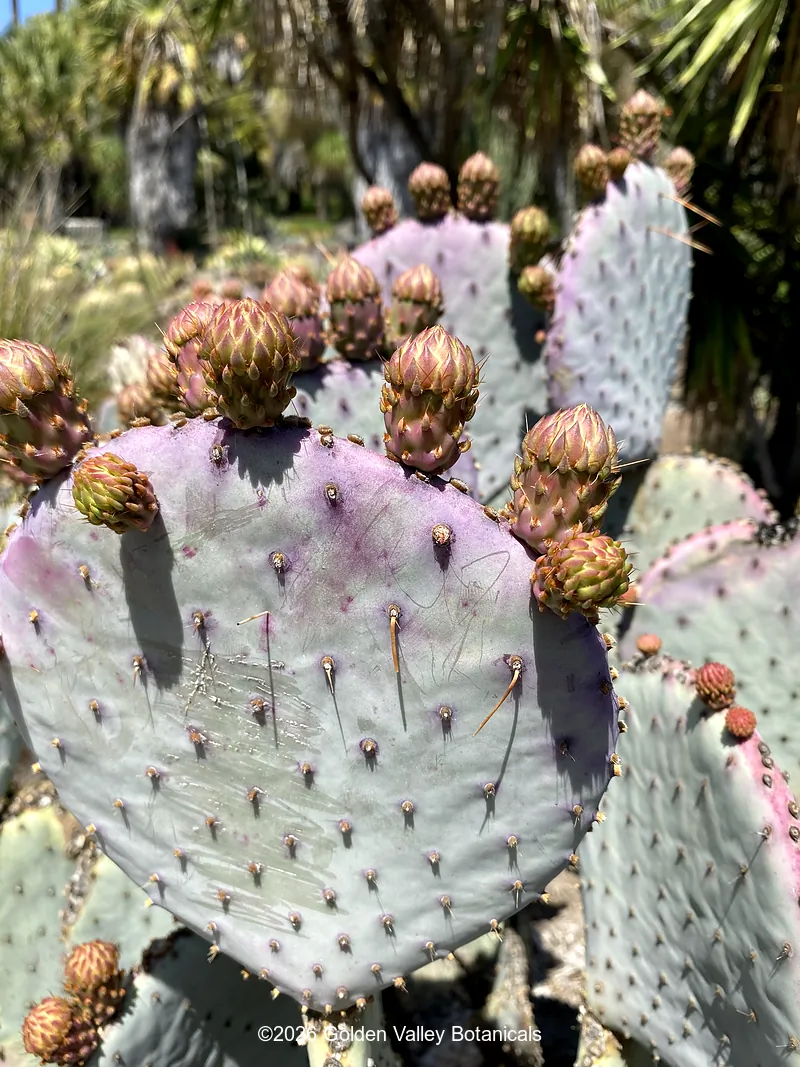
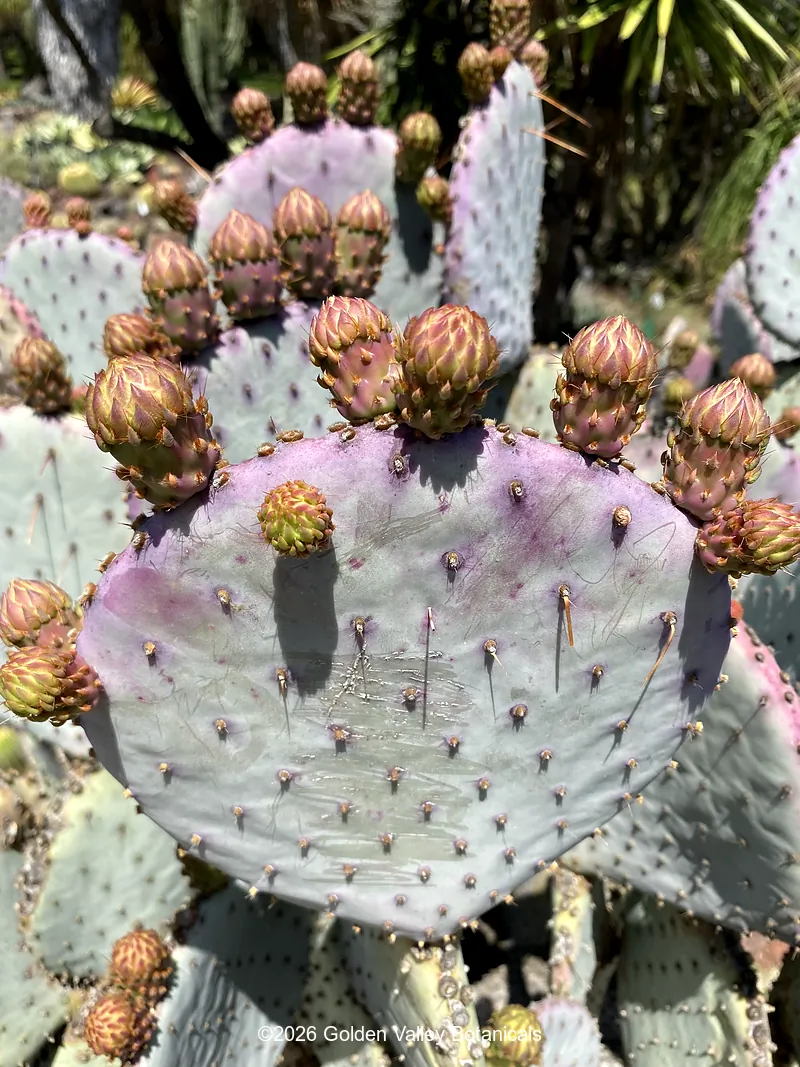
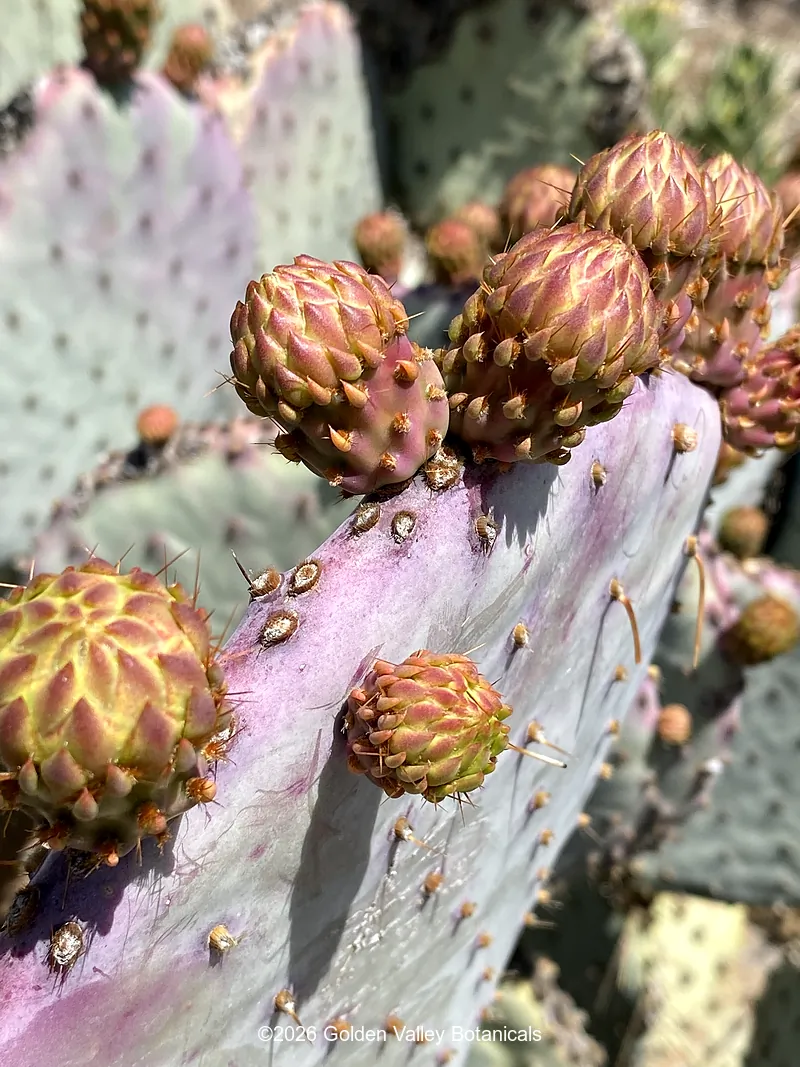
Opuntia macrocentra is a low, spreading cactus made of flat, rounded pads. The pads lean and stack into a broad clump close to the ground. In cold or dry spells, its blue-green pads flush violet or magenta around the edges. Long, dark spines rise from the upper rim of each pad and give the species its name, since macrocentra means long spine. In spring, yellow flowers with deep red centers open along the pad margins, each lasting only a day. Together, the purple pads and long black spines make it one of the most recognizable prickly pears of the desert Southwest.
Plant Details
Quick Information
- Latin Name: Opuntia macrocentra
- Plant Family: Cactaceae
- Common Names: Purple Prickly Pear, Black-Spined Prickly Pear, Long-Spined Prickly Pear
- Origin / Native Range: Southwestern United States (Arizona, New Mexico, western Texas) and northern Mexico
- Mature Height × Width: 2–3 ft × 3–5 ft
- Exposure Requirements: Full Sun
- Irrigation Requirements: Very Low
- USDA Hardiness Zones: 7–10
- Cold Hardiness: 0°F–10°F (when dry)
- Bloom Time: Spring to Early Summer
- Bloom Color: Yellow with Red Centers
General Information
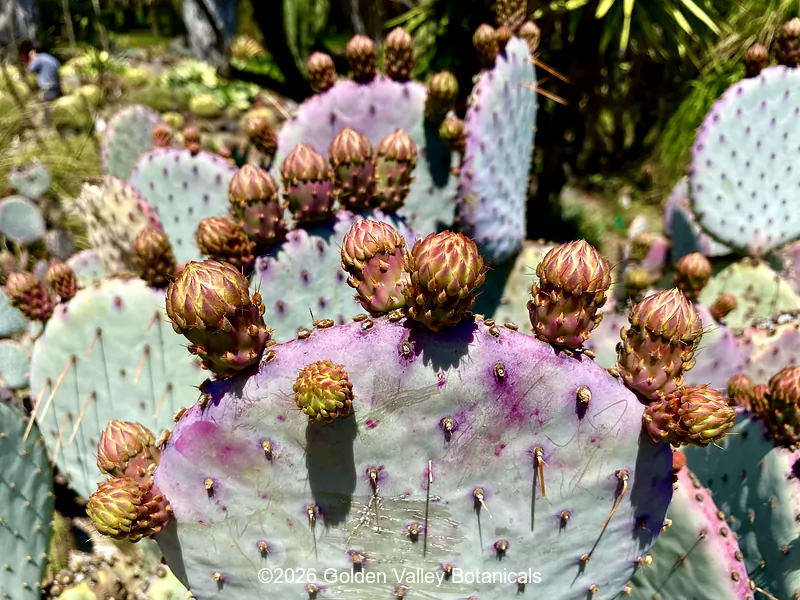
Each plant is a cluster of flat, egg-shaped to nearly round pads. Botanists call these pads cladodes, and they work as both stems and water-storage organs. Rather than climbing, the pads branch outward and pile against one another. An established plant reads as a low mound, wider than it is tall. New pads start out lightly armed, with only a few short spines, and gain their longer spines as they age. Those spines cluster near the top edge of each pad and can reach several inches. Their color ranges from reddish brown to nearly black. After the spring flowers fade, egg-shaped fruits ripen from green to deep red or purple. The fruits often hold on the plant into winter, stretching the color show well past bloom.
In the wild, this cactus grows on rocky slopes, gravelly flats, and desert grasslands. Summers there are hot, and rain is unreliable. Like other cacti, it relies on CAM photosynthesis: it opens its pores at night to take in carbon dioxide, which loses far less water than opening them in the daytime heat. That water-thrifty biology makes it a dependable choice for sunny, fast-draining beds and rock gardens once it settles in. Its cold tolerance depends heavily on staying dry. Wet soil during a hard freeze does more harm than cold alone, so gardeners in wetter winter climates should treat it as more tender than the zone range suggests. The spring flowers offer pollen that native bees gather, and browsing deer usually leave the spiny pads alone.
The shifting pad color that gives the plant its name comes from betalains. These are red-to-purple pigments found in cacti and their close relatives. Cold and drought push the plant to make more of them. That is why pads that stay blue-green in mild weather can turn violet or magenta by midwinter. The ripe fruits, known as tunas, are edible and carry a pale purple pulp. Still, the pads hold more than spines to watch for. At the base of each spine cluster sit glochids, tiny barbed bristles that detach at the lightest touch. They are hard to pull from skin once they catch. Handle the plant with thick gloves and long tools, and keep it away from paths where people or pets might brush against it.
General Planting & Cultivation Information
Even drought-tolerant plants require regular watering until they are well established, good drainage is essential. If planting in containers, avoid pots without drainage holes.
Irrigate by watering deeply and then allowing the top several inches of soil to dry between waterings. This encourages the plant to send roots deep into the earth in search of moisture, helping it to become established, prevent root rot, build drought tolerance, and resilience to wind, heat, and cold.
The length of time between waterings will vary depending on your growing conditions and environment. Use a moisture meter for precise irrigation.
When planting, set the plant at the same depth as it was in its current container. For trees, ensure the top of the root flare is at soil level.
Young plants are vulnerable to harsh conditions, so consider growing them in larger containers until mature.
When planting in the ground, research the optimal planting season for your climate zone and protect young plants from frost.
To support establishment, consider creating a microclimate with nurse plants, shade, or wind protection. This can reduce stress, conserve soil moisture, and increase long-term success.
Protect the small, immature plants from rabbits and deer.
Check out our FAQ page for more tips on desert gardening.