Mexican Marigold
Latin Name: Tagetes lemmonii
Price range: $16.95 through $19.95
- Pot Size: 4 Inch, 1 Gallon
- Hardiness Zone: Zone 8, Zone 9, Zone 10, Zone 11
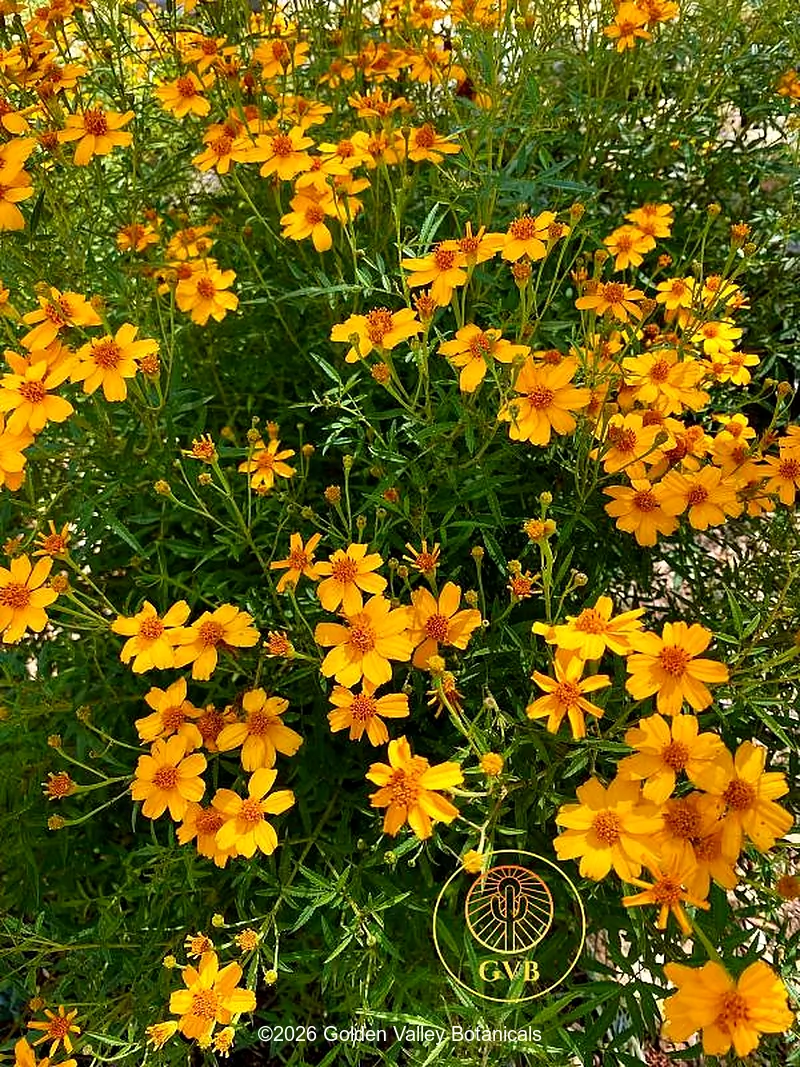
Tagetes lemmonii is a fast-growing shrubby marigold. It forms a loose, sprawling frame with fine, fern-like leaves. Brush the foliage and it gives off a sharp scent of marigold, lemon, and mint. Through the cooler months, it covers itself in golden-yellow, daisy-like flower heads about two inches wide, blooming when much of the garden has gone quiet. The aromatic oils are part of the shrub’s defense, and they keep many browsing animals away. Unlike the annual marigolds most gardeners know, this one is a woody perennial that returns each year.
Plant Details
Quick Information
- Latin Name: Tagetes lemmonii
- Plant Family: Asteraceae
- Common Names: Copper Canyon Daisy, Mexican Marigold, Lemmon’s Marigold, Mountain Marigold, Mexican Bush Marigold
- Origin / Native Range: Southern Arizona and adjacent northwestern Mexico
- Mature Height × Width: 3–5 ft × 4–6 ft
- Exposure Requirements: Full Sun
- Irrigation Requirements: Low
- USDA Hardiness Zones: 8–11
- Cold Hardiness: 15°F–20°F
- Bloom Time: Fall, continuing into spring in mild-winter climates
- Bloom Color: Golden Yellow
General Information
Tagetes lemmonii marigold grows quickly into a loose, rounded shrub. With age, the base often opens up and turns a bit leggy. Its leaves are pinnately divided, meaning that each leaf splits into several narrow, toothed leaflets along a central stalk. This fine texture gives the whole plant a soft, feathery look. The flower heads are small versions of a classic marigold. A ring of golden ray florets, the outer petal-like parts, surrounds a center of tiny disc florets. In mild-winter areas, the shrub stays green through most of the year. It can also flower over a very long season, sometimes for months at a time.
This species comes from the mountain canyons and oak woodlands of southern Arizona and nearby Mexico. It grows there at moderate elevations, not on the hot desert floor. That background explains much about how it behaves in the garden. Once established, it handles heat and dry spells well. But in low, blazing deserts, it does best with a little afternoon shade and an occasional deep soak, mimicking the shelter of a shaded canyon. Its bloom is tied to the shorter days and cooler nights of autumn, which is why the heaviest color arrives in fall, after most summer flowers fade. Those cool-season blooms feed bees and butterflies when little else is open. The pungent foliage, meanwhile, tends to keep deer from browsing.
The plant honors John Gill Lemmon and Sarah Plummer Lemmon, botanists who collected widely in the mountains of the Southwest in the late 1800s. It shares the genus Tagetes with the familiar annual marigolds of vegetable gardens. Even so, this one is a woody perennial that lives for years, not a single season. In the colder parts of its range, a hard freeze can kill the top growth. Established plants usually resprout from the roots once spring returns. The foliage is not considered toxic. Still, its strong aromatic oils can irritate sensitive skin, so it is worth wearing gloves to prune it if you tend to react to fragrant plants.
General Planting & Cultivation Information
Even drought-tolerant plants require regular watering until they are well established, good drainage is essential. If planting in containers, avoid pots without drainage holes.
Irrigate by watering deeply and then allowing the top several inches of soil to dry between waterings. This encourages the plant to send roots deep into the earth in search of moisture, helping it to become established, prevent root rot, build drought tolerance, and resilience to wind, heat, and cold.
The length of time between waterings will vary depending on your growing conditions and environment. Use a moisture meter for precise irrigation.
When planting, set the plant at the same depth as it was in its current container. For trees, ensure the top of the root flare is at soil level.
Young plants are vulnerable to harsh conditions, so consider growing them in larger containers until mature.
When planting in the ground, research the optimal planting season for your climate zone and protect young plants from frost.
To support establishment, consider creating a microclimate with nurse plants, shade, or wind protection. This can reduce stress, conserve soil moisture, and increase long-term success.
Protect the small, immature plants from rabbits and deer.
Check out our FAQ page for more tips on desert gardening.