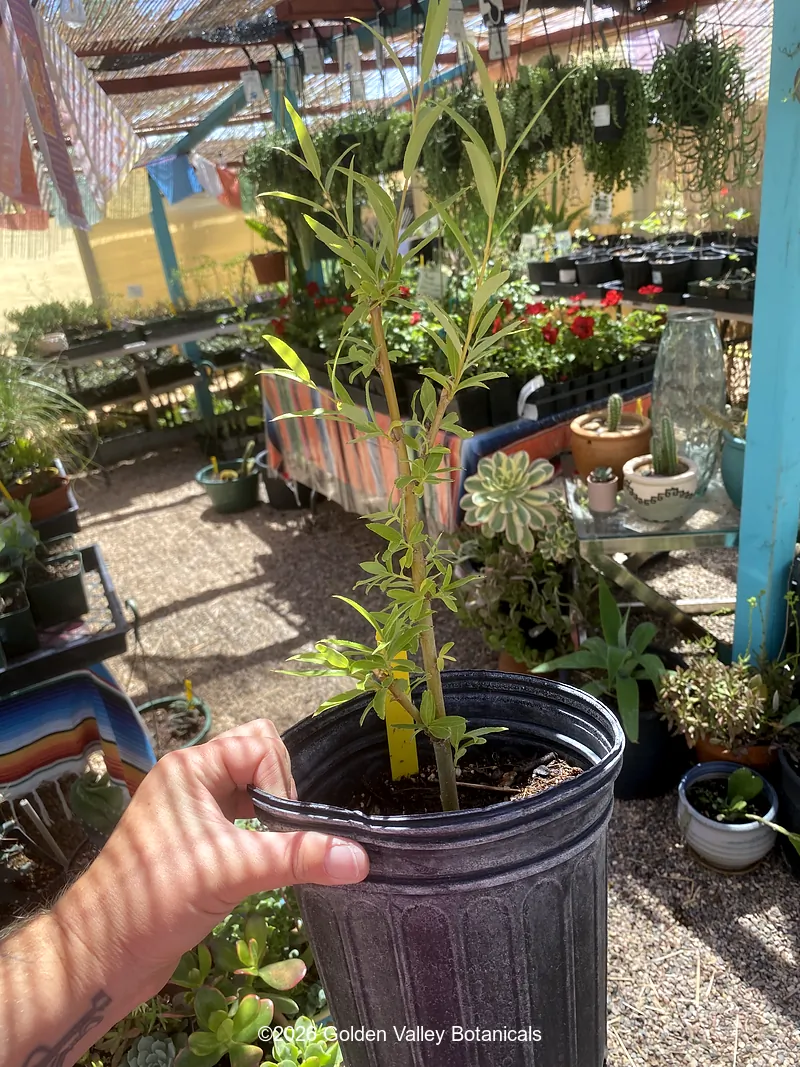
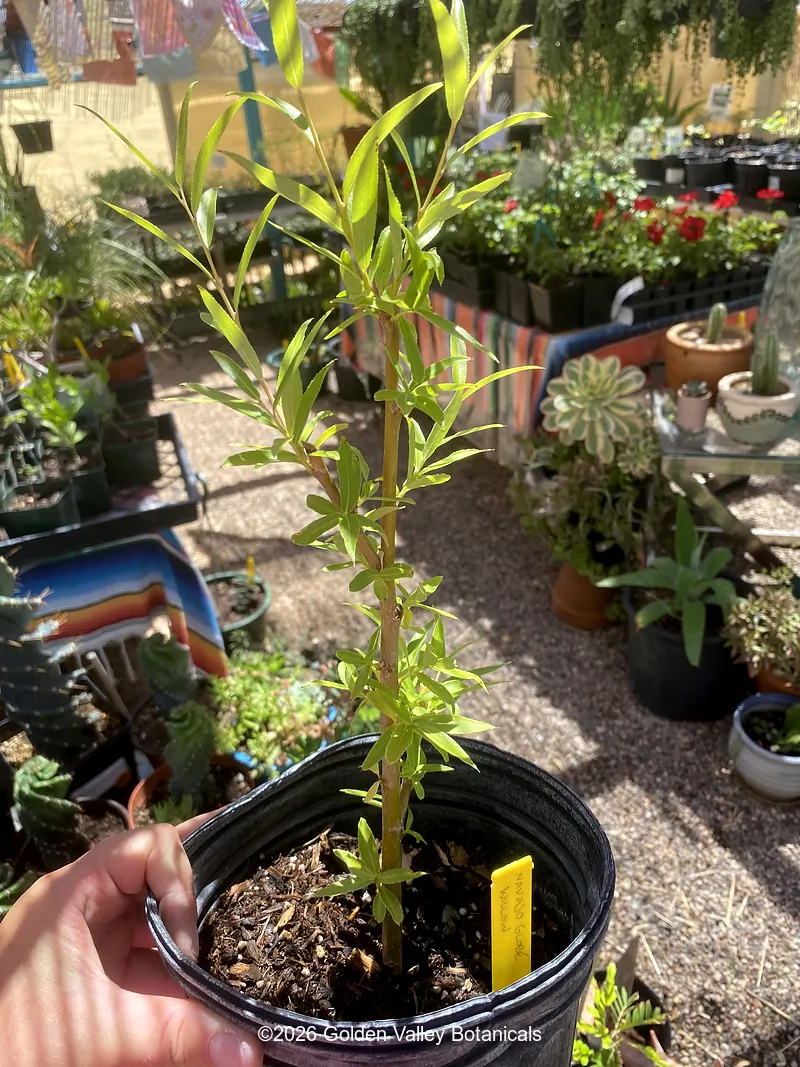
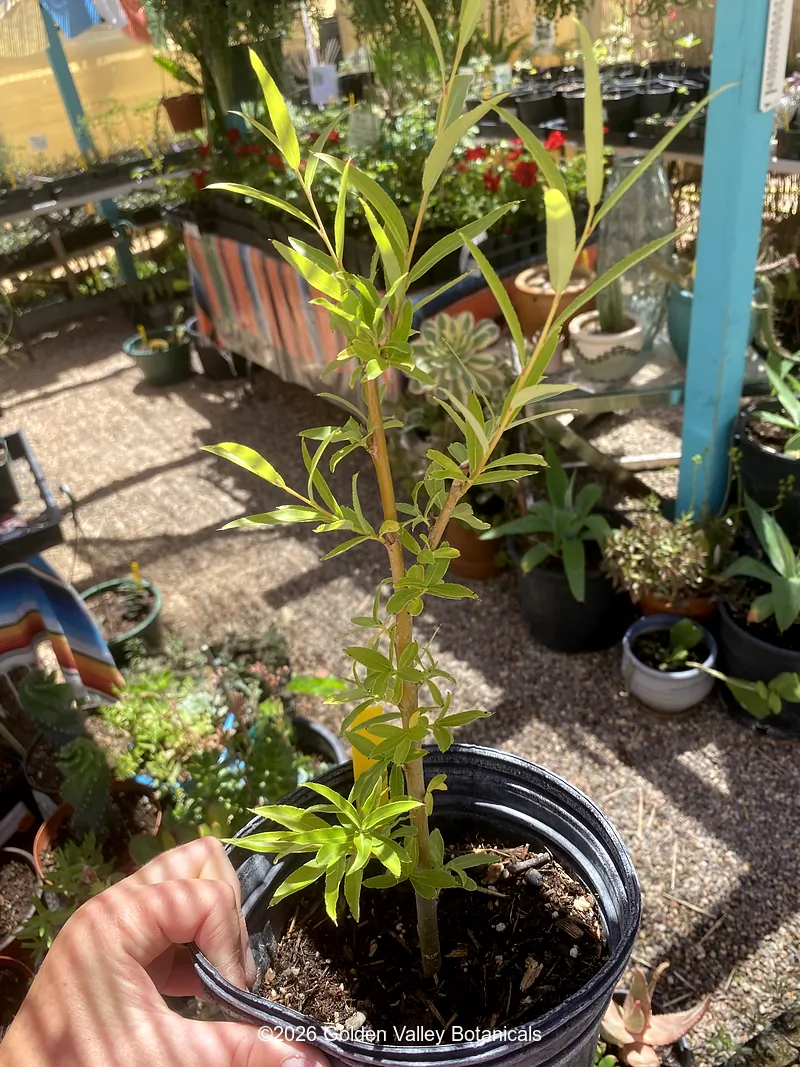
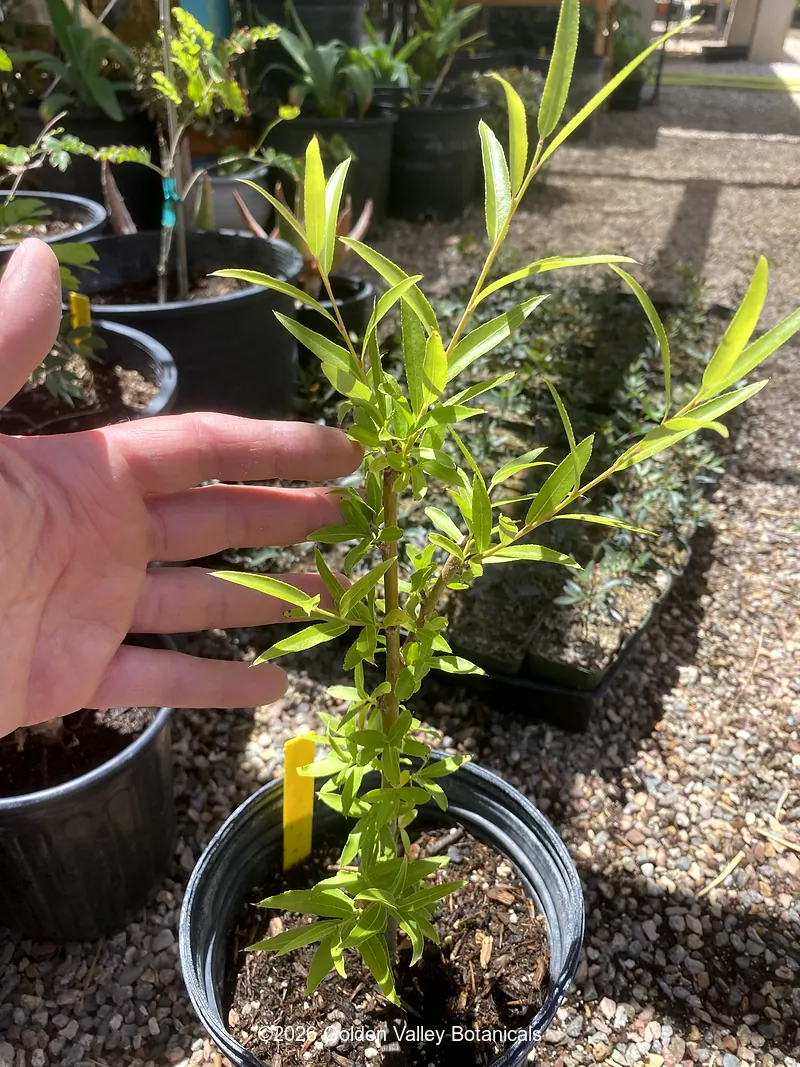
Navajo Globe Willow
Latin Name: Salix matsudana 'Navajo'
Price range: $19.95 through $34.95
- Pot Size: 4 Inch, 1 Gallon, 5 Gallon (Local Pickup Only)
- Hardiness Zone: Zone 4, Zone 5, Zone 6, Zone 7, Zone 8, Zone 9
‘Navajo’ (or Salix babylonica ‘Navajo’), the Navajo globe willow, grows into a large shade tree with a dense, rounded crown: that tidy green globe is what gives the tree its name. It looks nothing like a weeping willow, since the branches spread and lift instead of trailing down. The leaves are slender and lance-shaped, bright green on top and paler below, so the whole canopy has a soft, fine texture that stirs in a light breeze. Young stems and bark start out yellow and slowly turn olive-green. This willow was chosen for tougher inland yards, and it handles cold, dry air better than most of its water-loving kin.
Plant Details
Quick Information
- Latin Name: Salix babylonica ‘Navajo’
- Plant Family: Salicaceae (willow family)
- Common Names: Navajo globe willow, globe willow, Navajo willow
- Origin / Native Range: Northern and eastern China to Korea (species); cultivar selected in northwestern New Mexico
- Mature Height × Width: 30–50 ft × 30–40 ft
- Exposure Requirements: Full Sun
- Irrigation Requirements: Moderate
- USDA Hardiness Zones: 4–9
- Cold Hardiness: −20°F to −25°F
- Bloom Time: Early Spring
- Bloom Color: Greenish Yellow
General Information
A young Navajo globe willow grows upright and a bit uneven at first but, as it ages, the branch tips spread and arch out until the crown fills in as a broad, rounded dome. Growth is fast, often two to three feet a year in good soil, so the globe shape shows up within a few years. In fall, the narrow leaves turn soft yellow before they drop, giving a short season of color. Once the leaves are gone, the bare branches reveal bark that darkens and forms shallow grooves as the trunk thickens. In early spring, the tree makes catkins. These are the slim, soft flower clusters common to willows. On this tree, they are greenish yellow and easy to miss.
Most willows grow along streams, rivers, and ponds. Salix babylonica is one of them: a riverside tree from northern and eastern China and Korea. The ‘Navajo’ selection traces back to a wild willow found near Aztec, in northwestern New Mexico. It was chosen because it stood up to cold winters and dry inland air better than other willows. That past explains both its strengths and its limits in the yard. It is more drought-tolerant than a weeping willow, but it is still a willow at heart. It looks and grows best with deep, regular watering, not true desert neglect. It does best in cold and high-desert areas and tends to struggle in low-desert heat. Give it full sun and plenty of room, where it works well as a shade tree or a large lawn and park tree. Its roots grow fast and hunt hard for water, so keep it well away from sewer lines, septic fields, foundations, and pavement.
Botanists have long argued over this tree. Some call it its own species, Salix matsudana. Others treat it as a form of the weeping willow, Salix babylonica. Most current references now fold the two together under S. babylonica, though the trade still sells it under the older name. Either way, the globe shape is a chosen garden form, not a wild trait. A few drawbacks are worth knowing before you plant. Willow wood is fairly brittle and drops twigs and small branches, mostly after storms. The tree can also get Cytospora canker and pests such as aphids and borers, which may shorten its life on hard sites. On the useful side, willow bark has long been a source of salicin, a natural compound related to modern aspirin.
General Planting & Cultivation Information
Even drought-tolerant plants require regular watering until they are well established, good drainage is essential. If planting in containers, avoid pots without drainage holes.
Irrigate by watering deeply and then allowing the top several inches of soil to dry between waterings. This encourages the plant to send roots deep into the earth in search of moisture, helping it to become established, prevent root rot, build drought tolerance, and resilience to wind, heat, and cold.
The length of time between waterings will vary depending on your growing conditions and environment. Use a moisture meter for precise irrigation.
When planting, set the plant at the same depth as it was in its current container. For trees, ensure the top of the root flare is at soil level.
Young plants are vulnerable to harsh conditions, so consider growing them in larger containers until mature.
When planting in the ground, research the optimal planting season for your climate zone and protect young plants from frost.
To support establishment, consider creating a microclimate with nurse plants, shade, or wind protection. This can reduce stress, conserve soil moisture, and increase long-term success.
Protect the small, immature plants from rabbits and deer.
Check out our FAQ page for more tips on desert gardening.