Red Yucca
Latin Name: Hesperaloe parviflora
$18.95
- Pot Size: 4 Inch
- Hardiness Zone: Zone 6, Zone 7, Zone 8, Zone 9, Zone 10, Zone 11
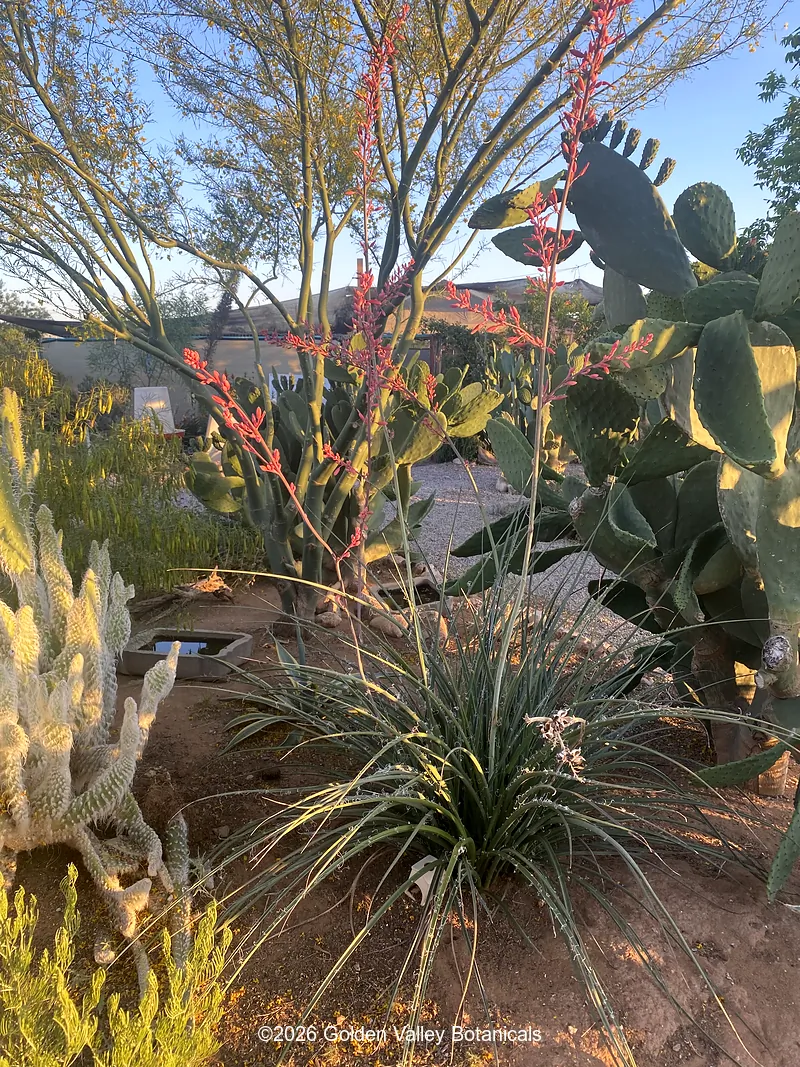
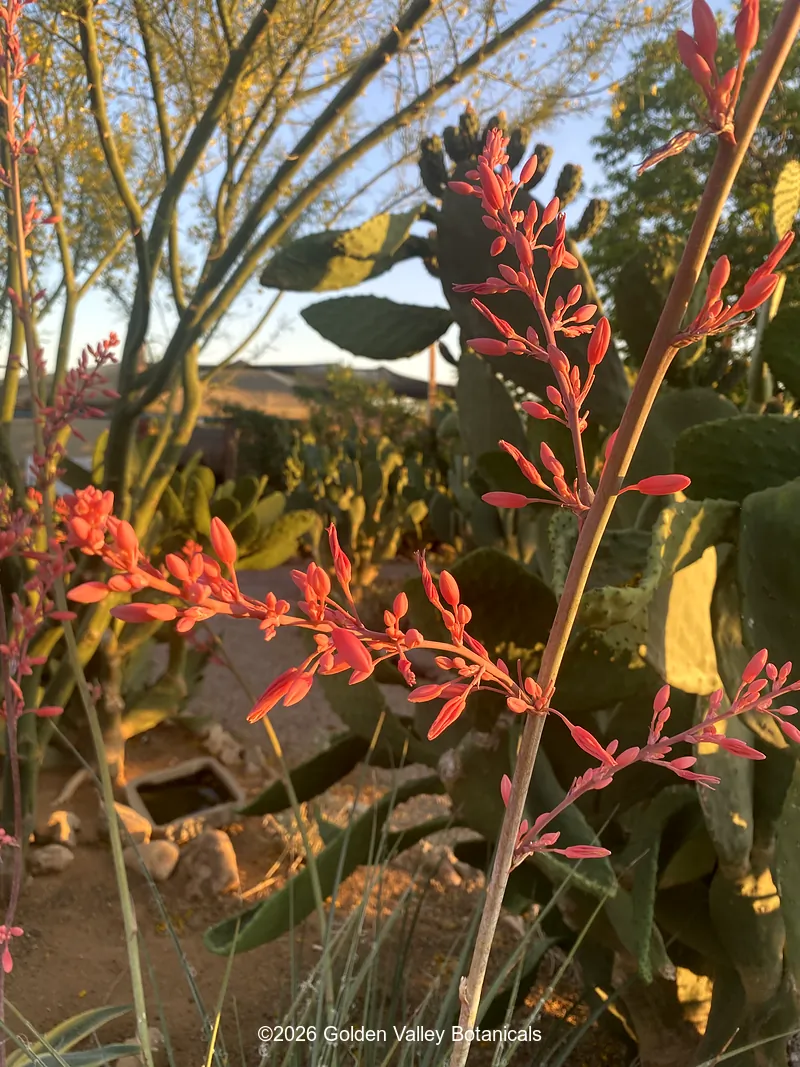
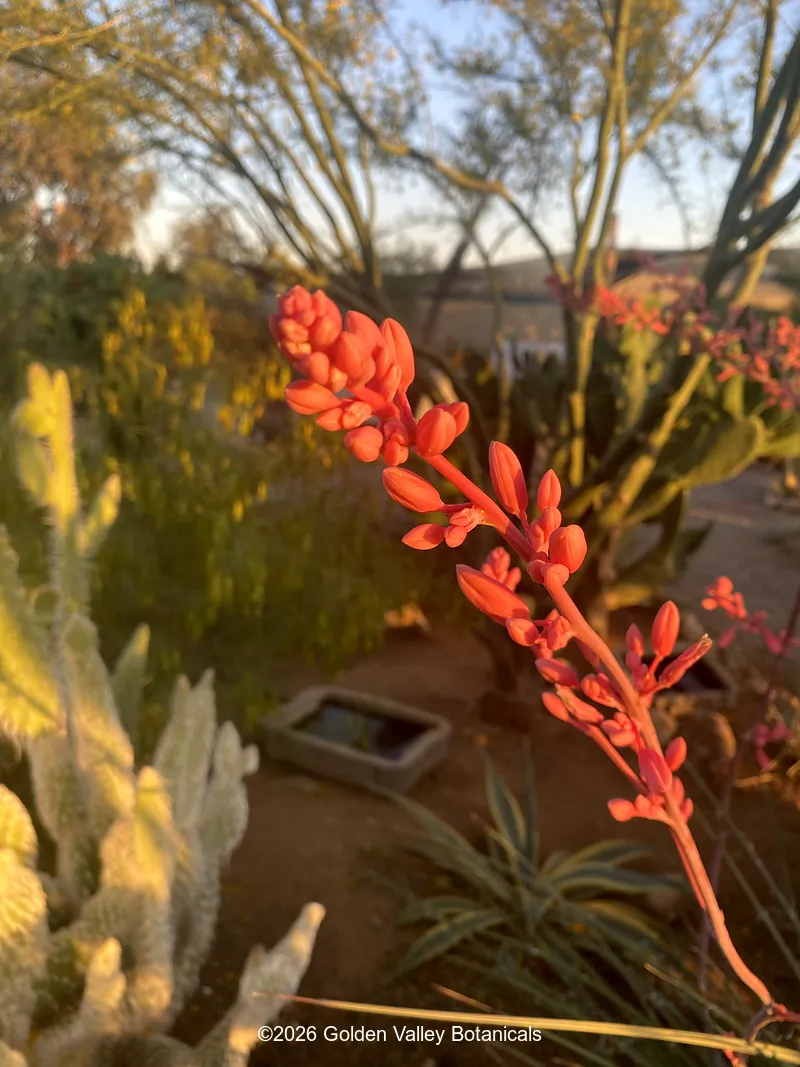
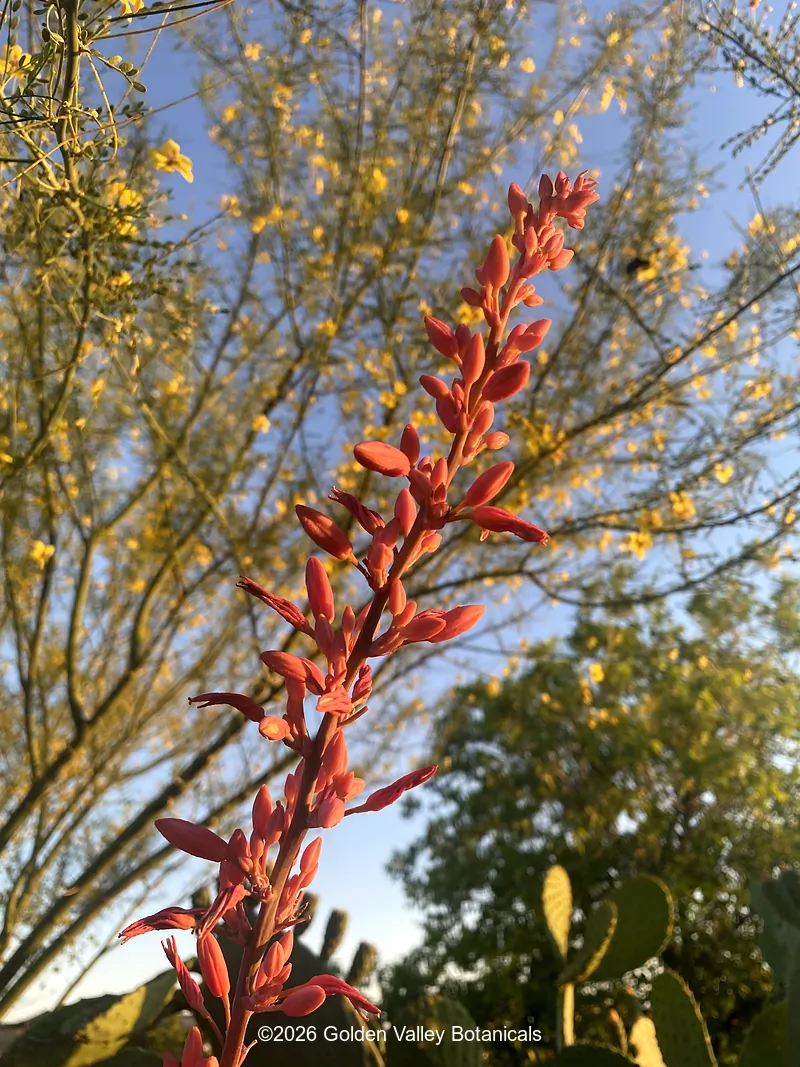
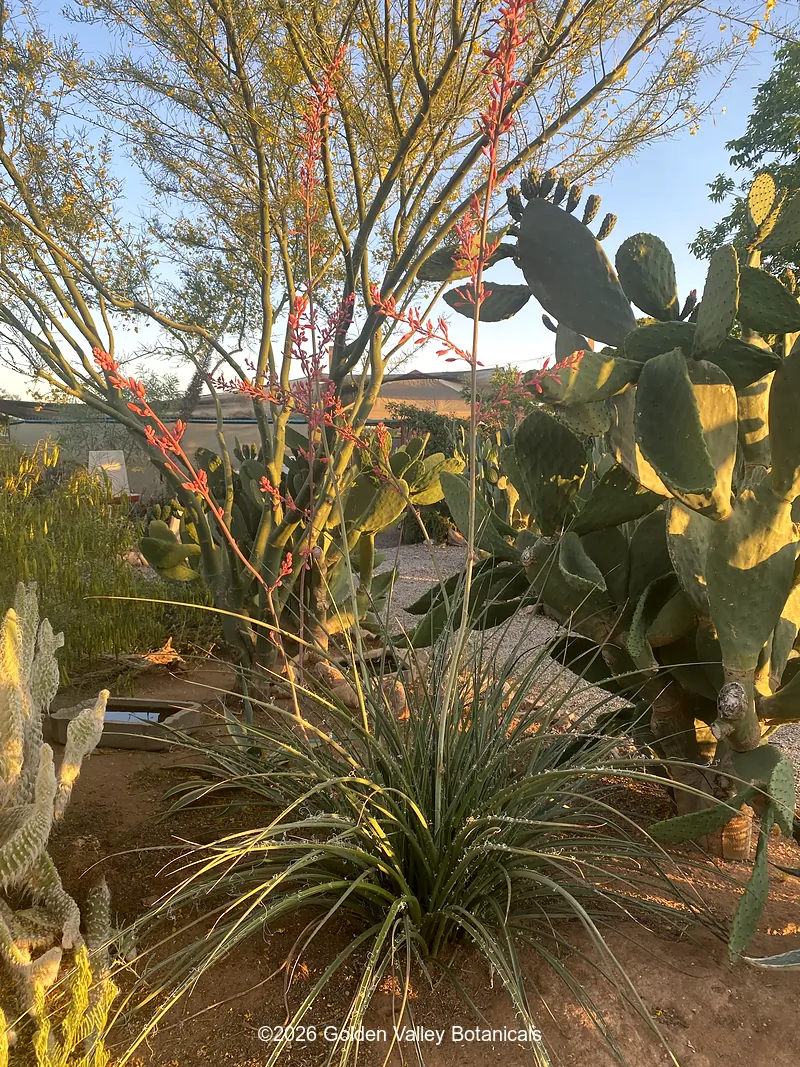
Hesperaloe parviflora forms a low, spreading clump of narrow, arching leaves that curve outward like a fountain. The blue-green blades are stiff and slender, and their edges peel into fine, curling white threads. From late spring into fall, tall, wiry stalks rise well above the foliage and carry dangling tubular flowers in coral red to soft pink. Those tall stalks and bright, narrow blooms are shaped for hummingbirds, which reach the nectar with their slender bills. Despite its common name, red yucca is not a true yucca.
In stock
Plant Details
Quick Information
- Latin Name: Hesperaloe parviflora
- Plant Family: Asparagaceae
- Common Names: Red Yucca, Coral Yucca, Hummingbird Yucca, Redflower False Yucca, Samandoque
- Origin / Native Range: Chihuahuan Desert of western and central Texas into northeastern Mexico
- Mature Height × Width: 2–3 ft × 3–4 ft (foliage clump; bloom stalks 5–6 ft)
- Exposure Requirements: Full Sun
- Irrigation Requirements: Low
- USDA Hardiness Zones: 6–11
- Cold Hardiness: 0°F–10°F (when dry)
- Bloom Time: Late Spring through Fall
- Bloom Color: Coral Red to Pink
General Information
A young red yucca starts as one small rosette. Over time, it builds into a wider clump, sending up new shoots around its base. Growth is slow, and plants often take two or three years to bloom. The leaves stay green all year, but they do change: in cold weather, they take on purple or bronze tints, then shift back to blue-green as it warms. Each summer, tall flower stalks rise from the center of the clump. These stalks branch near the top into clusters called panicles. After the blooms fade, round seed capsules form and dry to a woody brown.
In the wild, red yucca grows on rocky limestone soils in desert grasslands. Rain there is scarce and the sun is strong. Its thick leaves store water, which helps it get through long dry spells once it is established. It also saves water with a system called CAM photosynthesis. The plant opens its leaf pores mostly at night, so it loses less moisture to the heat. This is why it does best in full sun and fast-draining soil. It struggles in shade or wet ground. The tubular flowers give hummingbirds a steady source of nectar through the warm months. In the yard, red yucca fits mass plantings, gravel and rock gardens, and medians. Its slow start and need for sharp drainage are worth planning for.
The name Hesperaloe means western aloe. It points to the plant’s aloe-like look, though it is neither an aloe nor a true yucca. Red yucca sits in its own genus in the family Asparagaceae. That family also holds agaves and yuccas, and the plant once went by the name Yucca parviflora. The fine white threads along its leaf edges are a family trait, shared with several yuccas and agaves. Unlike true yuccas, its leaf tips are soft, not tipped with a sharp spine. That makes it easier to place near walkways and seating. Gardeners will also find named forms in the trade, including ones with yellow or deeper red flowers.
General Planting & Cultivation Information
Even drought-tolerant plants require regular watering until they are well established, good drainage is essential. If planting in containers, avoid pots without drainage holes.
Irrigate by watering deeply and then allowing the top several inches of soil to dry between waterings. This encourages the plant to send roots deep into the earth in search of moisture, helping it to become established, prevent root rot, build drought tolerance, and resilience to wind, heat, and cold.
The length of time between waterings will vary depending on your growing conditions and environment. Use a moisture meter for precise irrigation.
When planting, set the plant at the same depth as it was in its current container. For trees, ensure the top of the root flare is at soil level.
Young plants are vulnerable to harsh conditions, so consider growing them in larger containers until mature.
When planting in the ground, research the optimal planting season for your climate zone and protect young plants from frost.
To support establishment, consider creating a microclimate with nurse plants, shade, or wind protection. This can reduce stress, conserve soil moisture, and increase long-term success.
Protect the small, immature plants from rabbits and deer.
Check out our FAQ page for more tips on desert gardening.